
20 Bible Verses About Work, Career, and Success
Bible verses about work, career, and success show that God values labor, skill, honesty, and faithful effort. Read in context, these passages do not promise automatic promotions or wealth. They teach you to work with purpose, humility, and hope, while trusting God with the results.
Key takeaways
- Work is part of God’s design, not a curse to escape, so your daily labor has meaning before Him.
- Colossians 3:23 shifts your focus to God, which changes how you approach every task, even the unnoticed ones.
- Biblical success is measured by faithfulness and wisdom, not by a guaranteed promotion or paycheck.
- A good reading plan is to study one theme at a time, so diligence, integrity, calling, and perseverance stay clear.
- Use Proverbs and Ecclesiastes carefully: they call for skill and wisdom, but they do not promise automatic wealth.
Bible Verses About Work in Context
Genesis 2:15 shows that work was part of God’s good design before sin entered the world. God placed the man in the garden “to work it and keep it,” which means labor is not a punishment to escape, but a calling built into creation. That matters when you feel burned out, because Scripture starts with dignity, not drudgery.

Colossians 3:23 reframes everyday labor by telling you to work “as for the Lord and not for men.” The point is not that your boss disappears from the picture, but that your deepest audience is God Himself. That changes how you write the email, finish the report, and handle the task nobody else wants to touch.
Ephesians 2:10 connects your life of faith to action by saying believers are God’s workmanship, created in Christ Jesus for good works. Those good works do not earn salvation, because salvation is God’s gift, but they do show what a redeemed life is for. In other words, you do not work to become accepted by God, you work because you already belong to Him.
That distinction keeps you from two common mistakes. One is treating work as meaningless survival; the other is treating achievement as proof that God loves you more. Scripture gives you a better frame: work is a calling, and grace is the ground of your standing with God.
How to Group Bible Verses About Work by Theme
| Theme | What it emphasizes | Best use |
|---|---|---|
| Hard work and diligence | Steady effort, skill, and follow-through | Encouragement for daily tasks, school, and career growth |
| Integrity and honesty | Clean hands, honest dealings, trustworthy speech | Leadership training, work ethics, and decision-making |
| Calling and vocation | God-given purpose in ordinary labor | Discernment, career direction, and life planning |
| Perseverance under pressure | Faithfulness when work is hard or unrewarded | Exhaustion, setbacks, layoffs, and long seasons of waiting |
This grouping helps you study Bible verses about work without turning every passage into one vague lesson. If you are preparing a devotion, use one theme per reading so the application stays clear. If you are teaching a class or leading a small group, the same verse can land differently depending on whether the question is effort, character, purpose, or endurance.
A simple way to use the categories is to pick one theme and ask one question. For diligence, ask, “What does faithful effort look like this week?” For integrity, ask, “What would honesty require in this situation?” For calling, ask, “What kind of work am I equipped to do well?” For perseverance, ask, “How do I stay steady when the reward is slow?”
How to Read Success Verses Without Overpromising
Proverbs 22:29 and Ecclesiastes 9:10 connect success with skill and wholehearted effort, not with shortcuts. Proverbs 22:29 says a skilled worker will stand before kings, and Ecclesiastes 9:10 tells you to do whatever your hand finds to do with all your might. The lesson is practical: become competent, do the work in front of you, and do not confuse visible gifting with finished character.
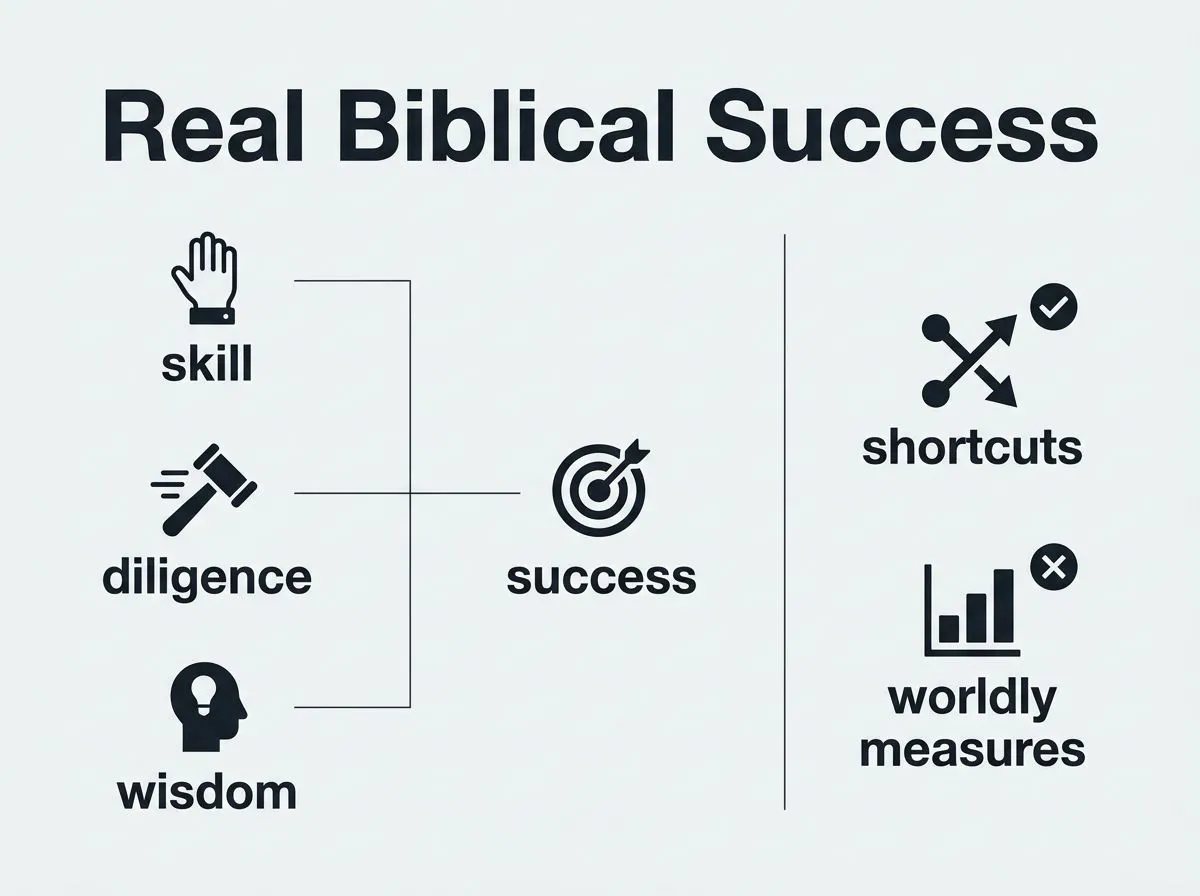
That is why Proverbs 3:13-16 describes wisdom as more valuable than silver, gold, and long life measured only in worldly terms. The passage does honor blessing, but it places wisdom itself above material gain. Proverbs 22:1 does something similar by saying a good name is to be chosen rather than great riches, because reputation and character outlast a bigger paycheck.
A helpful way to read these verses is to ask what kind of success they define. Biblical success is faithfulness before God, wise judgment, and a life that honors Him. It may include promotion, stability, or public favor, but those are possible outcomes, not guaranteed promises.
That is where two errors often show up. The first error is prosperity teaching, which turns wisdom texts into a promise that diligent believers will always get wealth or visibility. The second error is salvation by works, which treats hard work and moral effort as if they could replace grace. Proverbs and Ecclesiastes never ask you to earn God’s love; they call you to live wisely within God’s world.
Two details from the context keep the reading honest. Proverbs 22:14-15 warns that moral folly can be deeply destructive, which means not every apparent result is a sign of God’s approval. And Proverbs 22:29, read carefully, speaks of skill and readiness, not entitlement. If you want help tracing those connections in the text, resources such as Corban University, Precept Austin, and Desiring God discuss these passages in ways that stay close to Scripture.
What to do this week
If you want to put these verses into practice, write one sentence that connects your work to God’s purpose. A job seeker might write, “I want a role where I can serve people well, learn quickly, and work with honesty.” A current employee might write, “I will finish the project carefully, speak truthfully, and keep a calm spirit under pressure.”
Then bring that sentence into your next concrete step. It could shape a resume line, such as, “Improved team response time by organizing daily follow-up tasks,” or an interview answer like, “I stay focused by taking ownership of deadlines and communicating early when a problem appears.” Those answers matter because the person across the table is usually looking for competence, reliability, and character, not just enthusiasm.
If you are training for a new field, use the same biblical lens while you study. Ask whether the certification, course, or apprenticeship is helping you become more skillful, more truthful, and more useful to others. That is a more biblical measure of progress than whether you feel impressive in the moment.
Work and success in Scripture are never reduced to money, but they are also not abstract ideals. They show up in a clean report, an on-time shift, a careful answer, and a reputation for trustworthiness. That is where biblical wisdom becomes visible.
Verification Checklist
- You can explain Genesis 2:15 in one sentence as work in God’s good design, and not as a punishment for sin.
- You can read Colossians 3:23 in context and name one task you will do this week as service to the Lord.
- You can sort the verses into at least one theme, such as diligence, integrity, calling, or perseverance, without mixing them together.
- You can state in one sentence that biblical success means faithfulness before God, not a guarantee of wealth or promotion.
- Your next resume bullet, interview answer, or study plan reflects honesty, skill, and purpose, and the final version is specific enough that another person could evaluate it.
Frequently asked questions
Which Bible verse is best for encouraging someone starting a new job?
Colossians 3:23 is a strong choice because it centers work on serving the Lord, not just pleasing people. It is especially encouraging when a new job feels intimidating, because the verse reminds you that your real audience is God, even in ordinary tasks like emails, reports, and daily responsibilities.
What Bible verse helps when work feels exhausting?
Ecclesiastes 9:10 is helpful because it calls you to do your work with strength, while still acknowledging the limits of life under the sun. It speaks honestly to exhaustion without pretending every season will feel easy, and it encourages steady effort even when the reward is slow.
Is there a Bible verse about skill and excellence at work?
Yes, Proverbs 22:29 points to skill, showing that competence matters and can open real opportunities. In context, it highlights readiness and quality work, which fits the article’s point that biblical success includes faithful effort, wisdom, and useful skill, not shortcuts or empty ambition.
How should I share Bible verses about work with a coworker?
Choose one verse, explain it briefly in context, and keep the tone encouraging rather than preachy. A simple, respectful approach works best, especially if you connect the verse to a real work situation, like diligence, honesty, or handling pressure with calm.


This Bible Verse Can Help You Face a Difficult Day
Psalm 46:1 is a strong Bible verse for a difficult day because it says, “ God is our refuge and strength , a very present help in trouble.” Put simply, God is…

Before Your Next Important Decision, Remember What Proverbs Says
A common mistake is treating Proverbs like a magic formula that guarantees the outcome you want if you quote the right verse. The better way is simpler, and st…

Read This Bible Verse When You're Worried About Your Future
If you’re worried about your future, start with Jeremiah 29:11. It reminds you that God knows your life, sees what you can’t see, and is still working with pur…

This Bible Verse Is a Powerful Reminder of God's Promises
Jeremiah 29:11 is one of the clearest Bible verses about God’s promises: “For I know the plans I have for you, declares the Lord, plans for welfare and not for…