
This Bible Verse Is a Powerful Reminder of God's Promises
Jeremiah 29:11 is one of the clearest Bible verses about God’s promises: “For I know the plans I have for you, declares the Lord, plans for welfare and not for evil, to give you a future and a hope.”
Financial Provision in Difficult Times Trust God With Your Finances.
READ PRAYER →
You will remain on the same website.
It stands out because it reveals God’s faithful character, but it belongs in its original setting, not as a blank check for every personal dream.
Key takeaways
- Jeremiah 29:11 is best read with verses 10 to 14, not as a stand-alone promise.
- The verse was first spoken to exiles in Babylon, so its hope was given in a hard season.
- Cross-references like Hebrews 10:23 and 1 Corinthians 1:9 reinforce God’s faithfulness across Scripture.
- A good next step is to pray this verse before a major decision, then wait with obedience and trust.
- If a promise verse sounds like a shortcut, read the surrounding passage before you claim it.
The Bible verse that best fits God’s promises
Jeremiah 29:11 is the verse many people turn to when they want a Bible verse about God’s promises, and that makes sense because it speaks directly about a future and a hope.
In Jeremiah, the prophet is speaking to God’s people in exile, so this promise was first given to a community living through loss, delay, and uncertainty, not to people who already had easy answers.
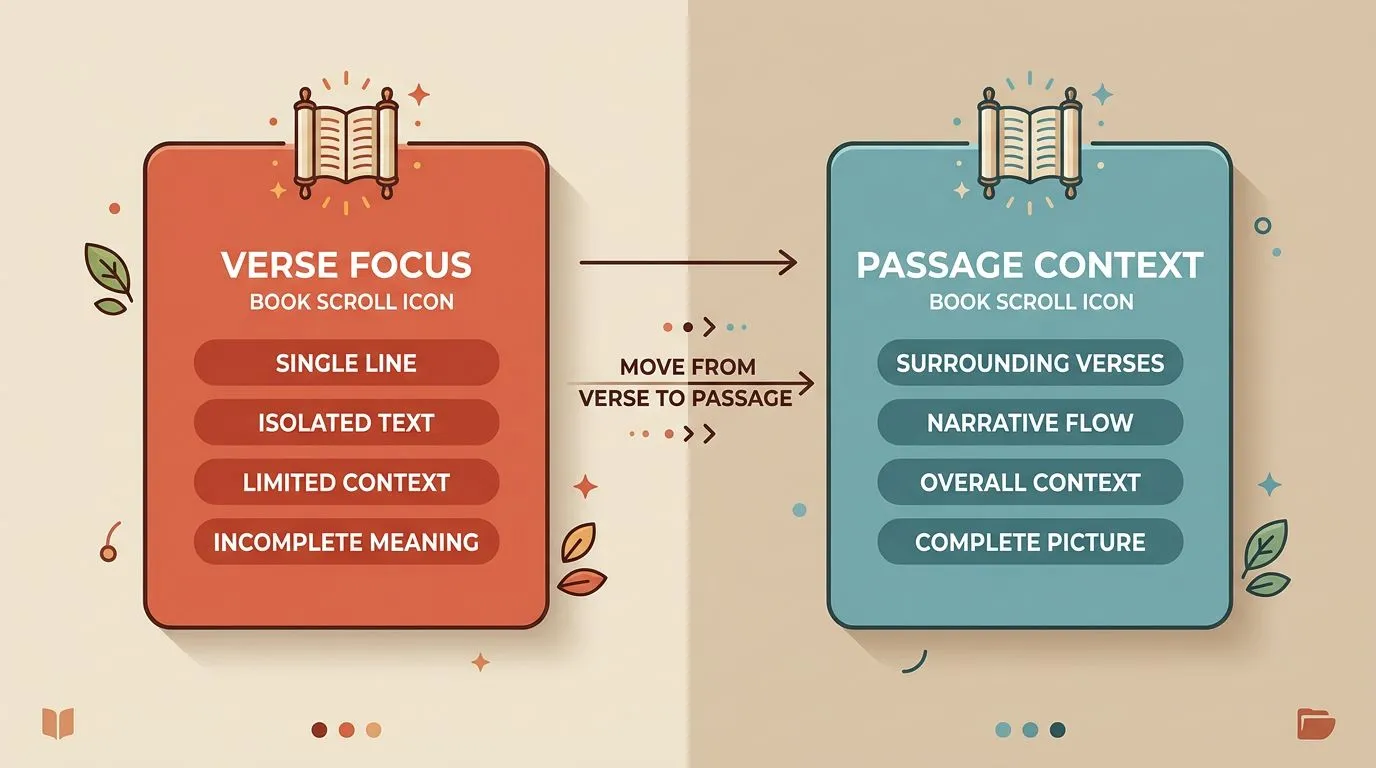
That context matters. GotQuestions.org explains that proper biblical interpretation starts with the verse, then moves to the passage, book, author, and original audience, and that is exactly why Jeremiah 29:11 should not be treated like a stand-alone slogan.
The promise was spoken to covenant people in a specific historical moment, yet Christians still draw a real principle from it: God is faithful, purposeful, and present even in hardship.
You can see the wider Bible theme in Hebrews 10:23 and 1 Corinthians 1:9. Hebrews tells believers to hold fast to hope because God, who promised, is faithful, and 1 Corinthians 1:9 says, “God is faithful,” which shows that Jeremiah 29:11 belongs to a much larger biblical witness about the trustworthiness of God.
The simple takeaway is this: Jeremiah 29:11 is a verse for encouragement, but its comfort comes from God’s character and covenant faithfulness, not from a promise that every personal plan will unfold exactly the way you want.
How to read this promise verse in context
| Passage | Book and author | Original audience | Main promise or theme | How it encourages believers today |
|---|---|---|---|---|
| Jeremiah 29:11 | Jeremiah, written through the prophet Jeremiah | Israel in exile in Babylon | God had plans for their future, hope, and restoration | It reminds you that God can work faithfully even in seasons that feel delayed or painful |
| Jeremiah 29:10 to 14 | Jeremiah, the prophet | Exiled covenant people | The promise is tied to return, prayer, and seeking the Lord | It shows that promise passages should be read with the verses around them, not isolated |
| Hebrews 10:23 | The Epistle to the Hebrews, author not named in the text | Believers facing pressure to drift | Hold fast to hope because God is faithful who promised | It strengthens confidence that God keeps His word across both Testaments |
| 1 Corinthians 1:9 | Paul the apostle | The church in Corinth | God is faithful, and believers are called into fellowship with His Son | It reinforces the dependable character of God behind every promise |
What this verse means for everyday encouragement
- Use the verse to reframe uncertainty as a place to trust God’s character rather than demand instant answers.
- Connect the promise to everyday situations such as family stress, job pressure, grief, or waiting for guidance, so the verse becomes a Bible verse for encouragement in real life.
- Bring in cross references that reinforce the theme, including 1 Corinthians 1:9, Hebrews 10:23, and Hebrews 8’s emphasis on better promises, to show the faithful promises of God across Scripture.
- Point out the common mistake of reading promise verses as instant solutions, and replace that with patient trust, prayer, and obedience while you wait.
- Offer a short reflection or prayer prompt that helps you meditate on the promise in context, such as asking God to shape your plans, steady your heart, and help you trust His timing.
BibleStudyTools and Sarah E. Frazer both present God’s promises as something to meditate on, memorize, and carry into daily life, and that is a healthy instinct as long as it stays rooted in context.
Cross references help here too, because the KJV Store notes that they uncover themes and show how different parts of Scripture align, while Crossway highlights 1 Corinthians 1:9 as a reminder that God’s faithfulness stands behind the whole promise theme.
That means the verse speaks well to ordinary pressure. If you are waiting on a job decision, caring for a sick parent, or praying through family conflict, Jeremiah 29:11 does not remove the difficulty, but it does keep you from assuming that silence means absence.
Hebrews 8 deepens that encouragement by pointing to a better covenant with better promises, which gives Christian readers a larger frame for hope.
Stonebrook Community Church stresses that the first task in reading Scripture is to understand what the original author was saying to the original audience, and then ask what that means for us now.
The common mistake is to turn promise verses into shortcuts. If you read Jeremiah 29:11 as though it guarantees an easy path, you will miss the harder, steadier comfort of the passage, which is that God can guide His people through exile, waiting, and rebuilding without losing control of the story.
A simple prayer can keep you grounded: Lord, shape my plans to match Your wisdom, steady my heart when I cannot see what comes next, and help me trust Your timing even when I would choose a faster answer.
A verification checklist for using this verse well
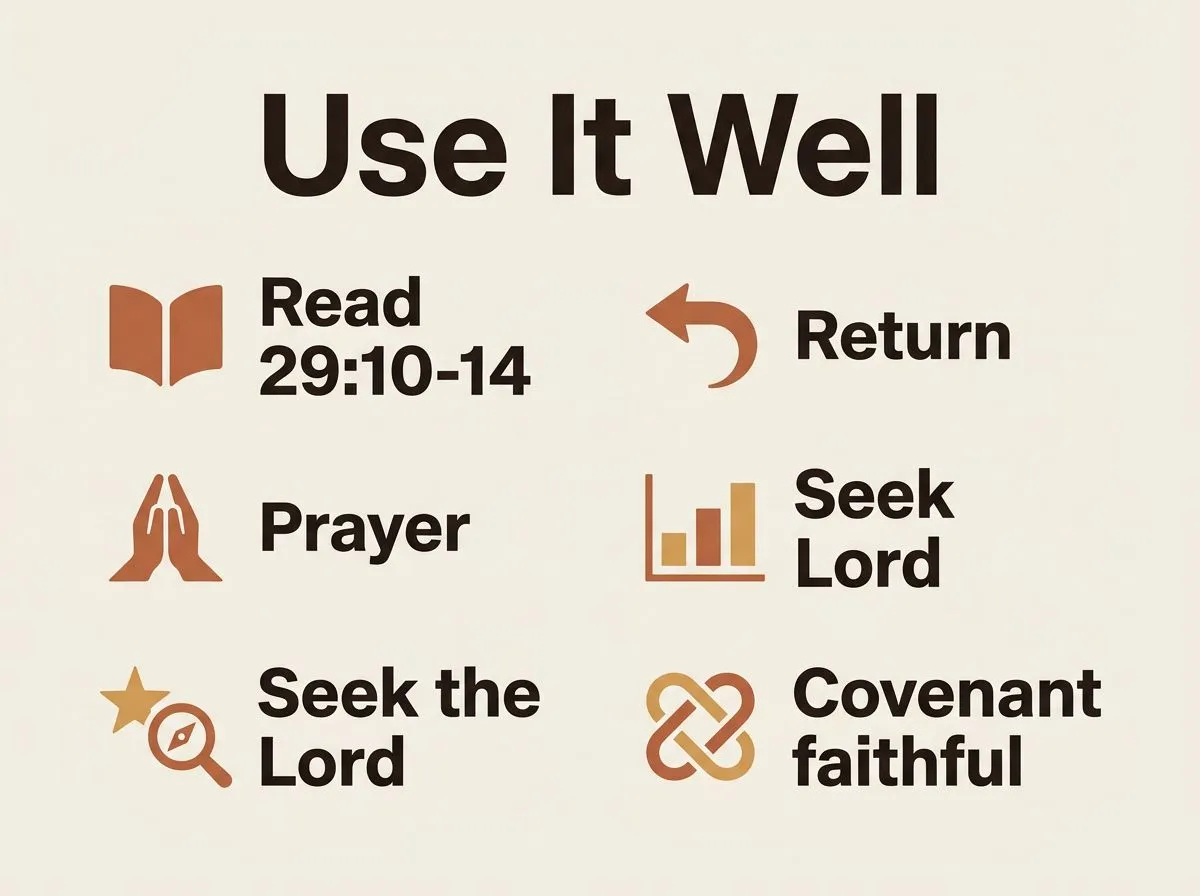
- Read Jeremiah 29:11 together with Jeremiah 29:10 to 14, and make sure the promise still includes return, prayer, and seeking the Lord.
- Check whether your use of the verse treats God’s promise as covenant faithfulness rather than a guarantee of a painless outcome.
- Compare Jeremiah 29:11 with Hebrews 10:23 and 1 Corinthians 1:9, and confirm that your application matches the Bible’s broader theme of God’s faithfulness.
- Use the verse in a situation where you need encouragement, and make sure the result is patient trust, prayer, and obedience, not pressure to force an immediate answer.
Frequently asked questions
Is Jeremiah 29:11 a promise for every Christian in the same way?
No. Jeremiah 29:11 was first spoken to Israel in exile, so the original setting matters, and it should not be treated as a blank check for personal plans.
Christians can still take real encouragement from it because it reveals God’s faithful character and His ability to work through delay, loss, and uncertainty.
What other Bible verse is closest to God’s promises?
Hebrews 10:23 is one of the closest companion verses because it tells believers to hold fast to hope since God is faithful to keep His promise.
1 Corinthians 1:9 also fits closely, since it simply says, “God is faithful,” which reinforces the same truth behind Jeremiah 29:11.
How do I know if I am reading a promise verse in context?
Read the verses before and after it, then check the book, author, and original audience.
Jeremiah 29:11 is a good example, because it sounds broad, but its setting is specific, and the promise is tied to exile, return, prayer, and seeking the Lord.
Can I use this verse in prayer for my family?
Yes. You can pray it as a reminder of God’s faithfulness, protection, and purpose for your family, especially in seasons of stress or waiting.
The key is to ask Him to shape your expectations according to His will, not to treat the verse like a guarantee that every outcome will happen your way.


This Bible Verse Can Help You Face a Difficult Day
Psalm 46:1 is a strong Bible verse for a difficult day because it says, “ God is our refuge and strength , a very present help in trouble.” Put simply, God is…

Before Your Next Important Decision, Remember What Proverbs Says
A common mistake is treating Proverbs like a magic formula that guarantees the outcome you want if you quote the right verse. The better way is simpler, and st…

Read This Bible Verse When You're Worried About Your Future
If you’re worried about your future, start with Jeremiah 29:11. It reminds you that God knows your life, sees what you can’t see, and is still working with pur…

Why So Many People Turn to This Psalm When They Need Protection
Psalm 91 stands out because it gives anxious readers a clear place to rest: God is shelter, fortress, and refuge. That’s why so many Christians turn to it when…