Before Your Next Important Decision, Remember What Proverbs Says
A common mistake is treating Proverbs like a magic formula that guarantees the outcome you want if you quote the right verse.
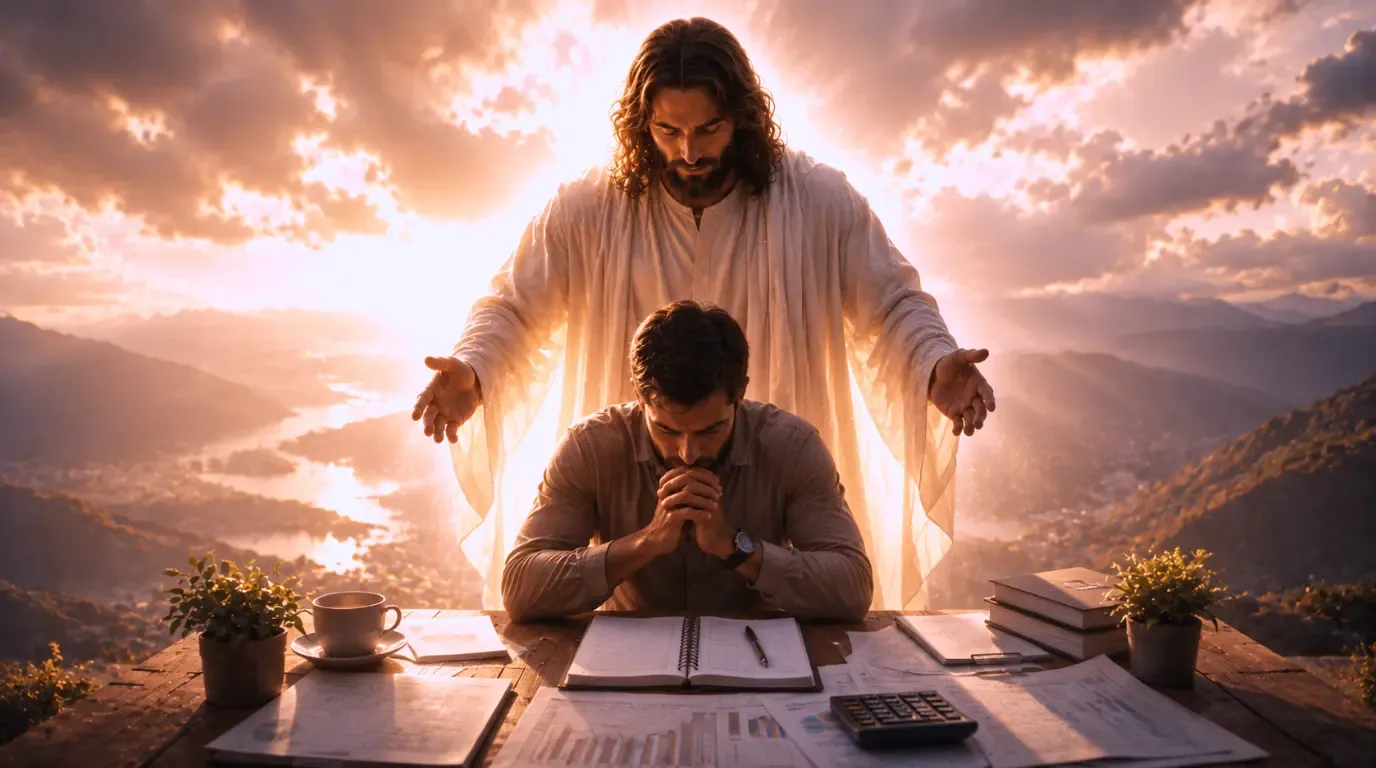
Financial Decision Prayer Seek God’s financial guidance.
READ PRAYER →
You will remain on the same website.
The better way is simpler, and sturdier: Proverbs teaches you how to choose wisely before God, especially when the next step is not obvious.
Proverbs 3:5-6 is the anchor, and the rest of the book adds the habits of prudence, counsel, and humility.
Key takeaways
- Proverbs 3:5-6 is the anchor, and Proverbs 14:8, 15, 24:6, 15:22, and 19:20 add 5 practical wisdom checks for major choices.
- James 1:5 gives you 1 clear first step: pray for wisdom before you ask anyone else for advice.
- Use Proverbs as a guide for the next step, not a guarantee of the final outcome, because wisdom literature speaks in patterns, not contracts.
- For high-stakes decisions, gather counsel from at least 2 mature believers who know Scripture and can speak plainly.
- If a choice pulls you away from obedience, family, or church, it is a red flag, even if it feels exciting.
The best Bible verses for important decisions, and what they actually say
Proverbs 3:5-6 is the clearest place to start because it tells you to trust in the Lord with all your heart and not lean on your own understanding. That is not a call to ignore your mind.
It is a call to stop treating your own perspective as final. Bible Study Tools gathers this passage with other decision-making texts for that reason.
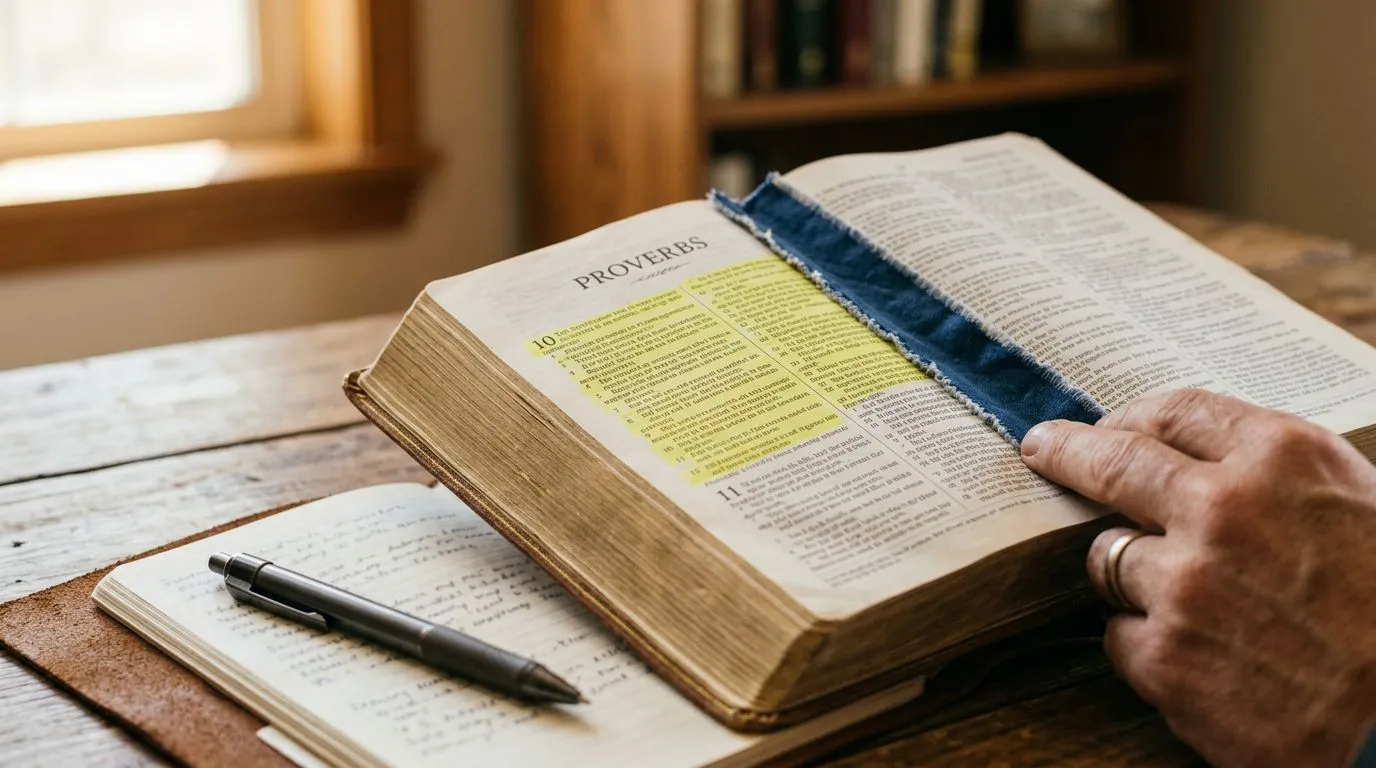
Proverbs 14:8 says the wisdom of the prudent is to understand his way, and Proverbs 14:15 warns that the simple believe anything while the prudent give thought to their steps.
Put together, they push you away from impulse and toward careful review. Proverbs 24:6 adds that wise counsel helps you wage your own war, which is a vivid way of saying major choices should not be made alone.
Proverbs 15:22 says plans fail without counsel, but with many advisers they succeed, and Proverbs 19:20 says to listen to advice and accept instruction. Those verses do not flatten every decision into a committee vote.
They do tell you that wisdom normally includes outside correction, especially when the stakes are high and your own judgment may be narrowed by stress, fear, or pride.
These sayings belong to wisdom literature, so they should be read as patterns of wise living, not mechanical promises. BibleProject explains that Proverbs speaks in probabilities, which means wise choices often lead to better outcomes, but not guaranteed ones.
That matters because it keeps you from blaming yourself for every hard result, and it keeps you from using one verse like a contract.
These passages fit best when you are facing a major life choice, a family question, a work change, a financial decision, or a moral crossroads.
Psalm 119:105 adds a simple picture for that kind of moment: God’s word is a lamp to your feet and a light to your path. A lamp gives enough light for the next step, not the whole road.
How to apply Proverbs to everyday decision-making
Start by asking God for wisdom before you ask anyone else for advice. James 1:5 says God gives wisdom generously to those who ask, and Psalm 5:8 gives you the language to pray, “Lead me, O Lord, in your righteousness.” Prayer is not a formality here. It is the first act of surrender.
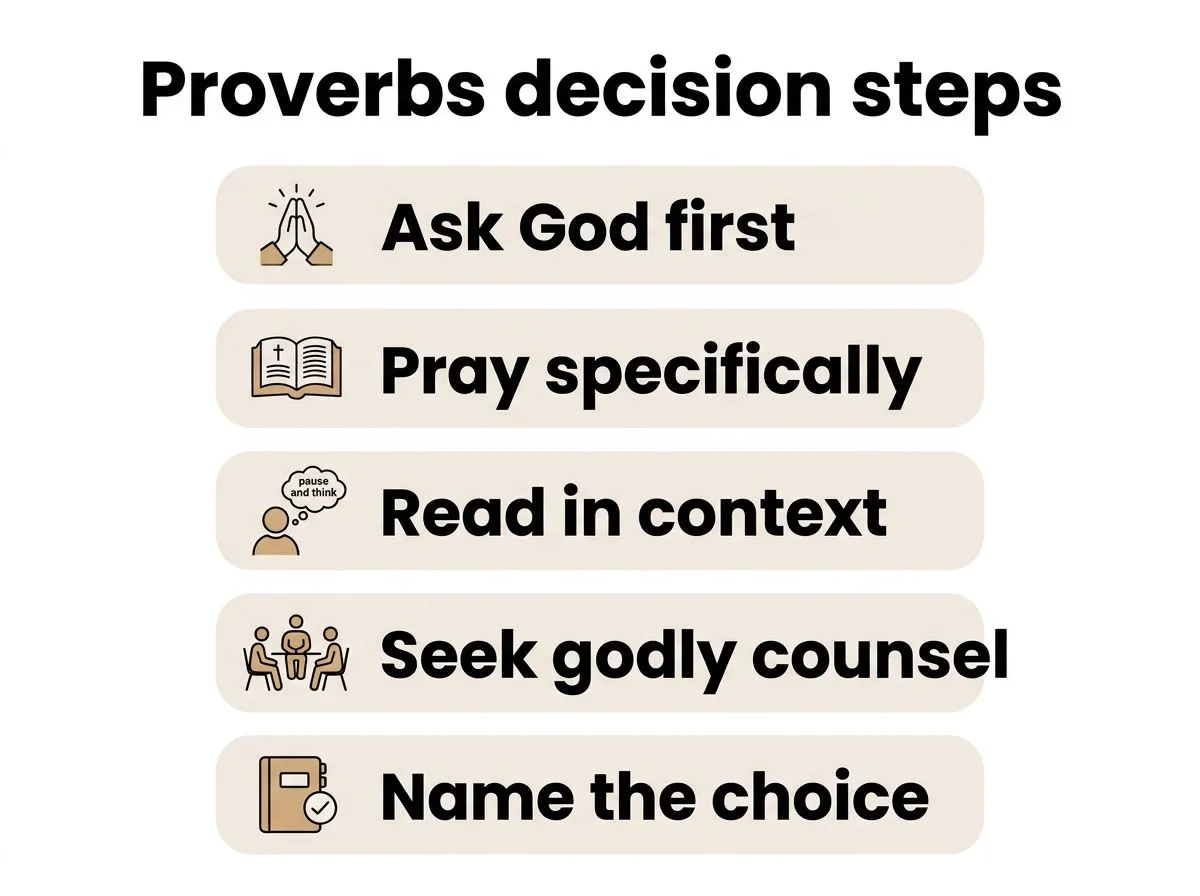
- Pray specifically about the decision, naming the choice, the pressure around it, and the outcome you are afraid of.
- Read the relevant proverb in context and ask what it says about trust, humility, prudence, and obedience.
- Seek counsel from mature believers who know Scripture and can speak plainly, especially when your emotions are loud.
- Compare the choice with God’s character and commands, then weigh the real consequences instead of chasing a perfect feeling.
- Move forward in faith when the option is wise and God-honoring, because endless delay is often disguised unbelief.
The next step is to read the proverb in context so you do not turn a line of wisdom into a private slogan.
Ask what the verse reveals about how a wise person thinks, what a foolish person overlooks, and what obedience looks like in your actual situation. That keeps the text doing its real work instead of serving your preference.
Then gather counsel from believers who have a track record of walking with God. Proverbs 15:22 and Proverbs 19:20 make that plain: wise plans benefit from advice, and wise people know how to receive instruction.
The best counsel is not the loudest voice. It is the voice that agrees with Scripture and tells you the truth even when it is inconvenient.
After that, compare the choice with God’s character and commands, and then think through the consequences in real life.
A move that looks exciting can still be unwise if it pulls you away from church, weakens your family, or invites avoidable debt. A less dramatic path may be the wiser one because it protects obedience.
Finally, act once the decision is wise and God-honoring. Christians often wait for total certainty, but Proverbs usually gives clarity enough for obedience, not certainty enough to remove all risk.
Faith means you can choose with humility, ask God to correct you, and keep walking.
Common mistakes people make when they read Proverbs for guidance
- Do not treat Proverbs as a blank check that guarantees an easy outcome if you quote the right verse.
- Do not use a single verse as a substitute for prayer, full-Scripture reading, or godly counsel.
- Do not wait for God to make every choice for you when the Bible also calls you to exercise responsibility and prudence.
- Do not read Proverbs like a promise that removes every risk, because wisdom often points to the better path, not the effortless one.
- Understand Psalm 119:105 correctly: it guides the next step, which is enough for obedience even when the whole route is not visible.
The biggest error is turning Proverbs into a promise formula. When people do that, they expect obedience to erase difficulty, delay, or pain, and then they feel betrayed when life stays hard.
Proverbs is wiser than that, because it teaches you how to walk with God when the road is clear enough for the next step, but not clear enough for the whole journey.
Another mistake is asking one verse to do the work of the whole Bible. Proverbs speaks with the voice of wisdom, but wisdom is still shaped by the rest of Scripture, including prayer, obedience, and the character of God.
If a decision feels “spiritual” but cannot stand beside the rest of Scripture, it is not ready.
A third mistake is confusing God’s guidance with passivity. Proverbs expects you to think, plan, listen, and choose.
That means you do not sit still forever waiting for a feeling, and you do not call indecision humility when it is really fear.
Psalm 119:105 is especially easy to misuse because people want a floodlight when God gives a lamp.
The lamp is enough for the current step, and that is often all you get. Obedience does not always come with a full map, but it does come with enough light to keep moving faithfully.
If you are making an important decision today, Proverbs gives you a better path than impulse, isolation, or superstition.
Trust the Lord, read the verse in context, seek wise counsel, and take the next obedient step with humility. That is how wisdom becomes action.
Frequently asked questions
What is the most quoted Bible verse for a big decision?
Proverbs 3:5-6 is the most common starting point because it tells you to trust the Lord with all your heart and not lean on your own understanding.
It is often paired with Psalm 119:105, which reminds you that God gives enough light for the next step, not always the whole road.
That makes it especially fitting for major choices where you need wisdom, not a shortcut.
Should I wait for peace before making a decision?
Peace can be part of discernment, but it should not be your final test. Proverbs points you toward Scripture, prayer, and wise counsel, because a calm feeling can still lead you in the wrong direction if the choice is unwise.
The better question is whether the decision is godly, prudent, and consistent with what God has already said.
Can Proverbs guarantee that God will choose the decision for me?
No. Proverbs gives patterns of wisdom, not a promise that God will make the choice for you or remove every hard outcome.
It calls you to act with prudence and humility, trusting God to guide your steps as you make a wise, obedient decision.
When should I ask other Christians for advice?
You should ask before major choices, especially when the decision affects your family, finances, calling, or spiritual health.
Proverbs says plans do better with counsel, and wise advice is protection, not a last resort. The best time to ask is before you feel boxed in by stress or emotion.
How do I know if a verse applies to my situation?
Check the verse in context and ask what kind of wisdom it is teaching, then compare your decision with God’s character and commands.
If the proverb is giving a general principle, apply that principle instead of turning it into a personal promise.
That keeps you from using Scripture as a slogan for a choice it was never meant to guarantee.


This Bible Verse Can Help You Face a Difficult Day
Psalm 46:1 is a strong Bible verse for a difficult day because it says, “ God is our refuge and strength , a very present help in trouble.” Put simply, God is…

Read This Bible Verse When You're Worried About Your Future
If you’re worried about your future, start with Jeremiah 29:11. It reminds you that God knows your life, sees what you can’t see, and is still working with pur…

This Bible Verse Is a Powerful Reminder of God's Promises
Jeremiah 29:11 is one of the clearest Bible verses about God’s promises: “For I know the plans I have for you, declares the Lord, plans for welfare and not for…
Why So Many People Turn to This Psalm When They Need Protection
Psalm 91 stands out because it gives anxious readers a clear place to rest: God is shelter, fortress, and refuge. That’s why so many Christians turn to it when…