
21 Bible Verses About Success, Prosperity, and God's Guidance
The Bible presents success as faithful, wise, God-centered living, and it presents prosperity as God’s provision, not a promise of easy money. In passages like Joshua 1:8 and Proverbs 16:3, success grows out of obedience, Scripture, and surrendered plans, so these verses help most when you read them in context instead of treating them like a shortcut to wealth.
Key takeaways
- Joshua 1:8 gives 1 clear pattern: meditate on God’s Word daily and obey it carefully before you expect success.
- Proverbs 16:3 and Proverbs 15:22 point to 2 habits that shape good decisions, commit your plans to the Lord and seek counsel.
- Deuteronomy 8:18 warns you to remember that wealth is a gift from God, not proof of self-made strength.
- Matthew 16:26-27 sets 1 hard limit, worldly gain means little if it costs your soul.
- When a verse feels promising, check the context first, especially who it was spoken to and what problem it was answering.
What the Bible means by success and prosperity
Biblical success means walking in obedience, wisdom, diligence, and trust, while prosperity means God’s provision and favor in a life that stays aligned with Him. That reaches far beyond a bigger bank account, because Scripture often ties blessing to faithfulness, counsel, and a heart that belongs to God.

Joshua 1:8 gives the clearest pattern: keep God’s Word close, meditate on it day and night, and obey it carefully, then you will prosper and succeed. Proverbs 16:3 adds the practical side, commit your work to the Lord and your plans will be established, while Deuteronomy 8:18 reminds you that even the ability to get wealth comes from God, not from your own power.
That is why Proverbs 15:22 matters too: plans fail without counsel, but they are established with many advisers. Biblical prosperity is never a free pass for impulse, pride, or private ambition dressed up as faith, because the motive behind the plan matters just as much as the outcome.
So these verses are guidance for wise, God-led living, not a blank check for constant comfort, luxury, or instant money. They teach you to ask whether your work, goals, and desires are under the Lord’s direction before you ask whether they are profitable.
21 Bible verses about success in context
- Joshua 1:8, Moses’ successor is being prepared to lead Israel into the promised land, and the emphasis is on meditating on God’s law and obeying it carefully so that success comes from faithful covenant living.
- Proverbs 16:3, Solomon teaches a proverb for daily life, and the point is simple: hand your work to the Lord and let Him establish your plans.
- Deuteronomy 8:18, Moses warns Israel not to forget God after abundance, and the verse says the power to get wealth comes from the Lord who keeps His covenant.
- Psalm 118:25, a worship psalm asks the Lord to save and give success, showing that even victory is something believers request from God.
- Philippians 4:13, Paul speaks from a life of hardship and contentment, and the verse means Christ strengthens believers for obedience and endurance, not for self-centered goals.
- Jeremiah 17:7, the prophet contrasts trust in God with trust in people, and the blessing described belongs to the person whose confidence rests in the Lord.
- Proverbs 15:22, the proverb warns that plans fail without counsel, so success is tied to wise advice and patient decision-making.
- Proverbs 11:25, generosity is linked with refreshment, showing that prosperity in Scripture includes giving as well as receiving.
- Proverbs 16:7, when a person’s ways please the Lord, even enemies can be brought to peace, which shows that success can include relational harmony.
- 1 Kings 2:3, David tells Solomon to walk in obedience so he may prosper, and the verse connects success with covenant faithfulness in leadership.
- Psalm 37:4, delight in the Lord comes before receiving the desires of your heart, so desire is meant to be shaped by worship.
- Proverbs 3:5-6, trust in the Lord rather than leaning on your own understanding, and He will make your paths straight; the theme is guidance, not guesswork.
- Ecclesiastes 5:3, many words can mark a foolish dream, so success requires seriousness and restraint, not noise.
- Habakkuk 2:3, the vision has an appointed time, which teaches patience when God’s answer seems delayed.
- Genesis 39:2-4, Joseph is in Potiphar’s house and the Lord gives him success in everything he does, showing that God’s favor can operate even in a hard setting.
- Genesis 39:21-23, Joseph later finds favor in prison, and the passage shows that divine success is not dependent on ideal circumstances.
- Psalm 90:17, Moses asks God to establish the work of human hands, which links lasting success to God’s favor on ordinary labor.
- Proverbs 14:23, all hard work brings profit, but mere talk leads only to poverty, so diligence is part of biblical wisdom.
- Colossians 3:23-24, Paul tells believers to work wholeheartedly as for the Lord, which turns everyday labor into worship.
- Luke 6:38, Jesus teaches generosity, and the measure you use returns to you, showing that prosperity includes open-handed living.
- Matthew 16:26-27, Jesus warns that gaining the whole world means nothing if you lose your soul, setting a clear limit on worldly success.
How to apply these verses to work, plans, and decisions
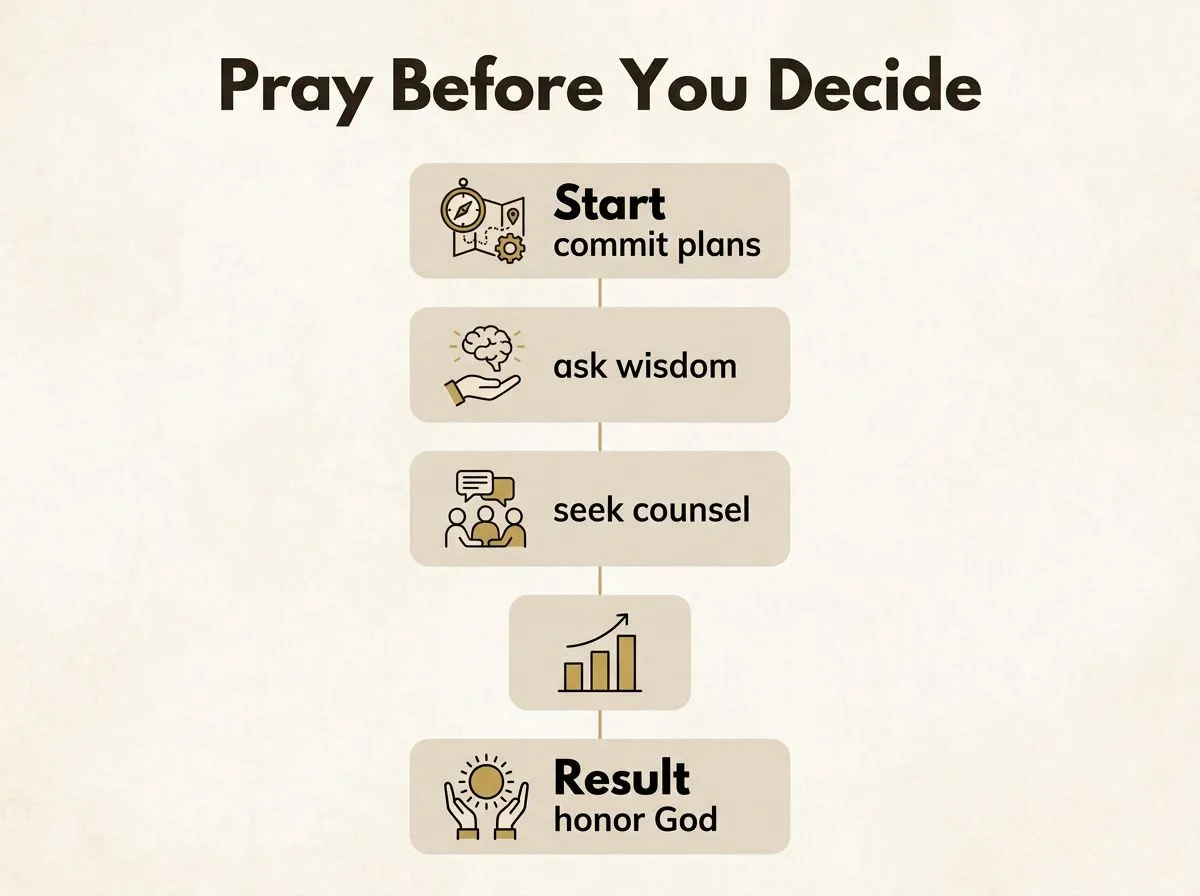
- Start by committing your plans to the Lord, naming the project, job, purchase, or change you are considering and asking whether it honors Him.
- Pray for wisdom before you decide, especially when the choice affects your work, family, finances, or long-term direction.
- Keep Scripture in front of you on a regular basis, and use passages like Joshua 1:8 as a pattern for what shapes your thinking before you shape your calendar.
- Invite wise counsel from mature believers, because plans are stronger when they are tested by more than your own enthusiasm.
- Work diligently and take the next faithful step, trusting God with the result instead of treating one verse like a guarantee of a specific outcome.
- Reject prosperity-gospel shortcuts that promise instant gain, because biblical success includes obedience, patience, integrity, and God’s timing, not just visible progress.
A clear way to read these verses without misusing them
Read these verses as a call to alignment, not as a promise that every obedient person will become wealthy. Scripture does teach that God blesses, provides, and guides, but it also shows that faithfulness can include waiting, hardship, and work that does not look impressive from the outside.
That is why sources like LearnScripture.net, BibleStudyTools, BibleHub, GotQuestions.org, and Manhood Journey all point back to the same center: success belongs in God’s hands, and prosperity is healthiest when it stays tied to obedience and trust rather than demand and pressure. Kenneth Copeland Ministries uses prosperity language more broadly, but even there the reader still has to test every claim against the passage itself and the full sweep of Scripture.
If you are deciding how to use these verses today, make three choices carefully. First, decide whether your goal is submission to God or only personal gain. Second, decide whether your next step needs counsel and patience or just more momentum. Third, decide whether you are asking for blessing with open hands, or trying to force a promise God never made.
Frequently asked questions
Which Bible verse is best for success and guidance?
Joshua 1:8 is one of the clearest verses because it ties success to meditating on God’s Word and obeying it carefully. It is especially strong because it was spoken as Joshua was preparing to lead Israel into the promised land, so the focus is faithful, God-centered leadership rather than a shortcut to wealth.
Does the Bible promise financial success if I trust God?
No. The Bible says God can bless, provide, and give the ability to get wealth, but it does not promise automatic money or an easy life. In Scripture, prosperity is tied to faithfulness, wisdom, counsel, and God’s timing, not to a guarantee of comfort or constant increase.
What should I pray before making an important decision?
Ask God for wisdom, commit the plan to Him, and pray for a heart that wants His will more than your own outcome. Proverbs 3:5-6 fits that prayer well because it calls you to trust the Lord instead of leaning on your own understanding, especially when the choice affects work, family, or finances.
Can I use these verses for business success?
Yes, if you use them as guidance for integrity, diligence, wise counsel, and dependence on God, not as a promise of profit. Proverbs 15:22 and Proverbs 14:23 are especially practical here, because they connect success with counsel and hard work, not with hype or pressure.
Why do some success verses sound different in different Bible translations?
Because translations use different wording while preserving the same core meaning, so it helps to compare a few faithful translations and read the verse in context. That matters with passages like Joshua 1:8, where the wording can vary but the main idea stays the same: obedience to God’s Word leads the way.


This Bible Verse Can Help You Face a Difficult Day
Psalm 46:1 is a strong Bible verse for a difficult day because it says, “ God is our refuge and strength , a very present help in trouble.” Put simply, God is…

Before Your Next Important Decision, Remember What Proverbs Says
A common mistake is treating Proverbs like a magic formula that guarantees the outcome you want if you quote the right verse. The better way is simpler, and st…

Read This Bible Verse When You're Worried About Your Future
If you’re worried about your future, start with Jeremiah 29:11. It reminds you that God knows your life, sees what you can’t see, and is still working with pur…

This Bible Verse Is a Powerful Reminder of God's Promises
Jeremiah 29:11 is one of the clearest Bible verses about God’s promises: “For I know the plans I have for you, declares the Lord, plans for welfare and not for…