
20 Bible Verses About Marriage, Love, and Commitment
Many people treat Bible verses about marriage like decoration for the wedding day, but Scripture gives them as a working guide for covenant love, daily honor, and steady commitment. The passages below show marriage as God’s design, not just a ceremony moment. They also remind you that verses about wives and husbands belong together, because the Bible speaks to both spouses as one calling under God.
Key takeaways
- Genesis 2:24 shows marriage as a covenant bond, not a convenience, because the two become one flesh.
- 1 Corinthians 13:4-7 gives 5 clear marks of love: patience, kindness, humility, truth, and endurance.
- Ephesians 5:22-33 and Colossians 3:18-19 must be read together, since both spouses receive instruction.
- Malachi 2:15 warns that marital faithfulness is a 1st-order covenant matter before God.
- Romans 12:10 calls you to one daily decision: honor your spouse above yourself in speech and tone.
The key Bible verses about marriage and what they say
- Genesis 2:18 says marriage answers loneliness with companionship and a suitable helper.
- Genesis 2:24 says husband and wife leave, cleave, and become one flesh, which points to covenant union and shared life.
- Song of Solomon 8:7 celebrates love that is strong, enduring, and not easily purchased or replaced.
- Malachi 2:15 warns against treachery in marriage and treats faithfulness as a covenant responsibility.
- Romans 12:10 calls spouses to devoted affection and mutual honor, a key posture for daily married life.
- 1 Corinthians 13:4-7 describes love as patient, kind, humble, truthful, and steadfast, which makes it useful far beyond a wedding ceremony.
- Ephesians 5:22-33 presents marriage through the picture of Christ and the church, with sacrificial love at the center.
- Colossians 3:18-19 brings the focus back to the home, where wives and husbands are both given clear, practical instructions.
What these marriage verses mean in context
Genesis 2:18 and Genesis 2:24 come from the creation account, so they define marriage before there is any nation, law code, or wedding custom. Genesis 2:18 says it is not good for man to be alone, which means marriage begins with God’s concern for companionship, not human convenience.

Genesis 2:24 then adds that a man leaves his father and mother, holds fast to his wife, and the two become one flesh. That language matters because it shows marriage as a new covenant bond that reshapes loyalties and creates a shared life.
Malachi 2:15 speaks into a broken covenant setting, where faithlessness had damaged marriages and faith itself. The verse is not sentimental. It is a warning against treachery, and that makes it one of the clearest Old Testament reminders that God cares about marital loyalty. In other words, marriage is not just a private arrangement between two adults, because unfaithfulness in marriage also profanes a covenant relationship before God.
Romans 12:10, 1 Corinthians 13:4-7, and 1 Peter 4:8 describe what love looks like when it is actually lived. Romans 12:10 calls believers to be devoted and to honor one another above themselves, so love is not passive feeling but visible respect.
1 Corinthians 13:4-7 adds the shape of that love: patience, kindness, humility, truth, endurance. 1 Peter 4:8 pushes the same truth toward forgiveness, because love covers a multitude of sins instead of keeping score. Together, these verses correct the shallow idea that love is mainly a mood.
Ephesians 5:22-33 and Colossians 3:18-19 must be read together because they speak to both spouses, not one alone. Ephesians frames marriage by comparing husband and wife to Christ and the church, which means the husband’s role is measured by self-giving love, not harshness or control.
Colossians makes the same balance plain in simpler language, calling wives to a fitting posture in the Lord and husbands to love without bitterness. Together, the two passages keep authority from drifting away from sacrifice and keep submission from being detached from the Lordship of Christ.
Scripture-centered reading protects you from using one verse as a slogan while ignoring the rest of the chapter. That is especially important in marriage, where selective reading can turn a holy calling into a weapon or a cliché. When you keep the whole passage in view, the Bible’s message becomes clearer: marriage is companionship, covenant loyalty, honor, patience, forgiveness, and Christlike care.
The main themes the Bible repeats about marriage
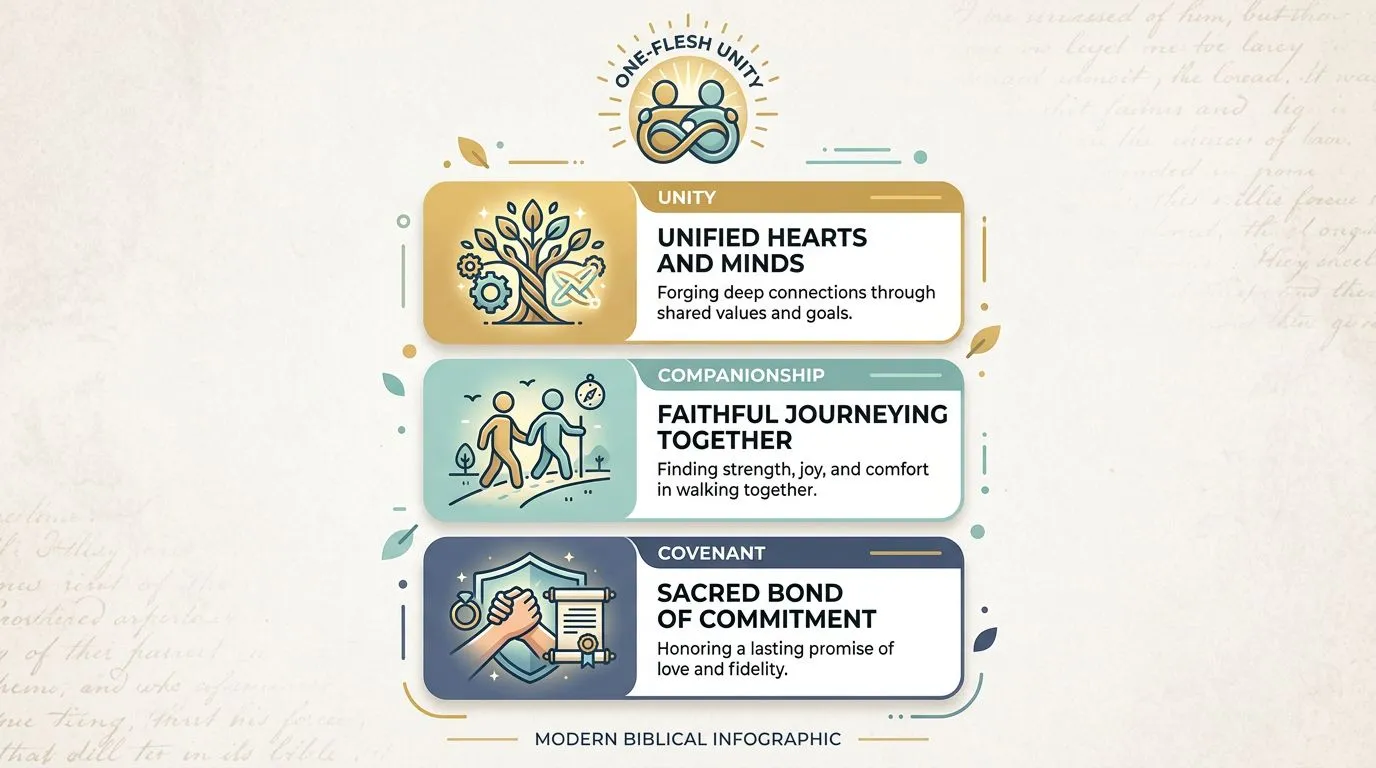
| Companionship and unity | Genesis 2:18, Genesis 2:24 | Marriage addresses loneliness and creates a new one-flesh bond under God. | Build a home where both spouses are known, included, and bound together in purpose. | Treating marriage like a contract for convenience instead of a covenant for life |
|---|---|---|---|---|
| Honor and mutual devotion | Romans 12:10, Colossians 3:18-19 | Love shows up as respect, steady devotion, and a refusal to be harsh. | Speak to your spouse with care, especially in disagreement. | Thinking honor only means public praise, not private tone and daily conduct |
| Patient, truthful love | 1 Corinthians 13:4-7, 1 Peter 4:8 | Biblical love is patient, kind, enduring, and forgiving. | Let love shape how you answer, apologize, and keep confidence. | Using love language while still keeping score or replaying every failure |
| Christlike sacrificial care | Ephesians 5:22-33, John 15:12 | Marriage reflects Christ’s love, which gives itself for the good of another. | Measure leadership and partnership by service, not by control. | Assuming biblical headship means privilege without responsibility |
| Faithful covenant commitment | Malachi 2:15, Song of Solomon 8:7, The Law and the Prophets | Marriage is meant to be steadfast, not treacherous or disposable. | Protect your covenant with loyalty in speech, boundaries, and choices. | Reducing marriage to romance alone and forgetting covenant faithfulness |
Common misreadings and how Scripture corrects them
- Ephesians 5 is about Christlike sacrificial love, not permission for control or abuse. The passage points husbands toward self-giving care, and the surrounding verses keep the focus on service rather than domination.
- Colossians 3:18-19 cannot be read as one-sided authority, because it also commands husbands not to be harsh. That means the home is not built on a spouse’s silence, but on mutual accountability before God.
- 1 Corinthians 13 is not only for weddings. It is a daily standard for married love, which means patience, kindness, and truth belong in ordinary disagreements about money, schedules, parenting, and stress.
- Song of Solomon 8:7 celebrates committed love and strong desire within marriage. It should not be flattened into a vague romance quote, because its power is in the depth and seriousness of covenant love.
- The Law and the Prophets point in the same direction as Jesus’ teaching in John 15:12, where love is commanded as active, not ornamental. That keeps marriage from being treated as an emotional mood instead of a disciple’s practice.
How these verses work together in everyday married life
These passages give you a practical way to judge a marriage moment by moment. If a choice increases closeness but weakens covenant loyalty, Scripture does not bless it. If a conversation is technically correct but humiliates your spouse, it fails the test of honor, patience, and love.
That is why the Bible keeps pairing truth with tenderness. A husband can be strong and still be gentle. A wife can be wise and still be honoring. And both can build a marriage that looks less like a performance and more like a faithful witness to God’s design.
John 15:12 gives the simplest summary of all: love one another as Christ has loved you. That command sets the ceiling and the floor for marriage, because it calls you to a love that gives, stays, listens, and keeps faith when feelings rise and fall.
Next steps
- Read Genesis 2:18, Genesis 2:24, Ephesians 5:22-33, and Colossians 3:18-19 in one sitting so you see the full picture of marriage.
- Choose one verse for the week, such as 1 Corinthians 13:4-7 or Romans 12:10, and practice one concrete action it calls for.
- If you are married, talk with your spouse about one area where honor, patience, or forgiveness needs to grow.
- If you are preparing for marriage, use Malachi 2:15 and Song of Solomon 8:7 to think about covenant faithfulness, not just wedding celebration.
- Pray John 15:12 over your relationship and ask God to shape your love into steady, Christlike commitment.
Frequently asked questions
How many Bible verses should I include in a wedding reading?
Use only the number that fits the ceremony well. For most weddings, one short passage is easier for guests to hear and remember, while one longer reading often carries more weight than several disconnected verses. If the reading is for a program or keepsake, you can include more, but spoken aloud, clarity matters most.
Are there Bible verses about marriage for struggling couples, not just weddings?
Yes. Scripture gives married couples more than wedding-day language, and passages like 1 Corinthians 13:4-7, Colossians 3:18-19, James 1:19, and 1 Peter 4:8 speak directly to patience, listening, forgiveness, and love in hard seasons. These verses are especially helpful when you need guidance for everyday conflict, not just celebration.
Which Bible verse about marriage is most often quoted at weddings?
1 Corinthians 13:4-7 is one of the most commonly chosen because it describes love in clear, memorable language, and it still works well beyond the ceremony itself. Couples often choose it because it gives a lasting picture of patient, kind, enduring love rather than a sentimental moment that fades after the vows.
Should I quote Ephesians 5:22-33 without the surrounding verses?
No. Read the full section so the call to wives is seen alongside the command for husbands to love sacrificially, with Christ as the model. The surrounding context matters because it keeps the passage from being turned into a one-sided slogan and shows that both spouses are called to faithful, self-giving care.


This Bible Verse Can Help You Face a Difficult Day
Psalm 46:1 is a strong Bible verse for a difficult day because it says, “ God is our refuge and strength , a very present help in trouble.” Put simply, God is…

Before Your Next Important Decision, Remember What Proverbs Says
A common mistake is treating Proverbs like a magic formula that guarantees the outcome you want if you quote the right verse. The better way is simpler, and st…

Read This Bible Verse When You're Worried About Your Future
If you’re worried about your future, start with Jeremiah 29:11. It reminds you that God knows your life, sees what you can’t see, and is still working with pur…

This Bible Verse Is a Powerful Reminder of God's Promises
Jeremiah 29:11 is one of the clearest Bible verses about God’s promises: “For I know the plans I have for you, declares the Lord, plans for welfare and not for…