
25 Bible Verses About Love and God's Unconditional Love
A hard conversation at the kitchen table can make love feel fragile, and a quiet night can leave you wondering whether God still sees you the same way. The Bible answers both moments with the same truth: God’s love is active, faithful, and unconditional, and it sets the pattern for how you love other people.
Key takeaways
- God’s love is described in 5 key passages as faithful, sacrificial, and unshakable, not based on your performance.
- The 25 verses are grouped into 4 themes, so you can find the right passage for worship, reassurance, relationships, or forgiveness.
- 1 Corinthians 13:4-7 gives 8 practical traits of love, which makes it one of the clearest verses for daily self-examination.
- John 15:12 sets 1 simple standard for Christian love: love others as Jesus has loved you, not as feelings rise and fall.
- Psalm 136 repeats 26 times that His love endures forever, making it a strong choice for prayer and gratitude.
This guide groups 25 Bible verses about love into four themes, so you can find passages about God’s love, love for others, love in relationships, and love as faithful action without losing the context that gives each verse its meaning.
What the Bible means by love
In Scripture, love is more than a feeling. It includes loyalty, action, and self-giving care. BibleProject explains that the Bible uses words like khesed, ahavah, agape, and philia to show different shades of love, from loyal covenant love to affectionate friendship love, and that matters because not every passage means the same thing in the same way BibleProject.

God’s love is not a reward for good behavior. It flows from His character, which is why verses like John 3:16 and Romans 8:38-39 speak so strongly to readers who feel worn down by guilt, fear, or failure. Like Minded Musings and Bible Study Tools both emphasize that God’s love keeps moving toward people even when they fall short Like Minded Musings Bible Study Tools.
That is also why this article is grouped by theme instead of random order. Some verses describe God’s love for you, some show how love should shape the way you treat others, and some speak directly to marriage, friendship, and family. The context changes the emphasis, even when the same word love appears again and again.
25 Bible verses about love, grouped by theme
| Verse reference | Short text summary | Theme group | Meaning in context | Best use case or reflection |
|---|---|---|---|---|
| John 3:16 | God loved the world and gave His Son | God's love for you | This verse anchors love in sacrifice, not sentiment, and shows that God's love moves first. | Use it when you need assurance that God's love is real and personal. |
| 1 John 4:8 | Whoever does not love does not know God | God's love for you | John ties love to God's own nature, so love is not optional for believers. | Use it to examine whether your view of God matches His character. |
| Romans 8:38-39 | Nothing can separate us from God's love | God's love for you | Paul gives a wide, sweeping assurance that hardship and fear do not cancel God's love. | Use it in seasons of grief, anxiety, or spiritual doubt. |
| 1 John 4:16 | God is love; abide in love | God's love for you | This passage says love is not only something God does, but something that defines who He is. | Use it for meditation on God's steady presence. |
| 1 John 4:19 | We love because He first loved us | God's love for you | Human love begins as a response, not a source, because God's love comes first. | Use it when you need a simple reminder of where Christian love starts. |
| Psalm 136:1 | Give thanks to the Lord, for He is good; His love endures forever | God's loyal love | The repeated refrain in Psalm 136 highlights steadfast, covenant love that does not run out. | Use it in prayer, gratitude, or worship. |
| Psalm 103:11 | As high as the heavens are above the earth | God's compassion and love | The verse uses enormous distance to picture how wide God's covenant love is. | Use it when you need perspective on God's mercy. |
| Lamentations 3:22-23 | His mercies are new every morning | God's faithfulness | In a book shaped by loss, this verse speaks hope into the morning after sorrow. | Use it when yesterday's failure still feels heavy. |
| Deuteronomy 7:9 | God keeps covenant and steadfast love | God's covenant love | The emphasis is on faithful commitment, not a passing mood. | Use it to remember that God's promises hold even when circumstances shift. |
| Ephesians 2:4-5 | God made us alive because of His great love | God's rescuing love | Paul connects love with mercy and new life, showing that love acts to save. | Use it when you want to thank God for grace. |
| John 15:12 | Love one another as I have loved you | Love for others | Jesus sets His own self-giving love as the standard for Christian relationships. | Use it as a direct guide for how to treat people today. |
| 1 Corinthians 13:4-7 | Love is patient and kind; it rejoices with truth | Love for others | Paul describes love through visible actions, not abstract emotion, so love can be tested in daily life. | Use it in marriage counseling, conflict, or self-examination. |
| 1 Corinthians 13:13 | Faith, hope, and love remain; the greatest is love | Love for others | Love is placed above other lasting virtues because it gives shape to the others. | Use it when you want a short verse about love's priority. |
| 1 Peter 4:8 | Love covers a multitude of sins | Love for others | Peter points to deep, forgiving love within the Christian community, not careless approval of wrongdoing. | Use it when a relationship needs mercy and wisdom. |
| Proverbs 10:12 | Love covers all wrongs | Love for others | This proverb contrasts love with conflict and shows how love resists stirring up more damage. | Use it when tension is rising and words need restraint. |
| John 13:34 | Love one another as I have loved you | Love for others | Jesus repeats the command because His example is the model, not our mood. | Use it to measure the tone of your words and actions. |
| Romans 12:9-10 | Let love be genuine; honor one another | Love for others | Paul calls for sincere love that shows up in honoring behavior, not performance. | Use it in church, family, or friendships where respect matters. |
| 1 Thessalonians 3:12 | May the Lord make you increase in love | Love for others | Love can grow, which means spiritual maturity is visible in how you care for people. | Use it as a prayer for growth, not perfection. |
| Colossians 3:14 | Put on love, which binds everything together | Love for others | Love is pictured like clothing, something you choose and practice. | Use it when you need a simple picture for daily discipleship. |
| John 15:9 | Remain in my love | Love in relationship with Christ | Jesus links obedience and abiding, showing that love is sustained by closeness to Him. | Use it when you feel spiritually scattered. |
| 1 John 3:18 | Love not in word or talk but in deed and truth | Love in action | John rejects empty language and calls for love that can be seen. | Use it when you want to move from sentiment to service. |
| Ephesians 5:25 | Husbands, love your wives as Christ loved the church | Marriage | This verse frames marital love as sacrificial leadership shaped by Christ's care. | Use it for marriage study and covenant commitment. |
| Ephesians 5:33 | Let the wife respect her husband and the husband love his wife | Marriage | Paul points to mutual honor and tender love as part of Christian marriage. | Use it when discussing healthy roles and respect. |
| Proverbs 17:17 | A friend loves at all times | Friendship | This verse describes steady friendship, not convenient friendship. | Use it to think about loyalty in close relationships. |
| Song of Solomon 8:6-7 | Love is strong as death | Marriage and devotion | The poetry shows the power and intensity of committed love, while still honoring its beauty and seriousness. | Use it when reflecting on romantic love within covenant boundaries. |
How to apply Bible verses about love in daily Christian life
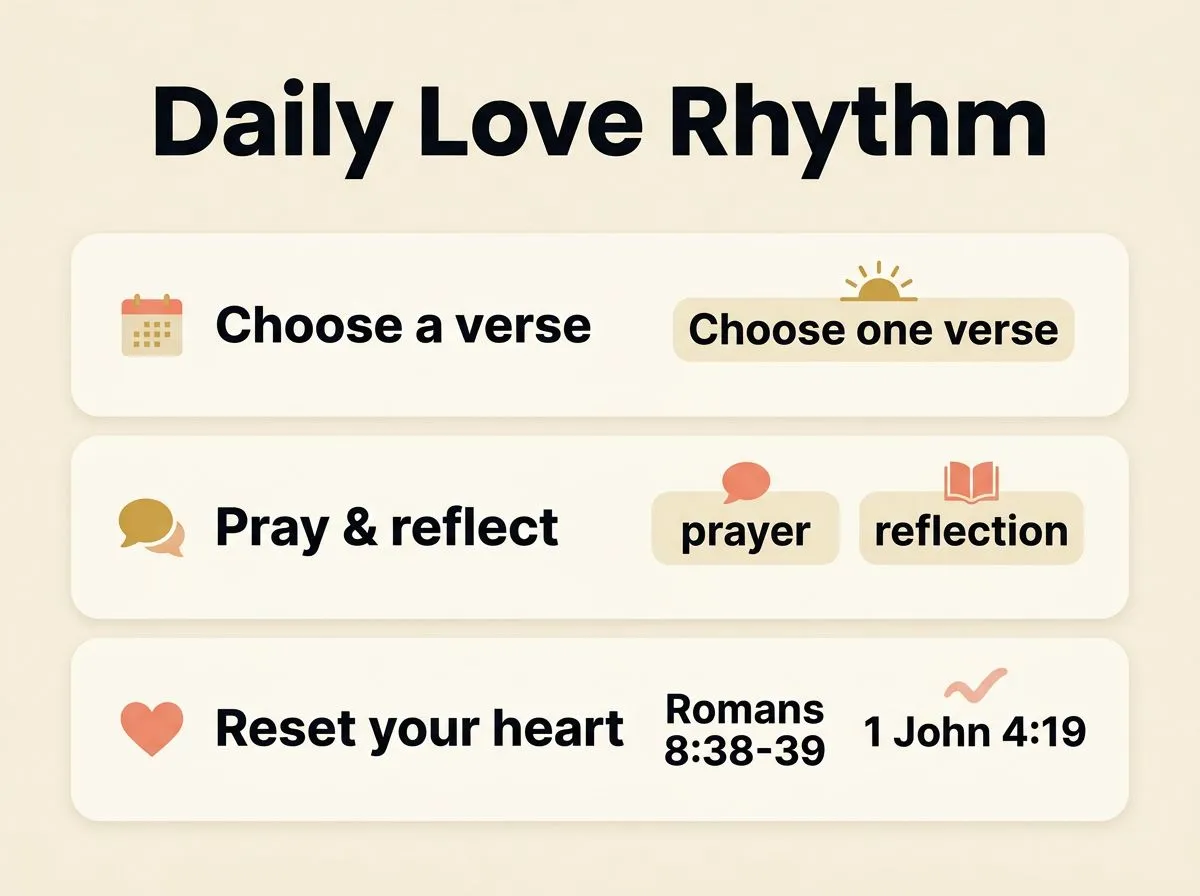
- Choose one verse each day for prayer and reflection, especially when you need reassurance of God's love. A short passage like Romans 8:38-39 or 1 John 4:19 is often enough to reset your heart before the day starts.
- Use love passages as a check on patience, forgiveness, humility, and truth in relationships. If a conversation makes you defensive, return to 1 Corinthians 13:4-7 and ask which line you are resisting.
- Pair verses about God's unconditional love with verses about loving others so you do not take any passage out of context. John 3:16 tells you what God has done for you, and John 15:12 shows what that love should become in your behavior.
- Apply these Scriptures in family life, friendships, marriage, and church relationships by asking what loving action they call for today. Sometimes the answer is a patient reply, sometimes an apology, and sometimes a quiet act of service.
- Memorize a few key verses, such as 1 John 4:19 or 1 Corinthians 13:4-7, so they are ready in moments of stress or conflict. What you can recall under pressure is often what guides your choices when emotions are loud.
A simple way to choose the right verse
The best verse is the one that fits the need right in front of you.
If you want comfort, reach for verses about God's steadfast love and unbreakable care; if you need direction, use the passages that describe how love behaves; if you need to examine a relationship, use the verses that connect love with truth, honor, and sacrifice.
For example, 1 Corinthians 13 is often read at weddings, but in context Paul is describing the daily shape of Christian love, patient, kind, and free from pride.
That is why many Bible readers keep trusted study tools close by. Heather Bixler, Guideposts, Bible Study Tools, Logos, Mission Hills Church, The Knot, Joyful Moments in Christ, and Pure Flix all organize love passages in ways that help readers move from verse to meaning, not verse to verse alone. The approach is simple: read the text, notice who is loving whom, and ask what faithful love looks like in that setting.
Next steps for living these verses
- Pick one verse about God's love and one verse about loving others, then read them aloud in prayer today.
- Write the two verses on a card, note, or phone lock screen where you will see them during the day.
- Choose one relationship that needs a loving response, and act on the verse instead of only thinking about it.
- Return tomorrow with a different verse from the same theme group and look for one new detail in the context.
- If you want to go deeper, read the full chapter around the verse so you can hear the whole message, not just one line.
Frequently asked questions
Which Bible verse is best for unconditional love?
John 3:16 and 1 John 4:8 are the clearest starting points because they show God’s love as giving, active, and rooted in His own character. Romans 8:38-39 is also a strong choice if you want a verse that speaks directly to fear, guilt, or the feeling that God’s love could be lost.
What is the difference between agape love and romantic love in the Bible?
Agape is sacrificial, committed love that seeks another person’s good, while romantic love is usually tied to marriage and intimacy. They can overlap in Christian marriage, but they are not the same thing, and Scripture uses each word with a different emphasis depending on the setting.
Can I use these verses in a wedding or anniversary card?
Yes, especially 1 Corinthians 13:4-7, John 15:12, Proverbs 10:12, and 1 John 4:19, since they are widely used for love, commitment, and encouragement. For a wedding card, verses from the marriage and devotion theme, like Ephesians 5:25, also fit well because they point to covenant love, not just sentiment.
How many verses should I read at once without losing the meaning?
A few at a time is usually best. Read the surrounding verses or the full chapter when possible so you can see the passage in context, especially with short verses like 1 John 4:19 or Romans 8:38-39, where the meaning deepens when you see what comes before and after.
Do these verses apply to love in friendships and family too?
Yes. Several passages speak to love between believers, neighbors, and family members, not only to marriage or romance, and Proverbs 17:17 is a clear example of steady friendship. Others, like Romans 12:9-10 and Colossians 3:14, speak to everyday Christian relationships where honor and patience matter.


This Bible Verse Can Help You Face a Difficult Day
Psalm 46:1 is a strong Bible verse for a difficult day because it says, “ God is our refuge and strength , a very present help in trouble.” Put simply, God is…

Before Your Next Important Decision, Remember What Proverbs Says
A common mistake is treating Proverbs like a magic formula that guarantees the outcome you want if you quote the right verse. The better way is simpler, and st…

Read This Bible Verse When You're Worried About Your Future
If you’re worried about your future, start with Jeremiah 29:11. It reminds you that God knows your life, sees what you can’t see, and is still working with pur…

This Bible Verse Is a Powerful Reminder of God's Promises
Jeremiah 29:11 is one of the clearest Bible verses about God’s promises: “For I know the plans I have for you, declares the Lord, plans for welfare and not for…