
15 Bible Verses About Debt, Borrowing, and Financial Wisdom
Debt in the Bible is an obligation you must repay, not just a number on a page. Scripture treats borrowing as a serious stewardship decision because it can limit your freedom, strain your budget, and affect how you honor God and other people. This article is about personal money wisdom, not business financing or investment debt.
Key takeaways
- Proverbs 22:7 shows that borrowing creates real obligation, so every loan should be weighed before you sign.
- Deuteronomy 15:1-2 points to a clear repayment mindset, not endless carrying of debt without a plan.
- Matthew 5:42 and Luke 6:34-35 call believers to generosity, but not careless lending or borrowing.
- Colossians 2:14 reminds you that Christ cancels sin’s debt, which should shape your gratitude and stewardship.
- Luke 16:10-12 ties financial faithfulness to spiritual trustworthiness, so your next money decision matters.
What the Bible means by debt, borrowing, and repayment
Debt means owing what you promised to return, and the Bible treats that promise as morally serious. Proverbs 22:7 says the borrower is servant to the lender, which means borrowed money creates real obligation, not mere convenience. That is why Scripture keeps linking borrowing with caution, accountability, and self-control.

The financial effect is clear, debt reduces flexibility. Once payments are due, money you might have used for giving, saving, housing, or emergencies is already spoken for, and that pressure can last for months or years. The larger and older the debt, the more it affects everyday choices.
That does not mean every loan is sinful, but it does mean every loan deserves scrutiny. The Bible’s concern is not only whether you can sign for money, but whether you can repay it without hurting your household, your witness, or your peace. If borrowing is easy to enter and hard to exit, wisdom says slow down.
15 Bible verses about debt and borrowing, explained in context
| Verse reference | Who wrote it and who it addressed | Context and theme in the surrounding passage | What it teaches about debt or borrowing | Practical money takeaway |
|---|---|---|---|---|
| Proverbs 22:7 | Solomon’s wisdom collection for readers learning prudent living | A short proverb on wealth, poverty, and the social cost of borrowing | Borrowing places the debtor under the lender’s power | Do not treat debt as neutral; it carries a loss of freedom |
| Proverbs 22:26-27 | Solomon’s wisdom collection | A warning against rashly guaranteeing another person’s loan | Do not put up security if you cannot pay | Never co-sign casually; your signature can become your burden |
| Psalm 37:21 | David’s psalm about the fate of the righteous and the wicked | A contrast between integrity and theft, generosity and refusal to repay | The wicked borrow and do not repay, which Scripture treats as a moral failure | Repayment is part of righteousness, not an optional extra |
| Romans 1:14 | Paul writing to the believers in Rome | Paul describes himself as obligated to preach the gospel to all kinds of people | Debt can be used as a picture of responsibility, not just money | Obligation is not only financial; Christians should recognize holy responsibility |
| Colossians 2:14 | Paul writing to the church at Colossae | Christ cancels the record of debt that stood against believers | The deepest debt problem is sin, and Christ deals with it at the cross | Gratitude for forgiveness should shape how you handle money obligations |
| Proverbs 3:9-10 | Solomon’s wisdom collection | Honor the Lord with wealth and firstfruits, then receive the promise of provision | Money belongs under God’s rule before it belongs to your plans | Give and budget with worship, not greed or fear |
| Deuteronomy 15:1-2 | Moses speaking to Israel about sabbatical release | The law required debts to be released in the appointed year | Debt is serious enough for God to regulate its limits | Build repayment into a plan instead of assuming endless carrying power |
| Deuteronomy 15:7-8 | Moses speaking to Israel | Commands generosity toward poor neighbors in need | The lender must not harden the heart or close the hand | If you lend, do so with compassion and clarity |
| Deuteronomy 23:19-20 | Moses speaking to Israel | A distinction between ordinary lending to fellow Israelites and lending to outsiders | God’s people were to avoid exploitative lending practices | Do not turn financial need into a way to profit from weakness |
| Ecclesiastes 5:5 | Solomon’s reflection on vows before God | A warning about making vows and failing to keep them | Broken promises matter spiritually | Do not borrow or promise lightly |
| Matthew 5:42 | Jesus teaching in the Sermon on the Mount | A call to open-handed generosity toward those who ask | The posture of the kingdom is ready mercy rather than stinginess | Be generous, but still wise about what you can actually give |
| Luke 6:34-35 | Jesus teaching about loving enemies | Jesus contrasts ordinary lending with kingdom generosity | God’s people should lend and give without selfish expectation | Check your motive before you lend |
| Luke 16:10-12 | Jesus teaching about faithfulness in small things | Faithfulness with money reveals readiness for greater trust | How you manage earthly money affects spiritual trustworthiness | Treat repayment and budgeting as matters of faithfulness |
| Matthew 6:19-21 | Jesus teaching about treasure | Jesus warns against storing treasure where it can be lost | Debt can anchor your heart to earthly pressures | Keep your financial life simple enough that your heart can stay free |
| 1 Timothy 6:6-10 | Paul writing to Timothy | A warning that the love of money brings many sorrows | Debt can become part of a bigger spiritual disorder if it feeds greed or anxiety | Pursue contentment first, then make financial choices from that place |
How to apply these verses to your finances today
Start by asking whether the debt is necessary, manageable, and realistic within your budget. The Consumer Financial Protection Bureau teaches that better money decisions come from understanding the risks and benefits of credit and managing debt wisely, especially when borrowing affects day-to-day finances. If the payment only works by assuming everything goes right, it is not a plan.
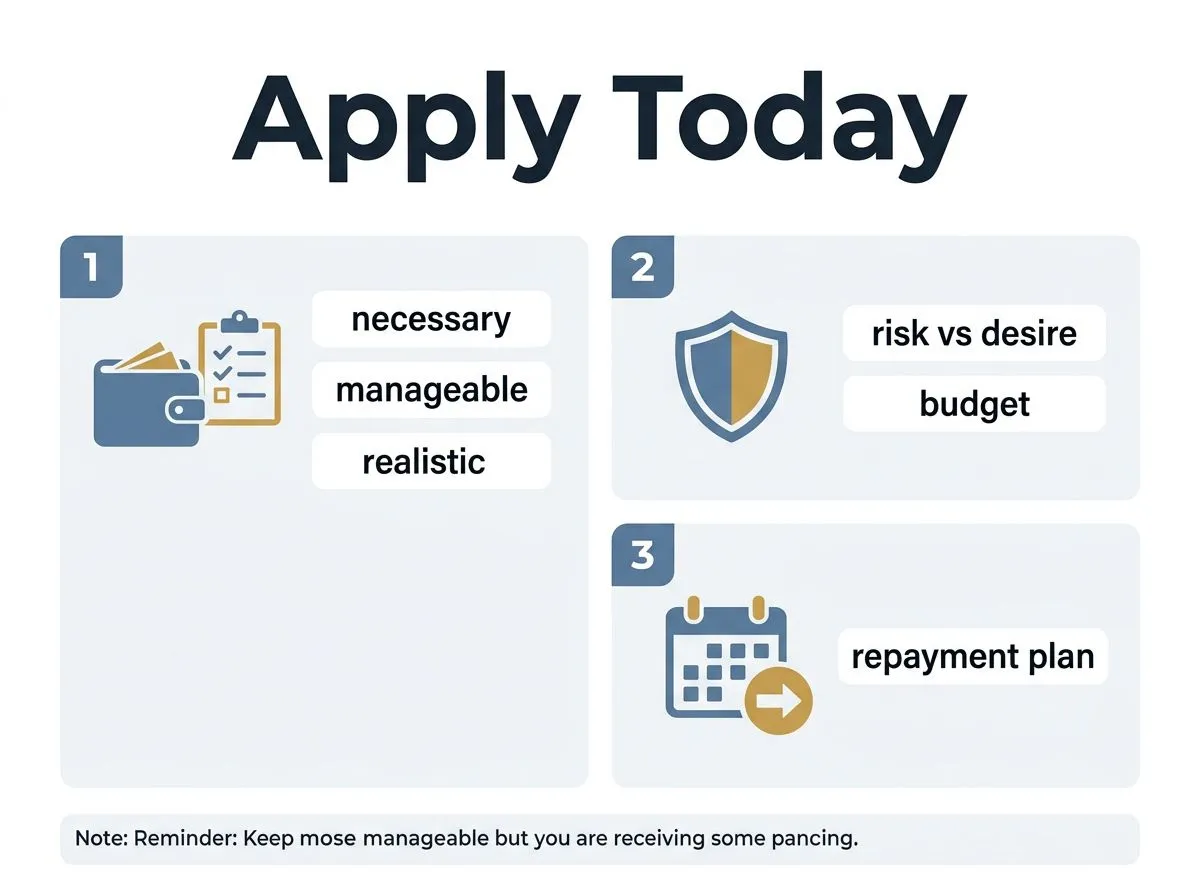
Use the verses to judge risk before desire. A credit card offer, an auto loan, or a personal loan may feel urgent or convenient, but Proverbs 22:7 and Proverbs 22:26-27 push you to ask what the obligation will cost later. If the monthly payment will crowd out giving, savings, or basic margin, the debt is too heavy even if the approval is easy.
If you already owe money, make a repayment plan that names the balance, the due date, and the next payment from your actual income, then compare that payment with your essential expenses. For example, if rent, groceries, utilities, and gas already use most of your paycheck, a car loan or credit card payment can leave no room for emergencies. Then cut the spending that keeps the debt alive, especially recurring purchases that do not meet a real need.
Think carefully before co-signing or lending money, because Scripture treats obligation seriously. If the lender expects your signature to rescue someone else’s weakness, you need to know whether you can really carry that debt if the other person cannot. Wisdom says love people without pretending every request is safe.
Common biblical themes that repeat across the passages
- Repayment matters, and failing to repay is treated as morally serious.
- Borrowing can create bondage, pressure, or loss of freedom.
- Wise stewardship includes planning before borrowing, not after.
- Scripture favors restraint, humility, and honesty over impulsive financial decisions.
- Christian money management should reflect trust in God, responsibility with resources, and concern for others.
What these verses mean for your next money decision
The clearest biblical test is not whether a lender will say yes, but whether the obligation will help you live faithfully after the money is gone. Proverbs gives general wisdom, not an absolute legal rule, so the point is to weigh the likely outcome, not to treat every loan the same. If a purchase can wait, patience is usually wiser than payment plans. If a need is real, move ahead only with a repayment path you can explain in plain numbers.
Keep your finances honest enough to bless other people. That may mean saying no to a loan, yes to a smaller purchase, or yes to a slower plan that leaves room for generosity. Scripture does not call you to financial fear, but it does call you to disciplined freedom under God.
Verification checklist
- Review every current debt and confirm the monthly payment, due date, and remaining balance on the latest statement.
- Test any new loan or credit offer against your budget and confirm that essential bills still fit after the payment is added.
- If you are considering co-signing, verify that you could cover the full debt yourself if the borrower stopped paying.
- Set one concrete repayment action this week, and confirm it appears on your calendar or banking app before the week ends.
Frequently asked questions
Does the Bible forbid all debt?
No. Scripture does not treat every loan as sin, but it does treat borrowing as a serious obligation that can limit your freedom and strain your finances. The Bible’s concern is whether the debt is wise, manageable, and repayable without harming your household, your witness, or your peace.
What does Proverbs 22:7 mean by saying the borrower is slave to the lender?
It means debt creates real obligation, not just convenience. Once you borrow, your money has conditions attached to it, and part of your future income is already committed to repayment. In plain terms, debt reduces flexibility and gives the lender a measure of control.
Is it sinful to co-sign a loan according to the Bible?
Proverbs 22:26-27 warns against putting up security for someone else’s loan when repayment is uncertain, so co-signing should be treated with great caution. It is not a casual favor, because your signature can become your burden if the other person cannot pay. Love should never pretend a risky debt is harmless.
How should a Christian think about credit cards?
Use them only if you can pay the balance in full and avoid carrying debt from month to month. The Bible favors careful stewardship over impulse, and Proverbs 22:7 and Proverbs 22:26-27 both push you to think about the future cost, not just the immediate convenience. If the card encourages revolving debt, it is a warning sign.
What is the difference between debt and wise borrowing?
Wise borrowing is limited, planned, and clearly repayable within your budget, while reckless debt ignores risk and weakens your ability to manage what God has given you. The difference is not just the amount, but whether the payment still leaves room for giving, saving, and basic margin. If the loan only works when everything goes right, it is not wise borrowing.


This Bible Verse Can Help You Face a Difficult Day
Psalm 46:1 is a strong Bible verse for a difficult day because it says, “ God is our refuge and strength , a very present help in trouble.” Put simply, God is…

Before Your Next Important Decision, Remember What Proverbs Says
A common mistake is treating Proverbs like a magic formula that guarantees the outcome you want if you quote the right verse. The better way is simpler, and st…

Read This Bible Verse When You're Worried About Your Future
If you’re worried about your future, start with Jeremiah 29:11. It reminds you that God knows your life, sees what you can’t see, and is still working with pur…

This Bible Verse Is a Powerful Reminder of God's Promises
Jeremiah 29:11 is one of the clearest Bible verses about God’s promises: “For I know the plans I have for you, declares the Lord, plans for welfare and not for…