
Read This Bible Verse When You Don't Know What to Do
If you don’t know what to do, start with James 1:5. It tells you to ask God for wisdom, and it promises that He gives generously to those who ask.
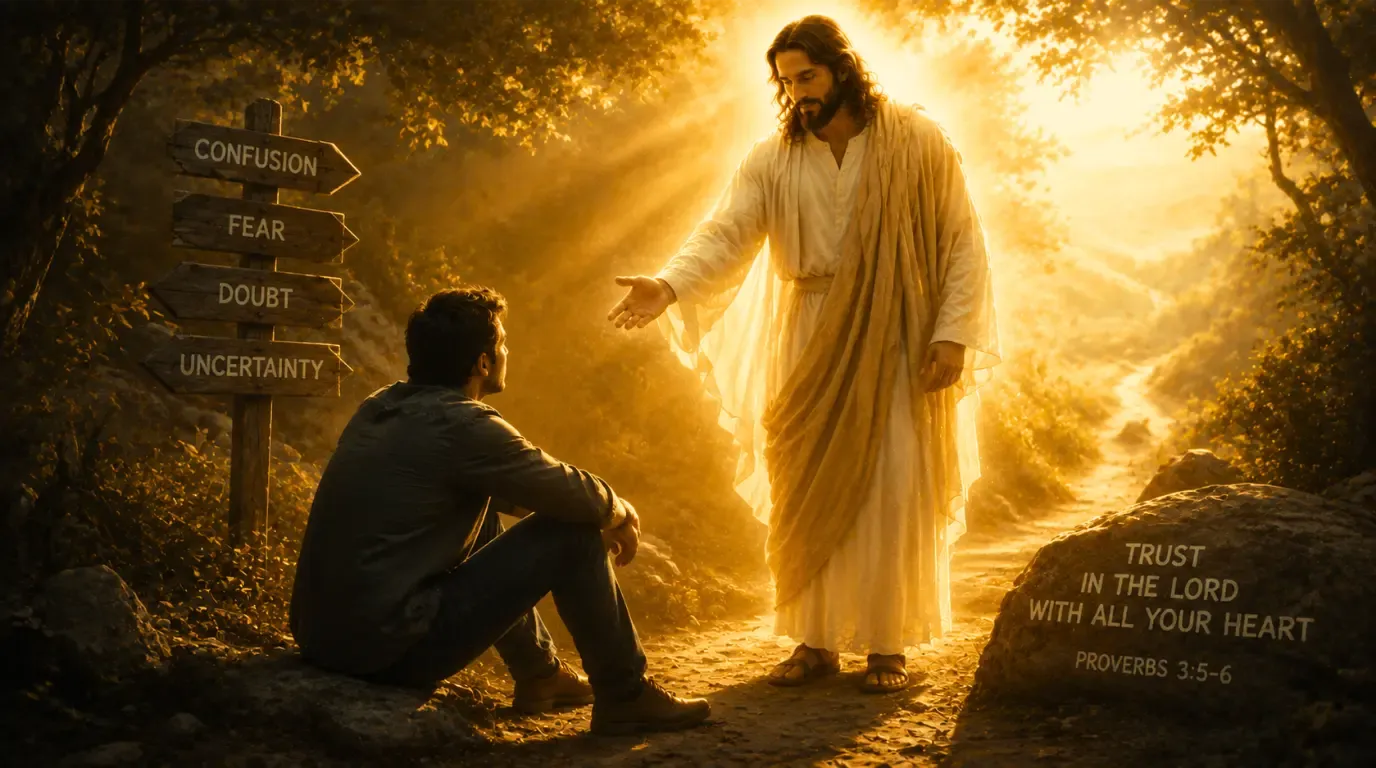
Prayer for God’s Guidance Ask God to show you the way.
READ PRAYER →
You will remain on the same website.
That makes it the clearest first verse for confusion, decisions, and the kind of uncertainty that leaves you stuck.
Key takeaways
- James 1:5 gives you a 1-step starting point: ask God for wisdom before you act.
- Read James 1:5 in context, because James is addressing believers facing trials, not offering a quick sign.
- For a hard decision, use 3 checks, Scripture, prayer, and trusted Christian counsel, before you move.
- Do one concrete act of obedience within 24 hours instead of waiting for total certainty.
- Use specific verses for specific needs, for example Psalm 46:1 for fear and Proverbs 3:5-6 for guidance.
The best Bible verse to read when you do not know what to do
James 1:5 is the best Bible verse to read when you don’t know what to do because it speaks straight to the need for wisdom.
James writes that if anyone lacks wisdom, he should ask God, who gives generously without finding fault, and wisdom is exactly what you need when the next step isn’t clear.

The context matters here. James is writing to believers facing trials, not to people looking for a quick spiritual slogan.
He is calling Christians to steady faith under pressure, which is why this verse fits more than emotional comfort, it fits real-life direction.
That is why James 1:5 works for decisions, confusion, and fear about the future. It does not promise that every answer will come instantly, but it does promise that God is willing to give wisdom as you ask.
Joseph’s story is a strong example of that kind of guidance, because his path was full of uncertainty, yet God was still at work through each step.
This verse is a starting point, not a magic formula. Most of the time, wisdom comes one step at a time, through prayer, Scripture, and the next obedient choice right in front of you.
How to understand James 1:5 in context and use it for a hard decision
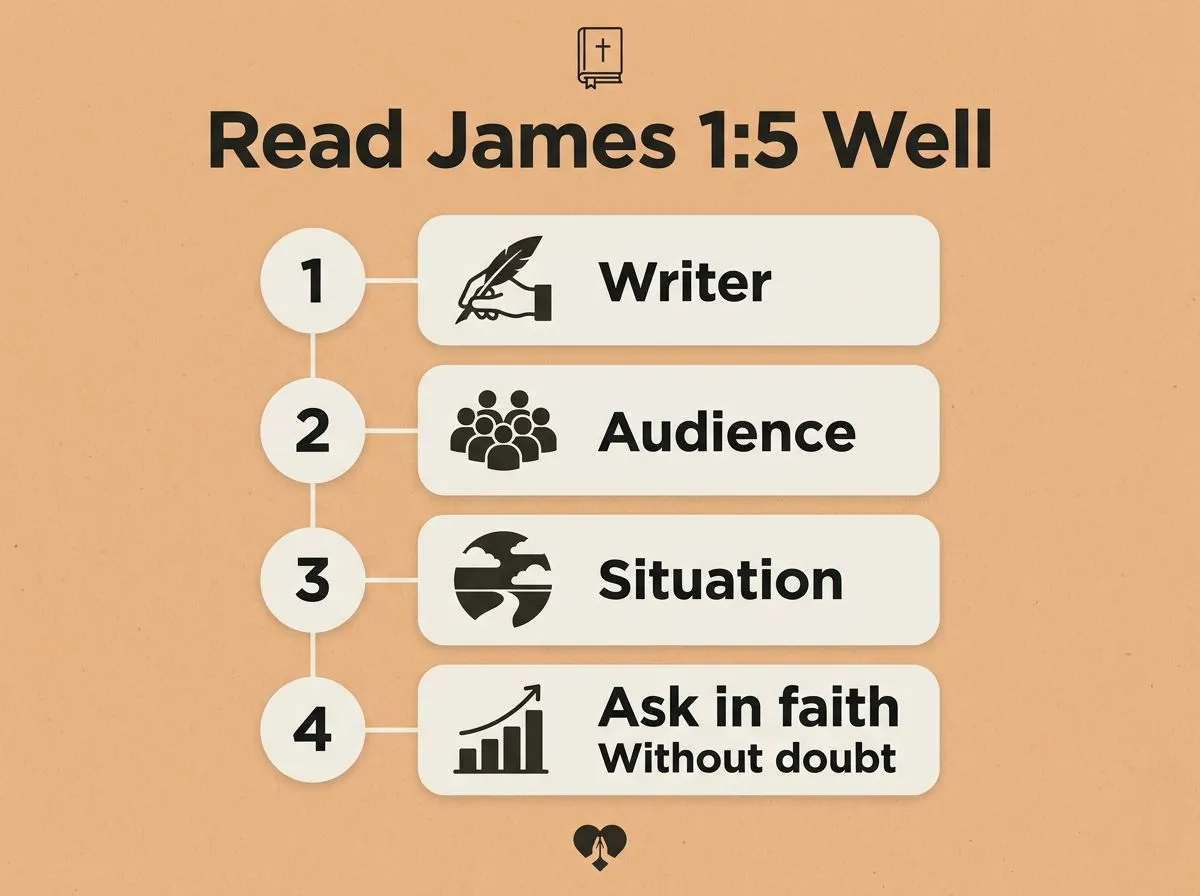
- Start by asking who wrote the verse, who received it, and what problem they were facing before you apply it to your own life.
- Read the phrase about asking in faith without doubting as a call to trust God, not as a demand for perfect feelings or zero questions.
- Pray for wisdom, then compare your next step with Scripture, prayer, and trusted Christian counsel.
- Choose one concrete act of obedience instead of waiting for total certainty.
- Treat the verse as a request for wisdom, not a shortcut that lets you ignore what God already says clearly.
- Watch for the common mistake of using a Bible verse to bless a decision you have already made instead of letting the verse correct you.
The first step is to look at the writer, audience, and situation.
James is speaking to scattered believers who needed endurance and practical wisdom, so the verse is about how to live faithfully in hardship, not how to force God into giving a private sign.
The next phrase, asking in faith without doubting, matters because it shapes your posture. James is not teaching that you must never wrestle with uncertainty, he is warning against a divided heart that asks God while refusing to trust Him enough to obey what He reveals.
After that, pray simply and honestly. Ask God what He wants you to see, then open Scripture, listen carefully in prayer, and seek counsel from mature Christians who know the Bible well and won’t flatter you.
Then take one concrete step. If you are deciding whether to forgive, make the call. If you are unsure about a job move, update the application or schedule the conversation. Wisdom is often confirmed in motion, not in endless waiting.
This is also where many believers get stuck. They ask God for wisdom but really mean they want instant certainty, and those are not the same thing. God often gives enough light for the next faithful step, not a full map for the whole year.
Other Bible verses to turn to when your need is specific
| Need or situation | Bible verse | Why it fits | Simple prayer | When to use it |
|---|---|---|---|---|
| Fear or instability | Psalm 46:1 | It reminds you that God is present help in trouble. | Lord, be my refuge and my strength right now. | Use it when panic rises and you need steady ground. |
| Trusting God with the next step | Proverbs 3:5-6 | It calls you to lean on God’s understanding and let Him direct your path. | Lord, I trust You to make my path straight. | Use it when you are tempted to rely only on your own analysis. |
| Anxiety that keeps looping | Philippians 4:6-7 | It ties prayer to peace and invites you to bring specific requests to God. | Father, I give You this burden and ask for Your peace. | Use it when your mind will not settle down. |
| Feeling unsafe or overwhelmed | Psalm 23:4 | It speaks of God’s presence in the valley, not only on the mountaintop. | Lord, walk with me through this valley. | Use it when the situation feels dark or emotionally heavy. |
| Needing direction from God’s Word | Psalm 119:105 | It shows Scripture as light for the path and guidance for the next step. | Lord, let Your Word light my way today. | Use it when you need biblical clarity before acting. |
| Staying alert and spiritually ready | Mark 13:33 | It reminds you to stay awake and watchful because you do not know the timing. | Lord, keep me alert and ready to obey. | Use it when delay is testing your patience. |
| Wanting to reflect Christ in the decision | Matthew 5:16 | It pushes you to live in a way that points others to God. | Lord, help me choose what brings You glory. | Use it when your choice will affect family, work, or witness. |
| Needing Jesus’ peace in a troubled heart | John 14:27 | It centers you on the peace Jesus gives, which is different from the world’s peace. | Lord, let Your peace guard my heart. | Use it when fear and tension are crowding out calm. |
If you want a simple place to start, read James 1:5 aloud, then pray it back to God in your own words.
If the uncertainty is tied to fear, add Psalm 46:1 or Philippians 4:6-7. If it is about direction, add Proverbs 3:5-6 and Psalm 119:105.
The Bible App has a 25-day devotional called What to Do When You Don't Know What to Do from reThink Group, and it walks through Joseph’s story, which is a helpful next step if you want to keep reading with structure.
When you are unsure what to do, don’t wait for perfect clarity before obeying God in the things you already know.
Ask Him for wisdom, open Scripture, take the next honest step, and trust that He can guide you without wasting your waiting.
Frequently asked questions
Should I read one verse or a whole passage when I am confused?
Start with James 1:5, then read the surrounding passage so you do not miss who James is writing to or what problem he is addressing.
The context shows that this verse is about asking God for wisdom in real hardship, not pulling a quick slogan out of the middle of a chapter.
What if I pray and still do not feel clear?
Keep obeying what is already clear in Scripture, ask for wise counsel, and take the next faithful step instead of waiting for perfect certainty.
James 1:5 points you toward wisdom, but it does not promise instant feelings of clarity, and God often gives enough light for the next step, not the whole map.
Is it okay to use a verse that was written for a different situation?
Yes, if the principle is still true, but you should first understand what it meant to the original audience.
James 1:5 matters here because it was written to believers facing trials, so you should apply its call for wisdom without turning it into a private sign or a verse that just blesses a choice you already made.
Which verse is best for fear instead of confusion?
Psalm 46:1 and John 14:27 are strong choices when fear is the main problem.
Psalm 46:1 reminds you that God is present help in trouble, and John 14:27 centers you on the peace Jesus gives when your heart feels unsettled.


This Bible Verse Can Help You Face a Difficult Day
Psalm 46:1 is a strong Bible verse for a difficult day because it says, “ God is our refuge and strength , a very present help in trouble.” Put simply, God is…

Before Your Next Important Decision, Remember What Proverbs Says
A common mistake is treating Proverbs like a magic formula that guarantees the outcome you want if you quote the right verse. The better way is simpler, and st…

Read This Bible Verse When You're Worried About Your Future
If you’re worried about your future, start with Jeremiah 29:11. It reminds you that God knows your life, sees what you can’t see, and is still working with pur…

This Bible Verse Is a Powerful Reminder of God's Promises
Jeremiah 29:11 is one of the clearest Bible verses about God’s promises: “For I know the plans I have for you, declares the Lord, plans for welfare and not for…