
Read This Bible Verse Before You Start Working Today
The biggest mistake is treating work as if it is only for your boss, your grade, or your paycheck.

Career Success Prayer Seek God’s blessing at work.
READ PRAYER →
You will remain on the same website.
Colossians 3:23-24 says to work wholeheartedly as for the Lord, because your real audience is God.
That verse doesn’t erase deadlines or responsibilities, but it does change the meaning of the whole day.
Key takeaways
- Colossians 3:23-24 is the main verse, and it reframes your work as service to the Lord, not only to people.
- 2 Thessalonians 3:10 warns against choosing idleness when you are able to work, while Ephesians 4:28 connects labor with generosity.
- One daily decision matters most: choose one verse, pray it, and turn it into one concrete action before your first task.
- Do not use work verses to justify burnout or to condemn unemployment, disability, caregiving, or a season of transition.
- At the end of the day, review 2 things: where you worked faithfully and where you need God’s help tomorrow.
What is the best Bible verse about work?
Colossians 3:23-24 is one of the clearest Bible verses about work because it tells you to work from the heart, not just for people.
Paul is writing to believers who lived under ordinary authority, so the command reaches the Monday morning task list, the group project, the factory floor, the kitchen, and the office inbox.
Read it in context, and you see that Paul is not giving a career slogan. He is describing Christian faithfulness in daily life.
Work becomes a place where obedience shows up in visible form, and that matters whether your job is public or quiet, respected or overlooked.
2 Thessalonians 3:10 adds a needed warning: persistent idleness is a real problem, and the church should not bless laziness.
That verse is about refusing to work when a person is able and unwilling, not about condemning someone who is unemployed, disabled, caregiving, or waiting for the next open door.
Proverbs 10:4 and Proverbs 22:29 reinforce the same theme from wisdom literature. Careless hands lead to loss, while skilled and diligent labor opens doors over time.
In other words, God cares about your habits, your craft, and your follow-through as much as your intentions.
Ephesians 4:28 adds the moral shape of work: honest labor should replace stealing, and earning should overflow into generosity.
Scripture does not treat work as self-enrichment alone. It treats work as a way to provide, to contribute, and to have something to share.
How do Bible verses about work shape your attitude at work?
- Diligence means doing steady, careful work even when nobody is checking your screen or counting your minutes.
- Integrity means refusing shortcuts, false claims, padded hours, copied work, and anything that breaks trust with an employer, client, or teammate.
- Purpose means seeing your job as service to God and people, not only as a paycheck or a personal achievement.
- Faith-based motivation gives you endurance and calm, while fear-based motivation tends to produce people-pleasing, hidden resentment, or burnout.
- Colossians 3:23-24 lifts your eyes from human approval, and Proverbs 10:4 and Ephesians 4:28 remind you that honest effort has practical value.
That shift matters on ordinary days. If you are answering emails, stocking shelves, teaching a class, coding, cleaning, or driving to a shift, the verse helps you ask a better question than “Will anyone notice?” The better question is, “Am I doing this faithfully?”
It also changes how you finish tasks. A Christian work ethic doesn’t mean rushing to look busy.
It means doing what you were given with care, telling the truth about what you can and cannot do, and leaving behind work that is clean enough for someone else to trust.
What are the most common mistakes when applying Bible verses about work?
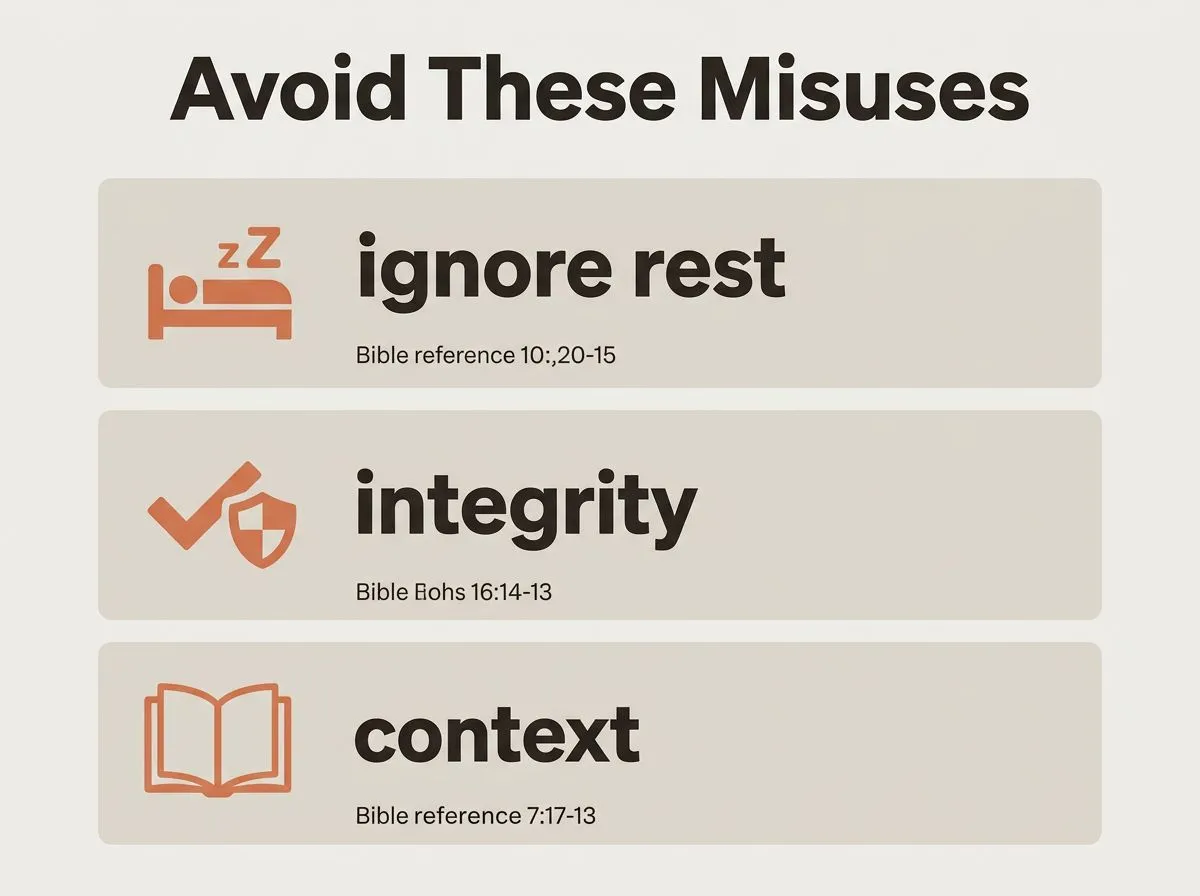
- Do not use work verses to excuse overwork or to ignore rest, family responsibilities, worship, and the limits God built into human life.
- Do not read verses about idleness as if they condemn every job loss, disability, slow season, or time of transition.
- Do not turn Proverbs into a promise that hard work always brings quick promotion, higher pay, or visible success right away.
- Do not pull a verse out of context without asking who wrote it, who heard it, and what problem it was addressing.
- Do not let a verse become legalism, where you measure your worth by output instead of by your identity in Christ.
A common mistake is treating a good verse like a harsh supervisor. Scripture calls you to faithfulness, but it does not ask you to become driven, anxious, or ashamed every time life slows down.
Deuteronomy 29:29 is a helpful guardrail here: some things belong to God, and some things are revealed for obedience.
Your next assignment is usually one of the revealed things, but the long-term outcome is not fully yours to control.
That is where 1 Timothy 6:8 helps too. Contentment keeps work from becoming an idol, because if you can receive food and clothing with gratitude, you are less likely to build your identity around title, output, or status.
How can you apply a Bible verse about work to your day?

- Choose one verse before work, such as Colossians 3:23-24 for perspective or Proverbs 10:4 for diligence.
- Pray the verse in your own words, asking God to shape your attitude, your focus, and your choices throughout the day.
- Turn the verse into one concrete action, such as telling the truth, finishing a task carefully, serving a coworker well, or working without complaint.
- Use the verse as a check on your schedule, asking whether your workload leaves room for prayer, rest, and obedience.
- Review where you worked faithfully, where you slipped into haste or frustration, and where you need God’s help tomorrow.
If you want a simple habit, open your Bible or Bible Gateway before you open your email.
A short reading from the January 2026 Bible Verse Calendar can help you start with Scripture instead of urgency, and Bible Gateway is built for that kind of steady, verse-by-verse attention.
Try turning the verse into a sentence you can carry into the day. For example: “Lord, help me work at this report as if I am serving You, not just trying to finish quickly,” or “God, keep me honest in this interview and give me the courage to answer plainly.”
What should you say, study, or bring into a job search?
When an employer asks about a weakness, do not fake perfection. Say something like, “I can be too cautious at the beginning, so I use a checklist and ask for clear deadlines.” That answer shows honesty, self-awareness, and a willingness to improve.
You should also study the role before you apply. Read the job posting line by line, match your resume to the language they use, and write one sentence that proves you have already done similar work.
A stronger resume line is specific, like, “Managed a weekly schedule for 18 team members and kept daily tasks on time,” because it shows scope and reliability.
How does Philippians 2:13 keep work from becoming self-reliance?
Philippians 2:13 reminds you that God is at work in you, which keeps diligence from turning into pride.
You are still responsible for showing up and doing the work, but you do not carry the burden as if everything depends on your own strength.
That truth matters when you are tired, under review, or stuck in a long season of ordinary duties.
It lets you keep going without pretending you are the source of your own faithfulness.
When should you read a work verse before you start working?
You should read a work verse before you start when your day will require focus, honesty, or patience.
A verse read after the pressure starts can still help, but a verse read first tends to shape the tone of the whole morning.
This is especially useful before interviews, exams, demanding shifts, difficult conversations, and any task where your first instinct is to rush. One verse can steady your mind long enough to make your next decision wiser.
What is the best way to close the day with Scripture about work?
The best way to close the day is to ask whether your work matched your witness. If you were faithful, thank God specifically.
If you failed in one part of the day, confess it plainly, receive forgiveness, and name the next step for tomorrow.
That closing habit keeps work from turning into a scoreboard. Instead, it becomes part of discipleship, where you bring your effort, your limits, and your future to God, and let Him shape what comes next.
Start tomorrow with Colossians 3:23-24, keep Proverbs 10:4 and Ephesians 4:28 in view as you work, and let Philippians 2:13 remind you who gives you strength.
Do that, and your job becomes more than labor. It becomes a place where faith shows up in ordinary, honest, excellent work.
Frequently asked questions
What Bible verse should I read before going to work?
Colossians 3:23-24 is the clearest place to start because it reminds you that your work is ultimately for the Lord.
It fits especially well before a day that will demand focus, honesty, or patience, because it reframes even ordinary tasks as an act of faithfulness. If you want a second verse for diligence, Proverbs 10:4 is also helpful.
Does the Bible say anything about being lazy at work?
Yes. 2 Thessalonians 3:10 addresses idleness and calls believers to responsible labor, but it should be read in its church context.
In the article, that warning is about refusing to work when a person is able and unwilling, not about condemning unemployment, disability, caregiving, or a season of waiting for an open door.
How do I know if a verse is about my job or just about spiritual work?
Check the context. Some verses speak about general labor, while others focus on ministry, character, or the life of the church.
The article also points out that Paul often writes to believers living under ordinary authority, so a verse may apply to daily work even if it was not written as a career slogan.
Can Bible verses about work help if I am unemployed?
Yes. They can still guide your attitude, your daily discipline, and your trust in God while you look for work.
The article is careful to say that verses about idleness do not condemn someone who is unemployed, so you can receive Scripture as encouragement without turning it into shame.


This Bible Verse Can Help You Face a Difficult Day
Psalm 46:1 is a strong Bible verse for a difficult day because it says, “ God is our refuge and strength , a very present help in trouble.” Put simply, God is…

Before Your Next Important Decision, Remember What Proverbs Says
A common mistake is treating Proverbs like a magic formula that guarantees the outcome you want if you quote the right verse. The better way is simpler, and st…

Read This Bible Verse When You're Worried About Your Future
If you’re worried about your future, start with Jeremiah 29:11. It reminds you that God knows your life, sees what you can’t see, and is still working with pur…

This Bible Verse Is a Powerful Reminder of God's Promises
Jeremiah 29:11 is one of the clearest Bible verses about God’s promises: “For I know the plans I have for you, declares the Lord, plans for welfare and not for…