
This Bible Verse Teaches an Important Lesson About Money
Many people assume 1 Timothy 6:10 says money itself is the problem, but the verse points to something sharper: the love of money.

Debt Relief and Financial Freedom God’s wisdom for your finances.
READ PRAYER →
You will remain on the same website.
That difference matters, because Scripture does not condemn earning, saving, or giving wisely.
It warns about a heart that starts treating wealth like a master instead of a tool.
Key takeaways
- 1 Timothy 6:10 is about the love of money, not money itself, and the warning becomes clear in the chapter’s larger call to contentment.
- The NIV and NLT say "a root of all kinds of evil," which helps readers avoid turning the verse into a claim that money causes every evil.
- A practical weekly check is simple: pray once, review 1 spending category, and ask whether that choice serves God or status.
- Do not use the verse to label all wealth sinful, or to excuse greed in someone with little money or generosity in someone with much.
- Read this verse beside Matthew 6:33, Hebrews 13:5, and Philippians 4:19 to keep money, trust, and provision in balance.
| Point | What it shows | Why it matters |
|---|---|---|
| 1 Timothy 6:10 in KJV | "For the love of money is the root of all evil" | The warning is about love, not money itself |
| 1 Timothy 6:10 in NIV | "For the love of money is a root of all kinds of evil" | The phrase broadens the result to many kinds of harm |
| 1 Timothy 6:10 in NLT | "For the love of money is the root of all kinds of evil" | The wording stays plain and easy to apply |
| Translation difference | KJV says "all evil," while NIV and NLT say "all kinds of evil" | The message stays the same, but the newer wording avoids a flattening mistake |
| Key lesson | Money is a tool, but desire can turn it into an idol | The issue is not possession, it is allegiance |
The context around the verse in its chapter
1 Timothy 6 places this warning inside a larger discussion about contentment, false teaching, and the danger of wanting wealth more than godliness.
Paul is writing to Timothy about how believers should live and teach, so the money verse is not a line you pull out on its own.
It belongs in a pastoral warning about what happens when greed starts shaping faith.
The verses around it make the point clear. Paul says godliness with contentment is great gain, then he contrasts that with the fact that people bring nothing into the world and take nothing out.
From there, he warns that those who want to get rich can fall into temptation and harmful desires, which fits the rest of the passage in a very practical way.
That is why the verse connects money, greed, false teaching, and spiritual danger in one breath.
The Bible Study Tools list places 1 Timothy 6:10 beside other related verses like Hebrews 13:5 and Exodus 22:25, which helps show the wider pattern: God’s people are called to contentment, mercy, and restraint with money, not obsession or exploitation.
The issue is the heart posture toward wealth, whether someone has much or little.
What Christians usually take away from this money verse
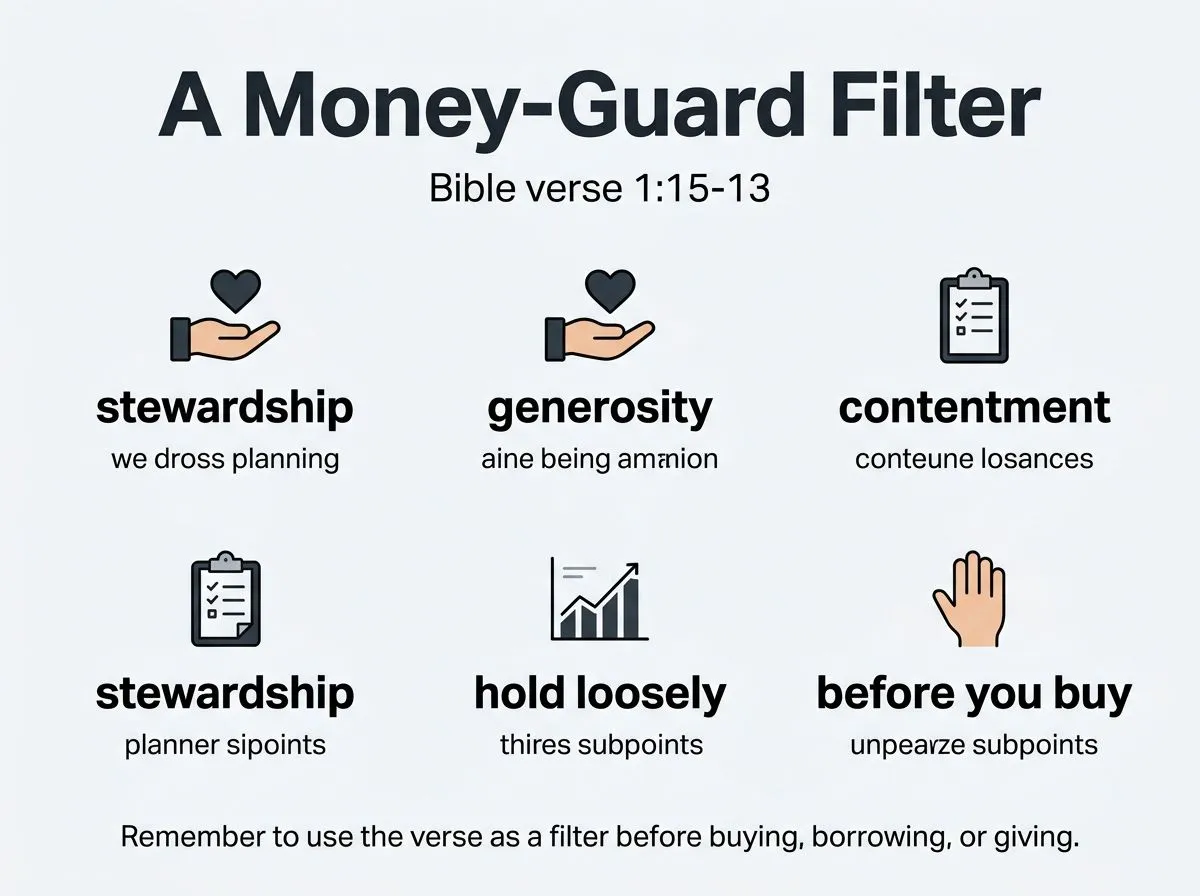
- Money is entrusted by God, so Christian stewardship means using it wisely, with plans, limits, and clear priorities.
- Biblical generosity calls believers to give, help others, and hold resources loosely, especially when someone around you has a real need.
- Integrity matters because money choices reveal what the heart loves, including how you earn, lend, spend, and promise.
- Contentment in Scripture means trusting God’s provision instead of chasing more, which is why Philippians 4:19 and Matthew 6:33 fit naturally with this verse.
- A simple weekly practice is to pray for wisdom, review one spending category, and ask God to shape a content heart before you make the next money decision.
How this changes everyday choices
This verse becomes concrete when you use it as a filter before you buy, borrow, or give. Pause before nonessential purchases and ask whether the expense fits a preset budget line.
If a purchase is mostly about status, comparison, or anxiety, it is already asking your heart to carry more weight than it should.
If a financial choice helps you live honestly, give freely, and sleep in peace, it is much closer to the spirit of the passage.
It also changes how you look at financial pressure. The Bible does not pretend that bills are fake or that needs disappear by wishful thinking.
Instead, it teaches you to seek God first and then make money decisions with open hands, while making a clear plan for real needs like rent, groceries, and utilities.
What not to conclude from the verse
Do not conclude that being rich automatically means you are sinful, or that being poor automatically means you are faithful. Scripture’s warning is about desire, not account balance.
That is why a person with little money can still be ruled by greed, and a person with much money can still be practicing generosity and integrity.
Do not read the verse as permission to ignore wise planning either. Saving, budgeting, and providing for your household fit well with biblical stewardship.
A simple example is setting aside money for emergencies and next month’s bills before spending on wants. The warning begins when money stops serving your calling and starts directing your choices.
How to read this verse with the rest of the Bible
1 Timothy 6:10 matches the Bible’s larger teaching that money is a place of testing, not the measure of a person’s worth.
Hebrews 13:5 tells you to keep your life free from the love of money, and Matthew 6:33 puts God’s kingdom first ahead of anxious striving.
Exodus 22:25 shows that money must not become a tool for taking advantage of the needy.
Philippians 4:19 gives the comfort that sits underneath all of that: God supplies what you truly need.
That does not mean every want becomes a promise. It means you can trust God enough to resist the fear that usually drives unhealthy money behavior.
If you want extra study help, Bible Study Tools, UMF, Compass Financial Ministry, and Air1 Worship Music all highlight the same core reading of the verse: money is not the evil, but loving it is.
Their value here is simple, they are study lists that reflect a long-held Christian understanding of the passage.
A simple verification checklist for your own reading
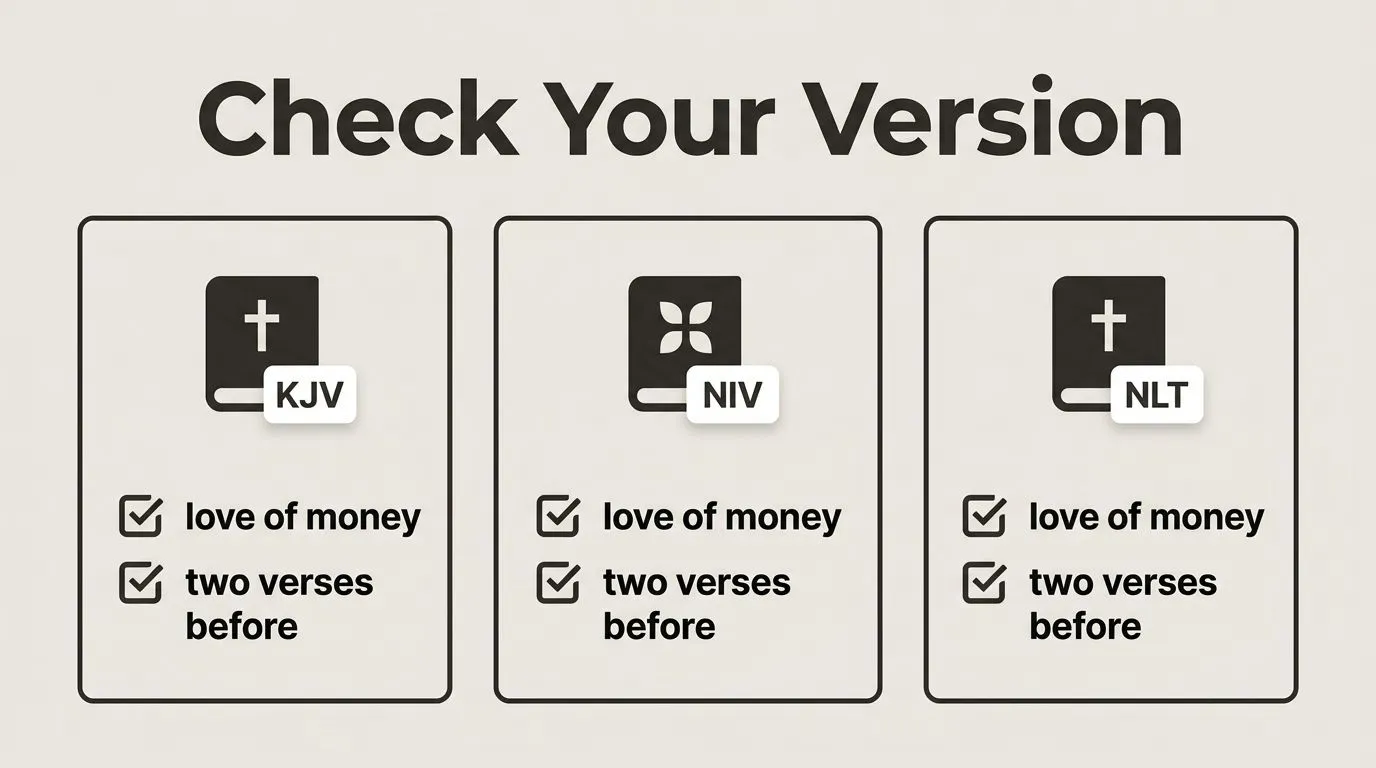
- Open 1 Timothy 6:10 in KJV, NIV, and NLT, and confirm that each version warns about the love of money, not money itself.
- Read the two verses before and after 1 Timothy 6:10, and confirm that the passage talks about contentment, temptation, and harmful desires.
- Compare your current spending decisions with one question: does this choice reflect stewardship, or does it feed craving?
- Read Hebrews 13:5, Matthew 6:33, and Philippians 4:19, and confirm that each one points you toward contentment and trust in God rather than fear-driven accumulation.
Frequently asked questions
Why do some Bible translations sound stronger than others on money verses?
Because translators make different choices between sounding literal and sounding clear.
In 1 Timothy 6:10, the KJV says “the root of all evil,” while the NIV and NLT say “a root of all kinds of evil,” which keeps the warning focused on love of money, not money itself.
The core message stays the same, but the newer wording avoids making it sound more absolute than the passage intends.
Is this verse about being poor or rich?
No. The warning is about the heart posture toward wealth, not a fixed income level.
A person with little money can still be ruled by greed, and a person with much money can still practice generosity and integrity.
Scripture calls believers to contentment and wise stewardship, whatever their account balance looks like.
Can I use this verse in a prayer for financial help?
Yes, if you pray in line with the verse’s meaning. Ask God for provision, wisdom, and a content heart, not only for more money.
That keeps the prayer grounded in stewardship and trust, which fits the wider message of 1 Timothy 6.
What other Bible verse is commonly paired with this one?
Hebrews 13:5 is often paired with 1 Timothy 6:10 because it also warns against the love of money and calls believers to contentment.
In study guides, it is commonly read alongside money verses to reinforce the same heart-level lesson.
Matthew 6:33 and Philippians 4:19 are also natural companions because they point you toward trust in God instead of anxious striving.


This Bible Verse Can Help You Face a Difficult Day
Psalm 46:1 is a strong Bible verse for a difficult day because it says, “ God is our refuge and strength , a very present help in trouble.” Put simply, God is…

Before Your Next Important Decision, Remember What Proverbs Says
A common mistake is treating Proverbs like a magic formula that guarantees the outcome you want if you quote the right verse. The better way is simpler, and st…

Read This Bible Verse When You're Worried About Your Future
If you’re worried about your future, start with Jeremiah 29:11. It reminds you that God knows your life, sees what you can’t see, and is still working with pur…

This Bible Verse Is a Powerful Reminder of God's Promises
Jeremiah 29:11 is one of the clearest Bible verses about God’s promises: “For I know the plans I have for you, declares the Lord, plans for welfare and not for…