
Where to Read About Jesus in the Bible: A Beginner's Guide
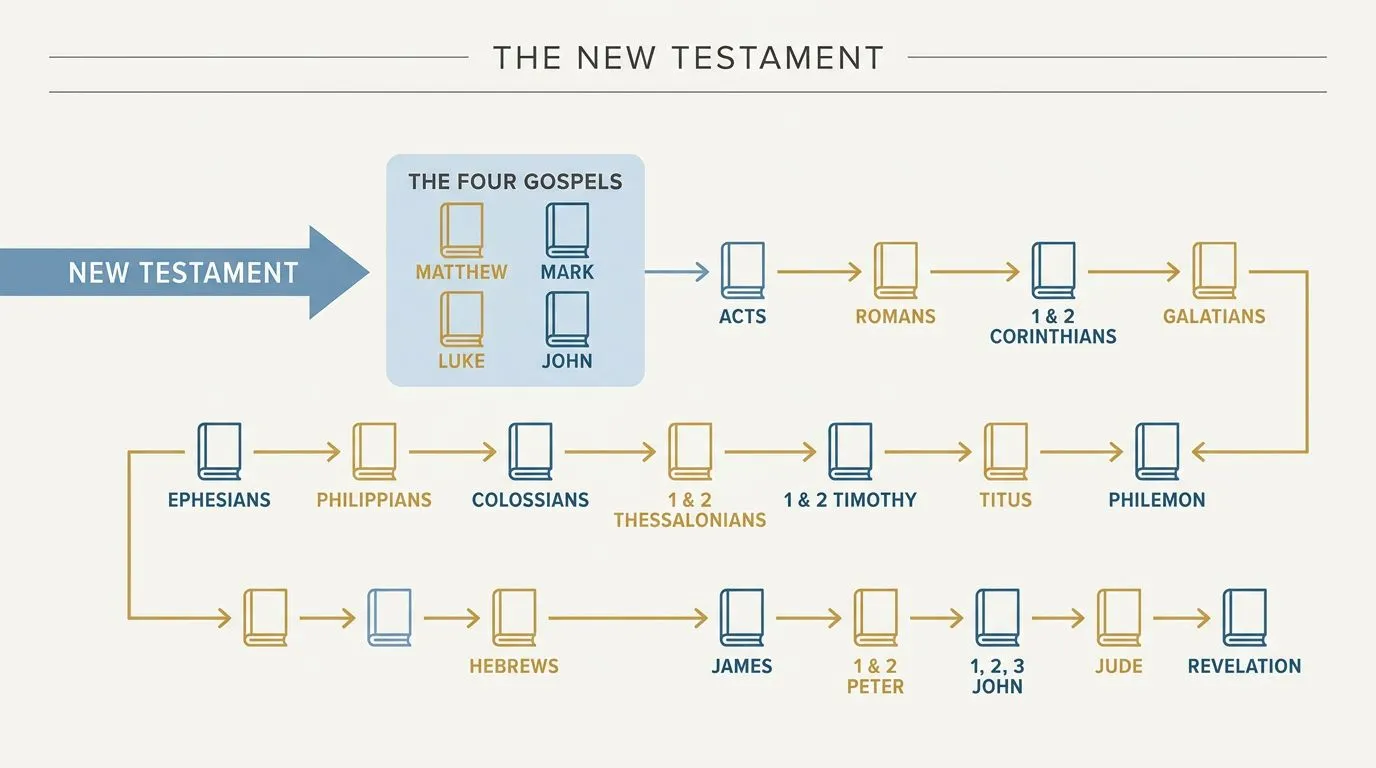
To read about Jesus in the Bible, start with the New Testament, especially the four Gospels: Matthew, Mark, Luke, and John. They appear at the beginning of the Gospel section and give you the clearest place to start with Jesus’ birth, ministry, death, and resurrection. If you want a quick, trustworthy path, begin with John 3:16, Mark 1:1, and Luke 2:11, then read the chapters around them.
Key takeaways
- Start with the 4 Gospels, because they are the clearest place to read about Jesus first.
- Use book, chapter, and verse to find exact passages, then read 3 to 5 verses around them.
- A concordance helps you track repeated words like forgive or believe across the Bible.
- If you want a simple first step, read John 3:16, Mark 1:1, and Luke 2:11 in context.
Where the Four Gospels sit in the Bible
| Book | Where it sits in the New Testament | What it emphasizes about Jesus | A good starting scene | Why this helps a beginner |
|---|---|---|---|---|
| Matthew | First of the four Gospels, right after the New Testament begins | Jesus as the King and Messiah for God’s people | Matthew 1:1 and the birth narrative | It gives you a direct entry into Jesus’ identity and background |
| Mark | Second Gospel | Jesus as the powerful Servant and Son of God | Mark 1:1 and the opening of His ministry | It moves quickly, so you see Jesus in action fast |
| Luke | Third Gospel | Jesus as the Savior for all people, with attention to His compassion | Luke 2:11 and the birth announcement | It helps you see how Jesus’ coming was announced and why it matters |
| John | Fourth Gospel | Jesus as the Son of God, with strong signs and clear statements | John 3:16 and the signs around His ministry | It gives some of the most direct language about belief and eternal life |
Matthew, Mark, Luke, and John are the first four books after the New Testament begins, so a beginner doesn’t have to search through the whole Bible to find Jesus. That placement matters, because it keeps you close to the stories themselves instead of beginning with later explanation in the Epistles.
John is especially helpful when you want a simple verse to memorize or share, while Mark works well when you want a brisk reading pace. Luke is often the easiest place to notice the human details of Jesus’ arrival, and Matthew ties Jesus to the promises already in Scripture.
How to find passages about Jesus by book, chapter, and verse
- Open the Bible’s table of contents or book list and go to the New Testament, then choose the book you want, such as John or Luke.
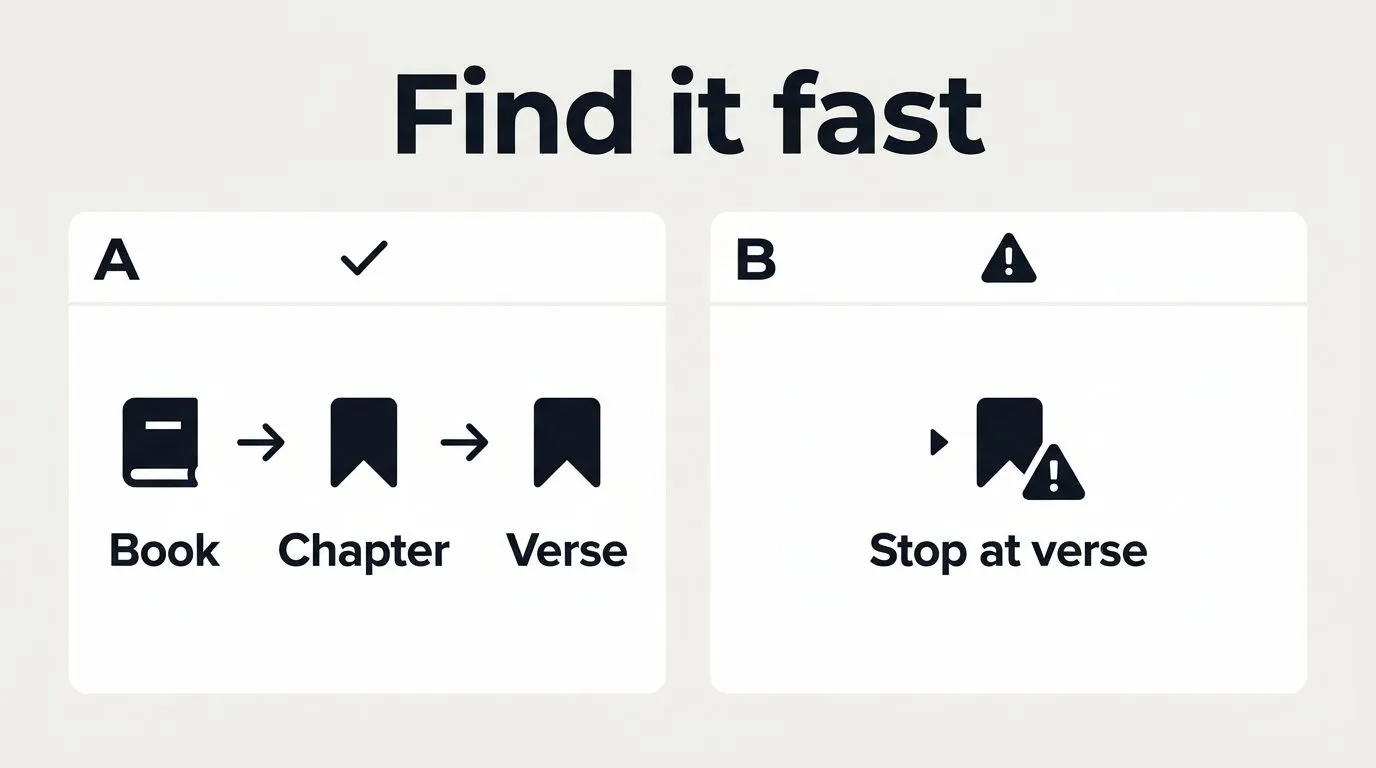
- Read the reference in order: the book name comes first, then the chapter number, then the verse number. In John 3:16, John is the book, 3 is the chapter, and 16 is the verse.
- Use the verse number to land on the exact line you want, then read a few verses before and after it so you do not pull a sentence out of context.
- Search for words tied to Jesus’ life and work, such as birth, kingdom, miracle, cross, resurrection, forgiveness, and believe, especially if your Bible has a search function or study notes.
- Compare parallel Gospel accounts when the same event appears in more than one book. Matthew, Mark, Luke, and John sometimes show the same moment from a different angle, which helps you notice details you would miss in only one account.
A beginner’s common mistake is reading only the quoted verse and stopping there. That can flatten a passage, especially in John 3:16, where the conversation with Nicodemus around it gives the verse its full force.
Cross-references are useful because they point you to related passages without making you guess where to look next. If your Bible includes them in the margin or center column, they can move you from one Gospel scene to another and help you follow how the same theme develops.
How concordances and theme indexes help you trace Jesus' teaching
- A Bible concordance lists words alphabetically and shows where those words appear, so you can find passages linked to Jesus by searching terms like love, believe, forgive, or kingdom.
- A Bible index or topical index groups passages by subject instead of by book, which is useful when you want everything your Bible says about one theme in one place.
- The Gospels tell you what Jesus did and said, while the Epistles explain how His teaching is worked out in the life of believers and local churches.
- Choose a straight Gospel reading plan when you want to meet Jesus in the text itself, and choose a theme study when you want to trace one idea across several books.
That difference between the Gospels and the Epistles keeps your reading focused. The Gospels are where you watch Jesus speak, heal, teach, and go to the cross, while the Epistles help you understand what His life and resurrection mean for faith and daily obedience.
A concordance is especially helpful if you are tracking a word like forgiveness or salvation and want to see how often it appears around Jesus’ teaching. A topical index works better when you already know the subject and want a guided path through the Bible instead of doing all the searching yourself.
If you want extra help from study tools, Bible Study Tools and Biblical Archaeology Society both offer background articles that can deepen your understanding of the Gospels, and Jesus Plus Nothing gives a broad map of how Christians often connect Jesus to the whole Bible. Use those helps after you have found the passage itself, not instead of the passage.
What to read first if you want a simple start
Start with the Gospel of John if you want the clearest statements about who Jesus is, or start with Mark if you want a fast-moving account that gets to Jesus’ ministry quickly. If you prefer a birth-and-beginnings approach, Luke 2:11 is a natural starting point because it centers the announcement of Jesus as Savior and Lord.
A good first reading plan is to stay in one Gospel long enough to notice repeated words and scenes. That gives you a stronger grasp of Jesus’ identity than jumping randomly from verse to verse.
Verification checklist
- You can open the New Testament and point to Matthew, Mark, Luke, and John without looking at notes, and the Bible page lands in the Gospels section.
- You can read a verse reference correctly, and John 3:16 takes you to the intended verse, not to chapter 16 or a nearby passage.
- You can explain the difference between a concordance and a topical index, and each one sends you to the kind of passage you actually want.
- You can choose one reading path, either a Gospel reading plan or a theme study, and your next session starts with the right book or tool in hand.
Frequently asked questions
What is the easiest Gospel for a beginner to start with?
John is often the easiest Gospel for a beginner because it gives very direct statements about who Jesus is and why belief matters. It is also a strong choice if you want a verse to memorize or share, especially John 3:16. If you prefer a faster pace, Mark is a good alternative because it moves quickly through Jesus’ ministry.
Do I need a study Bible to find Jesus in the Bible?
No, you can find Jesus in the Bible without a study Bible. A study Bible simply makes the search easier by adding notes, cross-references, and introductions that help you understand the context. If you are just starting out, those tools can save time and keep you from reading isolated verses too narrowly.
What do the chapter and verse numbers mean?
They are location markers that help you jump to a specific passage, like John 3:16 or Mark 1:1, without reading the whole book line by line. The book comes first, then the chapter number, then the verse number. That makes it much easier to find the exact words you want and then read a few verses around them for context.
Can I find Jesus in the Old Testament too?
Yes, many Christians read the Old Testament as pointing forward to Jesus through promises, symbols, and prophecies. That said, if your goal is to read about Him directly, the clearest starting place is the New Testament Gospels, especially Matthew, Mark, Luke, and John. This guide focuses on those Gospel accounts rather than the older foreshadowing in the Old Testament.


The Life of Jesus Christ: From His Birth to Resurrection
See how Matthew, Mark, Luke, and John trace Jesus from birth to the empty tomb, and why the differences matter.

What Jesus Taught About Forgiveness and Second Chances
Jesus ties forgiveness to mercy, repentance, and love for enemies. Learn how His teaching shapes real forgiveness and wise boundaries.

What Jesus Taught About Faith, Trust, and Believing in God
Jesus teaches faith as personal trust in Him. Learn what that means, how it differs from works, and how to live it daily.

What Jesus Taught About Love: Lessons for Everyday Life
Jesus taught love as sacrifice, obedience, and action. Learn how that shapes your words, choices, and relationships each day.