
Why Is Jesus Christ Called Our Savior?
Jesus is called our Savior because the Bible says He rescues you from sin, death, and separation from God. That title isn’t just a warm compliment. It names what He really does: He forgives, redeems, restores, and gives new life to people who can’t save themselves.
Key takeaways
- Jesus is named Savior because Scripture ties Him to rescue, not self-improvement, starting with the cross and resurrection.
- The Bible connects Jesus’ saving work to at least 4 realities: forgiveness, redemption, new life, and victory over death.
- The Greek word for Savior means Deliverer, so the title points to what Jesus does for you, not just what He teaches you.
- Christians today mean that Jesus still saves by grace, which changes how you repent, hope, and obey.
- If Jesus is your Savior, your future rests on His finished work, not on your performance.
What the Bible Means When It Calls Jesus Our Savior
Jesus is called Savior because Scripture presents Him as the One who delivers you from the problem underneath every other problem, sin. John 3:16 says God loved the world by giving His Son, and 2 Corinthians 5:21 says Christ was made sin for us so that we might become the righteousness of God in Him. In other words, salvation is not just comfort, motivation, or religious inspiration, it is rescue and reconciliation with God.
That’s why the title matters in everyday life. If Jesus only gave advice, you’d still be left carrying guilt, fear, and the weight of your own failure. As Savior, He does what you cannot do for yourself: He takes your place, brings forgiveness, and opens the way to a new life marked by hope instead of condemnation.
The practical meaning is simple and personal. Saving faith is not admiration from a distance, it is trusting the One who can actually save you, because He dealt with sin at the cross and gives life through His resurrection. Jesus Christ Savior means your future is not built on your performance, but on His finished work.
Where Scripture Calls Jesus Savior
- Luke 2:11, the angel tells shepherds that in Bethlehem a Savior has been born, and the announcement turns Jesus’ birth into good news for ordinary people who need rescue, not just religious inspiration.
- 2 Timothy 1:8-10, salvation is tied to God’s grace and to the appearing of our Savior Jesus Christ, which shows that rescue is God’s initiative before it is anyone’s achievement.
- Acts 2:36 and 1 Timothy 4:10, Jesus is proclaimed as both Lord and Savior, and the saving work is spoken of with a scope that reaches the people who place their hope in Him.
- 1 Corinthians 15:3-4 and 15:54-57, Paul connects Jesus’ death and resurrection to victory over death itself, so salvation includes more than forgiveness, it includes the defeat of the grave.
- These verses form a steady Bible pattern: Jesus is not only a teacher with wisdom, but the One who saves by His life, death, and resurrection.
What the Word Savior Means in the Bible’s Original Language
The Greek word σωτήρ (sótēr) means Savior or Deliverer, so the title is about rescue rather than self-improvement. In the New Testament, this word sets Jesus apart as the One who delivers people from the power of sin and death, not as someone who merely points to a better path.
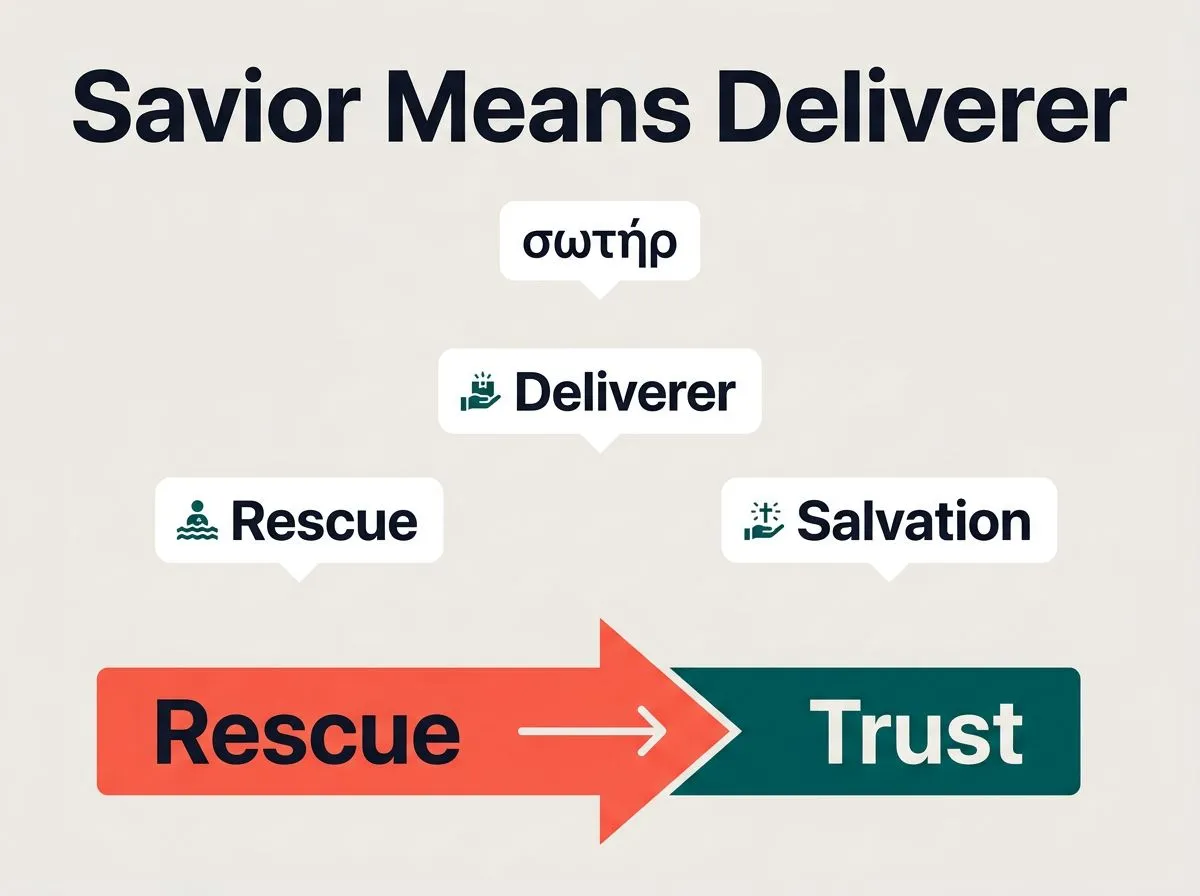
That matters because it changes the direction of faith. If salvation is rescue, then the center of the Christian life is not your effort to reach God, but God’s action toward you in Christ. The Bible’s language keeps the weight where it belongs, on the Savior, not on the person being saved.
The word also fits the Bible’s larger story, where God has long been revealed as the One who saves His people. When the New Testament calls Jesus Savior, it is not introducing a new kind of goodness, it is showing that the rescue God promised is now appearing in Jesus Christ. Sources such as BibleHub and the language notes summarized by Gospel Gazette point to that same meaning.
How Christians Explain Jesus as Savior, and What That Means for Your Life

| Biblical theme | What it shows about Jesus as Savior | What it means for your life | Scripture anchor |
|---|---|---|---|
| Rescue from sin | Jesus deals with guilt and the power that separates you from God | You can repent without despair because forgiveness is real | John 3:16; 2 Corinthians 5:21 |
| Redemption through His death | He gives Himself for you instead of leaving you trapped by sin | Your faith rests on His sacrifice, not your self-rescue | 2 Corinthians 5:21; 1 Corinthians 15:3-4 |
| Victory over death | His resurrection changes the final word from death to life | Hope becomes stronger than fear when you face loss | 1 Corinthians 15:54-57 |
| Lordship and saving care | Jesus is both Lord and Savior, not one without the other | Trust becomes obedience, gratitude, and assurance together | Acts 2:36; 1 Timothy 4:10 |
| Good news for ordinary people | His birth is announced as salvation, not hidden as theory | You can receive Him with childlike faith, not religious performance | Luke 2:11 |
What Christians Mean When They Say Jesus Is Our Savior Today
Christians say Jesus is our Savior because His saving work still names the center of the Christian life. The Church of Jesus Christ says it plainly in its statement The Living Christ: because of Him, we can change for the better and live again with God. That is not a slogan for private devotion, it is a claim about what Jesus accomplishes for real people in real need.
You can see the same emphasis in teaching from the Billy Graham Evangelistic Association and Desiring God, both of which present Jesus as the rescuing Savior who saves by His death and resurrection rather than by human effort. The practical takeaway is clear: if Jesus is Savior, then your response is trust, repentance, worship, and steady hope, not anxious self-salvation.
That also changes how you read the title in a sermon, a hymn, or a prayer. Savior is not an honorary label added to Jesus after the fact. It is the name Scripture gives Him because He does for you what no one else can do, and because His saving work is strong enough to hold your faith when your own strength runs out.
Why This Title Changes the Way You Respond to Jesus
Jesus being called Savior means you do not have to pretend you are fine before coming to Him. The Bible invites you to come honestly, because the One who saves is also the One who understands human weakness, bears sin, and offers mercy without losing holiness.
That is why the title brings both comfort and a decision. Comfort, because your hope rests in Christ’s finished work. Decision, because if He is Savior, then He is not merely someone to admire, but Someone to trust, follow, and receive as Lord of your life.
If you want the simplest biblical answer, keep it here: Jesus is called our Savior because He saves. He saves by His birth, His sinless life, His cross, and His resurrection, and that means you can live with forgiveness now and hope for life with God forever.
Frequently asked questions
Is Jesus called Savior in both the Old and New Testaments?
Yes, the idea of God as the One who saves runs through both Testaments, but the New Testament gives the title its clearest meaning in Jesus’ birth, cross, and resurrection. In the Old Testament, salvation is often shown as God rescuing His people; in the New Testament, that rescue is revealed fully in Christ.
Does calling Jesus Savior also mean He is Lord?
Yes, in the New Testament the two titles belong together. Jesus is not shown as a helper with no authority, but as the risen Lord who saves, and Acts 2:36 names Him that way directly. If He saves you, He also has the right to lead your life.
What is the difference between Savior and Redeemer?
They overlap, but they highlight different parts of the same rescue. Redeemer points to the cost of saving you, especially Christ giving Himself for you, while Savior points to the rescue itself and the One who accomplishes it. In the Bible’s language, both titles keep the focus on Jesus’ finished work, not your self-rescue.
Why do some Christians say Jesus is the only Savior?
Because the New Testament presents salvation as something God gives through Christ alone, not something you earn by effort or receive through another mediator. Jesus’ death and resurrection are shown as the decisive rescue from sin and death. That is why Christians say your hope rests in His finished work, not in anything you can add to it.


The Life of Jesus Christ: From His Birth to Resurrection
See how Matthew, Mark, Luke, and John trace Jesus from birth to the empty tomb, and why the differences matter.

What Jesus Taught About Forgiveness and Second Chances
Jesus ties forgiveness to mercy, repentance, and love for enemies. Learn how His teaching shapes real forgiveness and wise boundaries.

What Jesus Taught About Faith, Trust, and Believing in God
Jesus teaches faith as personal trust in Him. Learn what that means, how it differs from works, and how to live it daily.

What Jesus Taught About Love: Lessons for Everyday Life
Jesus taught love as sacrifice, obedience, and action. Learn how that shapes your words, choices, and relationships each day.