
What Did Jesus Teach About Money, Wealth, and Generosity?
Jesus taught that money is a strong test of the heart, not a measure of anyone’s worth. In passages like Matthew 6:19-34, Luke 12:15-21, Mark 12:41-44, and Luke 16:9, He calls you to trust God, push back against greed, and use what you have for lasting good. This article is about money, wealth, and generosity in general, not a full study of tithing law or modern budgeting.
Key takeaways
- Matthew 6:19-34 and Luke 12:15-21 show that money can become a rival master, so the real question is what you trust with your future.
- Mark 12:41-44 makes one thing clear: generosity is measured by sacrifice and faith, not by the public size of the gift.
- Luke 16:9 points money outward, toward people and eternal good, not inward toward accumulation alone.
- 1 Timothy 6:18-19 and 2 Corinthians 9:7 show that Christians should give freely, wisely, and without pressure.
- The common mistake is treating wealth as proof of security, instead of using it as a tool for stewardship and mercy.
What Jesus taught about money and wealth
Jesus taught that money can either serve God’s kingdom or start running your life. In Matthew 6:19-34, He warns against storing up treasures on earth, says you cannot serve both God and money, and points to worry as a sign that your heart is being pulled away from trust.

BibleProject frames this part of the Sermon on the Mount as a call to righteousness in how you relate to God and neighbor, and that is exactly the point: wealth is never neutral once it starts shaping your loyalties.
Mark 10:23-25 sharpens the warning by showing how hard it is for the wealthy to enter the kingdom, because riches can create the illusion of self-sufficiency. Jesus is not saying every rich person is automatically lost. He is saying wealth creates a spiritual danger that has to be faced honestly, because it can make dependence on God feel unnecessary.
Luke 12:15-21 drives the point home with the rich fool, a man who plans bigger barns but never makes room for God. His mistake was not having a harvest. His mistake was treating abundance as proof that life was secure, then talking only to himself and never toward God or others. The warning is plain: if your future depends on larger storage, better margins, or more accumulation, you may already be calling possessions what only God can be.
Luke 16:9 gives money a different use altogether. Jesus says to use worldly wealth in ways that serve eternal purposes, which means money is meant to move outward, not just pile up inward. That does not make money holy by itself. It means money becomes useful when it is directed toward people, mercy, mission, and kingdom priorities.
Jesus was not teaching that money is evil. He was teaching that money can become a rival master, and once that happens, even ordinary things like saving, spending, and planning start carrying spiritual weight. That is why the question is never only how much you have. The deeper question is what your money is training your heart to trust.
How Jesus showed generosity in practice
- Mark 12:41-44 shows that Jesus valued sacrificial giving more than public size, because the widow’s two small coins revealed trust that rich gifts often hide.
- Jesus connected generosity with mercy by treating people as more important than possessions, so open-handed living is measured by care, not display.
- His parables repeatedly turn wealth into something that can serve others, especially when it is used with grace instead of status in mind, as FaithLead notes in its discussion of Jesus’ financial parables.
- In daily life, generosity looks like simpler choices, quicker sharing, and a habit of putting people before stuff when there is a real need in front of you.
What these passages mean for giving, stewardship, and common mistakes
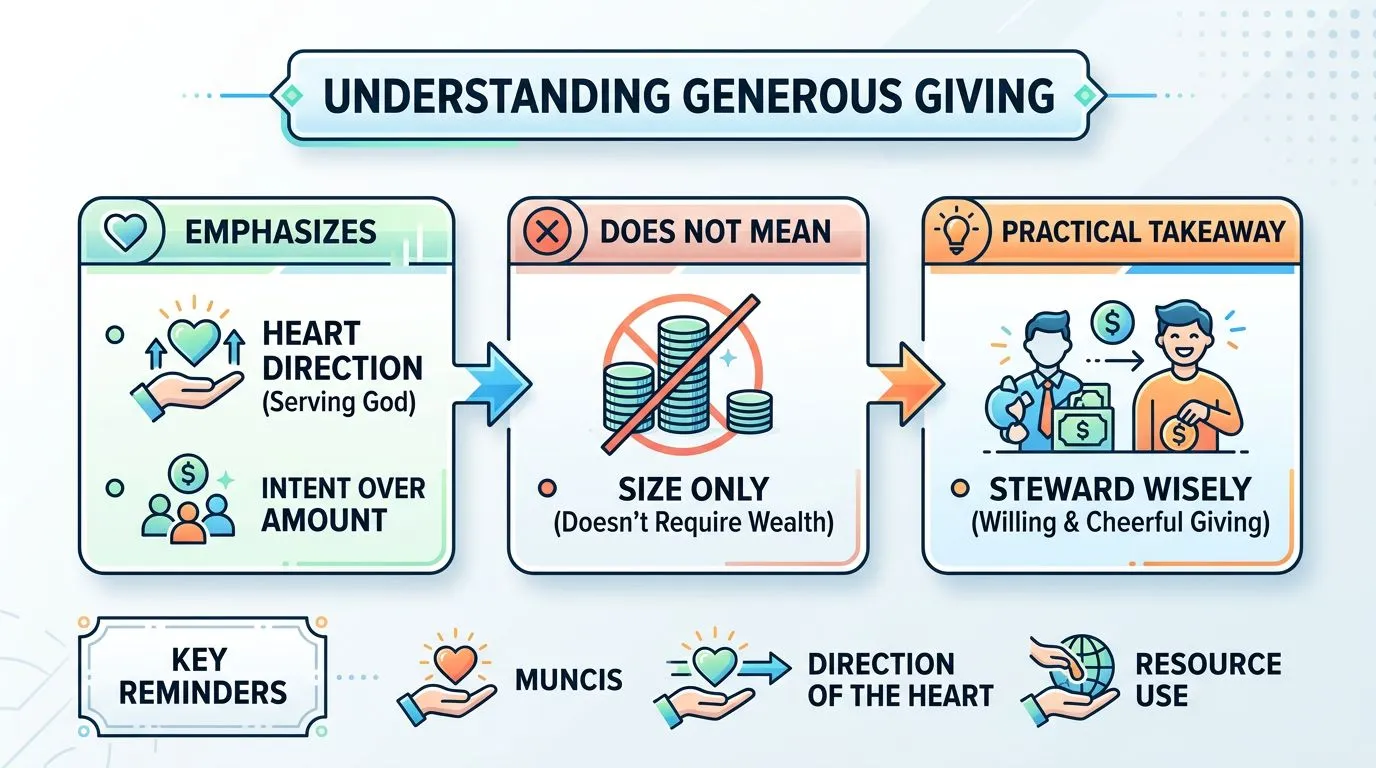
| Passage or teaching | What it emphasizes | What it does not mean | Practical takeaway | How New Testament giving relates to Jesus’ teaching, including willing, cheerful giving and stewardship |
|---|---|---|---|---|
| Matthew 6:19-34 | Treasures, trust, and serving one master | That planning, saving, or owning property is sinful | Check whether money is reducing worry or feeding it | Give and manage resources in ways that strengthen trust in God, not fear |
| Luke 12:15-21 | The danger of greed and false security | That abundance itself is the problem | Do not mistake bigger reserves for a bigger soul | Stewardship means asking what your wealth is for, not just how much you can keep |
| Mark 12:41-44 | Sacrificial giving and hidden faith | That God only notices large gifts | Measure generosity by cost and faith, not by visibility | New Testament giving values the heart behind the gift, not the amount alone |
| Luke 16:9 | Using money for eternal purposes | That money saves anyone or earns salvation | Spend with eternity in view | Stewardship includes investing resources in people and gospel-shaped good |
| 1 Timothy 6:18-19 | Doing good, being generous, storing up treasure for the future | That Christians should avoid wealth at all costs | Riches should become a tool for good works | This supports active stewardship, where wealth is managed for blessing rather than self-protection |
| 2 Corinthians 9:7 | Giving willingly and cheerfully | That God wants forced or resentful gifts | Give from conviction, not pressure | Christian giving is meant to be free, joyful, and thoughtful, not coerced |
The common mistake is reading Jesus as if He only cares about the size of the gift or whether you have wealth at all. He cares about the direction of the heart, the use of resources, and the loyalty behind both. That is why churches such as The Gospel Coalition, Christ Fellowship Church, and Clear Creek Resources all stress that Jesus’ teaching exposes spiritual priorities, not just financial habits.
New Testament giving fits Jesus’ teaching when it is willing, cheerful, and shaped by stewardship. 2 Corinthians 9:7 says God loves a cheerful giver, and 1 Timothy 6:18-19 tells believers to do good, be rich in good works, and be generous and ready to share. That means Christian giving is not a performance, and it is not a bribe to God. It is a steady practice of turning money into mercy, support, and witness.
A healthy reading of Jesus on money leads to two practical tests. First, ask whether your spending reveals trust in God or fear of running out. Second, ask whether your giving leaves room for sacrifice, or only for leftovers. If those answers are uncomfortable, that is often the place where Jesus is already working on your heart.
Next steps for applying Jesus’ teaching on money
- Read Matthew 6:19-34 and Luke 12:15-21 slowly, then write down what each passage says about trust, worry, and security.
- Look at one month of spending and saving, and ask whether it reflects kingdom priorities or self-protection.
- Choose one concrete act of generosity this week, and make it specific enough to cost you something real.
- Pray through 2 Corinthians 9:7 and ask God to make your giving willing, cheerful, and wise.
- If you want a fuller study, compare how BibleProject, Mission Hills Church, and The Gospel Coalition explain Jesus’ warnings about wealth and the heart.
Frequently asked questions
Did Jesus say money is evil?
No. Jesus treated money as a spiritual test, not as something evil in itself. The danger is when wealth starts to rule your heart, create the illusion that you can live without God, or push you into worry and self-sufficiency.
Is tithing the same thing as New Testament generosity?
Not exactly. Tithing belongs to the Old Testament background, while New Testament giving is broader and centers on willing, cheerful generosity. In the passages cited here, the emphasis falls on stewardship, mercy, and using resources to bless others and support God’s work.
What does Jesus mean by ‘store up treasures in heaven’?
He means you should invest your life in what lasts, not in what can be lost or buried in bigger barns. In this article, that includes obedience, mercy, generosity, and using money for people and kingdom priorities instead of treating accumulation as security.
Does Jesus forbid saving money?
No. Jesus does not forbid wise planning or saving, and the article even notes that wealth can be managed responsibly. The warning is against trusting savings as your ultimate security, or letting financial reserves become a substitute for dependence on God.


The Life of Jesus Christ: From His Birth to Resurrection
See how Matthew, Mark, Luke, and John trace Jesus from birth to the empty tomb, and why the differences matter.

What Jesus Taught About Forgiveness and Second Chances
Jesus ties forgiveness to mercy, repentance, and love for enemies. Learn how His teaching shapes real forgiveness and wise boundaries.

What Jesus Taught About Faith, Trust, and Believing in God
Jesus teaches faith as personal trust in Him. Learn what that means, how it differs from works, and how to live it daily.

What Jesus Taught About Love: Lessons for Everyday Life
Jesus taught love as sacrifice, obedience, and action. Learn how that shapes your words, choices, and relationships each day.