
What Did Jesus Teach About Marriage, Love, and Commitment?
A couple in a Sunday school class may be trying to make sense of a hard marriage question: What did Jesus actually teach about marriage, love, and commitment, and what does that mean when divorce or remarriage comes up? In Matthew 19:4-6, Jesus pointed back to God’s design in creation, quoted the one-flesh language from Genesis, and tied love to obedience, sacrifice, and faithfulness, not feelings alone.
Key takeaways
- Jesus points back to creation, so marriage is a covenant, not a casual contract.
- Mark 10 and Luke 16 give a strict warning: remarriage after divorce is never light or routine.
- Matthew 19 includes an exception clause, so Christians should read Jesus carefully, not selectively.
- Love in marriage is measured by obedience, sacrifice, and patience, not feelings alone.
- Paul builds on Jesus’ teaching by calling spouses to steadfast faithfulness and mutual care.
This guide focuses on marriage, divorce, remarriage, and covenant commitment. It doesn’t try to cover every pastoral case or every church tradition, but it does lay out the core words of Jesus and the way Paul develops them for Christian life.
What Jesus Said About Divorce and Remarriage
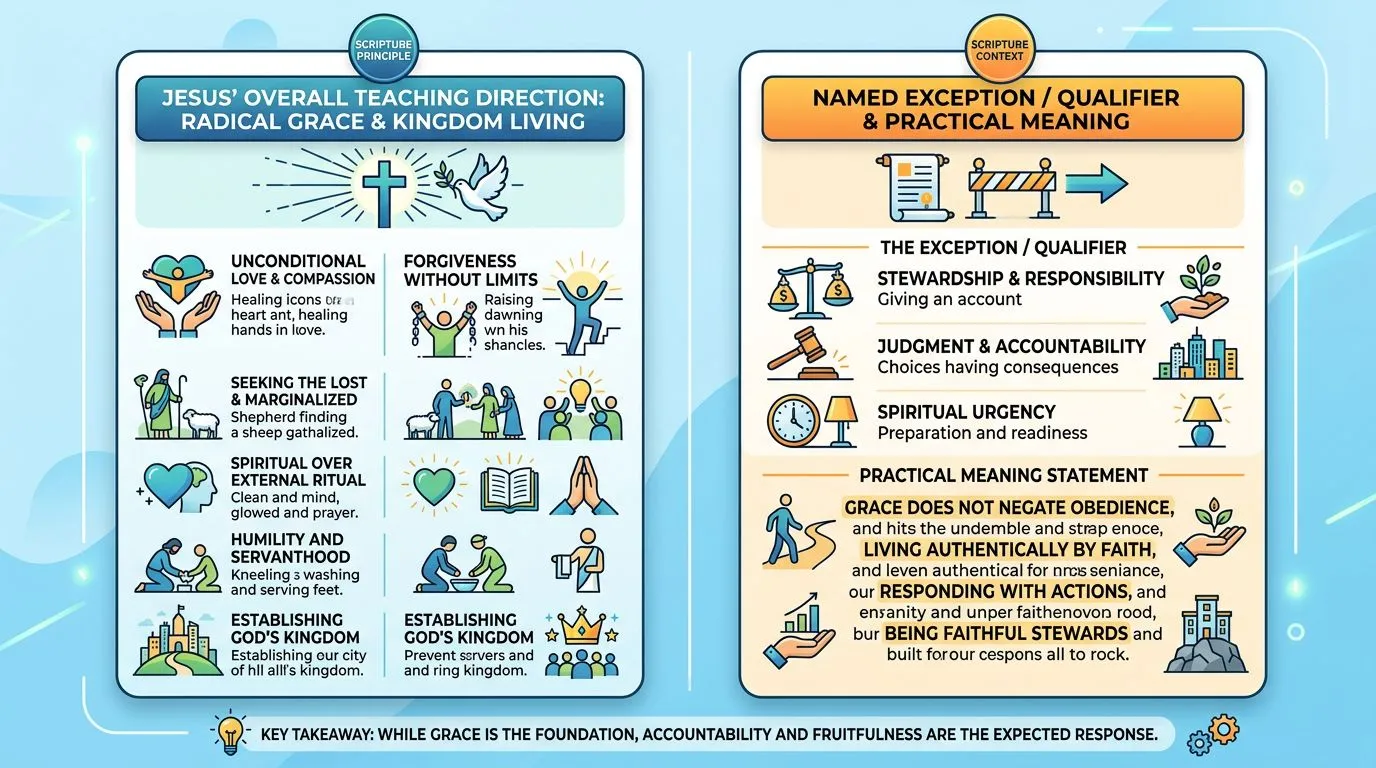
| Passage | What Jesus said | Exception or qualifier | Practical meaning for marriage |
|---|---|---|---|
| Matthew 19:3-12 | Jesus said divorce was never God’s heart for marriage and pointed the Pharisees back to creation, where the two become one flesh. | He named sexual immorality as an exception in Matthew’s account. | Marriage is treated as a serious covenant, not a disposable arrangement. |
| Mark 10:2-12 | Jesus said that whoever divorces and marries another commits adultery, and He gave the same warning whether the husband or wife is the one acting. | No exception clause is stated in Mark. | The default posture is endurance, not exit, and remarriage after an unlawful divorce is not presented lightly. |
| Luke 16:18 | Jesus said that divorce followed by remarriage is adultery, and He stated the warning in short, direct terms. | No exception clause is stated in Luke. | Luke reinforces the seriousness of breaking a marriage covenant and the moral weight of remarriage. |
| Matthew 5:31-32 | Jesus narrowed the issue instead of making it casual, saying that divorce can create adultery and that remarriage after divorce is morally serious. | Matthew includes the exception for sexual immorality. | The passage shows both the gravity of divorce and the need to read Jesus carefully, not selectively. |
Jesus answered the Pharisees by going back to Genesis, not by debating loopholes. That matters because He didn’t treat marriage like a legal puzzle to be worked around, but as something God established from the beginning. The point is plain, if God joined the couple, human convenience does not get the final word The Focused Pastor.
Matthew’s exception clause does not cancel Jesus’ seriousness. It shows that adultery or sexual unfaithfulness is no small offense, but it does not turn divorce into a routine answer for hurt feelings, conflict, or boredom. Mark and Luke keep the warning blunt, while Matthew 5:32 adds the exception clause, so Christians should not make Jesus sound looser than He is The North American Anglican.
The practical meaning today is clear. Jesus teaches that divorce is a grave rupture, remarriage is never a neutral follow-up, and marital vows are meant to be entered with reverence from the start. That doesn’t erase pastoral care for broken homes, but it does rule out treating marriage like a contract that expires whenever it gets inconvenient.
How Jesus Defined Love in Human Relationships
- Jesus said the greatest commandment is to love the Lord your God with all your heart, soul, and mind, and the second is to love your neighbor as yourself, so love for a spouse begins with devotion to God, not with self-protection.
- Jesus’ call to mercy and forgiveness shapes marriage because a covenant relationship cannot survive if every offense becomes a reason to keep score.
- Jesus used images of faithful belonging and costly discipleship, which show that love is proven by loyalty, not just by warm words.
- In marriage, love starts with covenant faithfulness, which means staying truthful, patient, and present even when feelings are low.
- Jesus ties love to obedience and whole-person devotion, so the question is not only how you feel, but how you act toward the person you vowed to honor.
- In daily married life, that looks like listening without interruption, refusing cruel speech, and choosing peacemaking before resentment hardens into habit.
Matthew 22:37-40 gives the center of gravity for everything Jesus says about love. If you love God first, you don’t use your spouse as a rival for your comfort. You serve, you restrain yourself, and you measure your words by whether they build peace or break trust JesusWalk.
That is why Christian love in marriage is not mainly a feeling you wait to receive. It’s a practiced way of living that reflects Christ’s mercy in ordinary moments, like apologizing quickly, forgiving without drama, and refusing the urge to win every argument. Love shows up in what you do when no one is watching.
What Jesus Taught About Covenant Commitment
Jesus taught that covenant commitment begins with God’s action, because in Matthew 19:4-6 He grounded marriage in creation and said that what God has joined together no one should separate. That means marriage is not a casual human arrangement built only on compatibility, but a union with divine witness and moral weight, which changes how vows are heard, spoken, and kept.
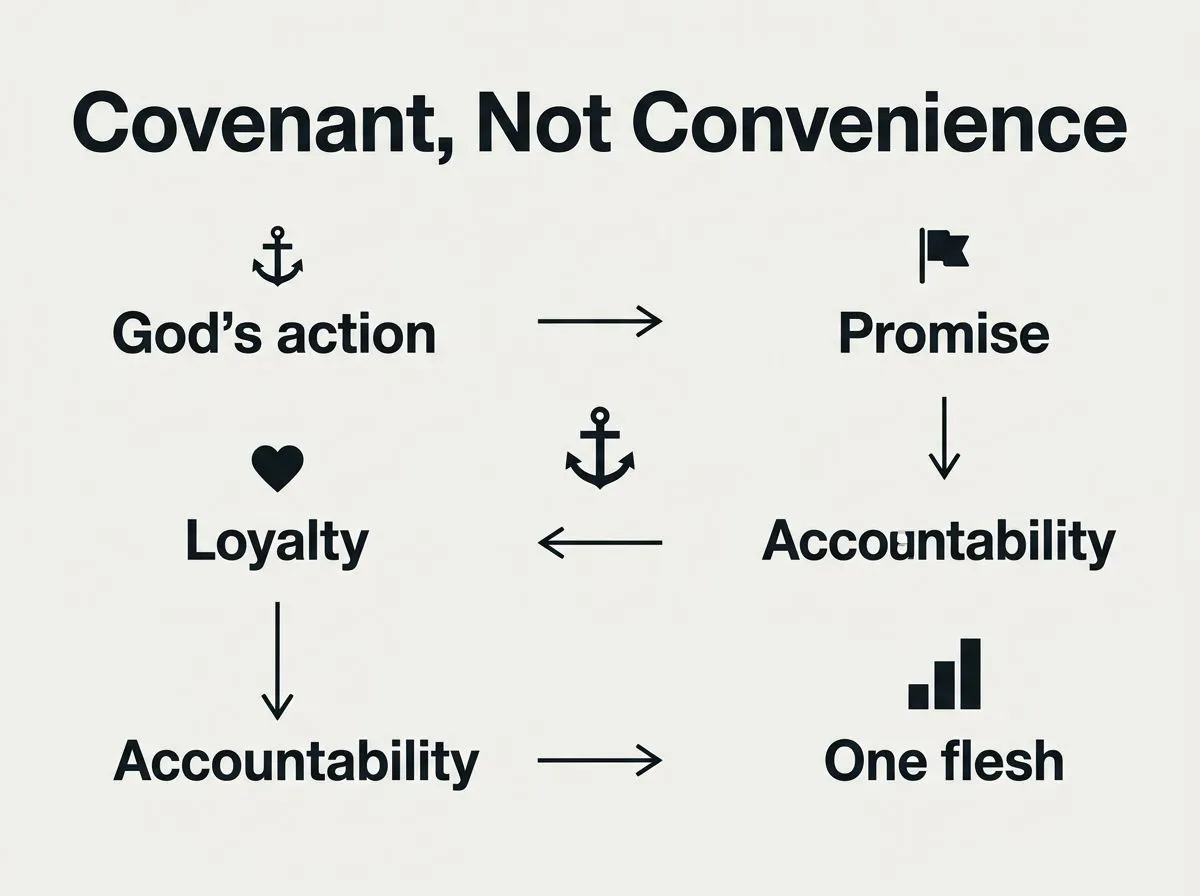
In biblical terms, covenant means a binding relationship marked by promise, loyalty, and accountability. Jesus’ words in Matthew 19:4-6 point back to the one-flesh union of man and woman, so the marriage vow is not just a public ceremony but a commitment to stay faithful through ordinary strain, financial pressure, illness, disappointment, and change. Our Daily Bread Ministries puts that covenant logic plainly: the promise is made before the Lord, not just before family and friends.
That is also why Jesus’ teaching addresses adultery and hardness of heart so directly. He does not normalize betrayal, and He does not pretend stubbornness is a small flaw. When He says what God has joined together should not be separated, He is warning against the kind of self-centeredness that treats a spouse as replaceable whenever love feels costly.
Why Matthew 22:30 matters here
Matthew 22:30 matters because Jesus said that in the resurrection people neither marry nor are given in marriage. That tells us marriage belongs to this present age, not the age to come, so it is a sacred earthly sign with a beginning and an end. This matters for marriage now because it keeps us from turning an earthly covenant into an ultimate one. Eternal Perspective Ministries notes that this does not lessen marriage, but places it within God’s larger kingdom story.
The practical consequence is important. Because marriage is temporary in that sense, Christians should not idolize it, but because it is holy in this age, they also should not trivialize it. The right response is reverence: keep your vows, guard your fidelity, and treat your spouse as someone entrusted to you by God.
How Paul Develops Jesus' Teaching on Marriage
- 1 Corinthians 7 says marriage includes mutual duties, and it also addresses separation and peace with pastoral realism instead of romantic fantasy.
- Ephesians 5:25-33 teaches husbands to love their wives as Christ loved the church, which means self-giving, cleansing, and faithful care.
- Titus 2:4-5 calls older women to train younger women to love their husbands and children and to live with discretion and purity.
- Paul keeps Jesus’ original vision intact by treating marriage as holy, ordered, and shaped by devotion to Christ.
- Paul’s guidance helps ordinary Christian households by naming mutual care, purity, and endurance as part of discipleship.
- His letters do not weaken Jesus’ words; they apply them to daily life in homes, churches, and seasons of pressure.
1 Corinthians 7 is especially helpful because Paul does not speak as if marriage were a spiritual failure. He speaks to real households, real tensions, and real duties, and he keeps peace in view. That matters for readers who need more than an idealized picture, because Scripture is honest about friction without making faithfulness optional.
Ephesians 5:25-33 brings the center back to Christ. Husbands are called to love in a way that looks like Jesus, which means initiative, sacrifice, and protection rather than dominance. Paul’s language also lifts marriage above mere companionship, because it becomes a living sign of Christ and His church.
Titus 2:4-5 brings the teaching into the ordinary rhythms of home life. Marriage is not sustained by grand speeches, but by trained habits of kindness, self-control, and responsibility. That is why Paul’s instruction fits Jesus so well, it assumes that holiness shows up in the kitchen, the schedule, the budget, and the way spouses speak when tired.
What This Means for Christian Relationships Today
Jesus teaches that marriage should be entered carefully, guarded faithfully, and honored as a covenant before God. That means Christian couples should not treat commitment as a mood, and they should not use the language of love to excuse selfishness, secrecy, or repeated betrayal. The safest path is still the most biblical one, because vows are meant to be kept, not managed for convenience.
For readers dealing with a hurting marriage, the point is not to act like the pain isn’t real. It’s to let Jesus define the seriousness of the covenant, while also letting His mercy shape repentance, forgiveness, and careful pastoral care. When the relationship is intact, His words call for vigilance. When it is broken, His words call for truth without cruelty.
Next Steps
- Read Matthew 19:3-12, Mark 10:2-12, Luke 16:18, and Matthew 5:31-32 together, and note what Jesus repeats in each passage.
- Ask whether your view of marriage starts with convenience or with God’s design in creation.
- Pray through Matthew 22:37-40 and ask how love for God should shape the way you speak to your spouse.
- Read 1 Corinthians 7 and Ephesians 5:25-33 slowly, then look for one habit of faithfulness you need to strengthen this week.
- If your marriage is under strain, seek wise pastoral counsel from a Bible-believing church rather than making a private decision in a rushed emotional moment.
Frequently asked questions
Did Jesus say divorce is always a sin?
No, not in a simple, flat way. In Matthew 19:3-12, Jesus gives a serious warning about divorce and remarriage, but Matthew also records an exception for sexual immorality, while Mark 10 and Luke 16 state the warning without that clause. Read the passages together, because Jesus treats marriage as a covenant, not a disposable arrangement.
What did Jesus mean when He said people will neither marry nor be given in marriage in heaven?
He was talking about the resurrection life, where marriage as we know it does not continue. In Matthew 22:30, Jesus places marriage in this present age, so it is holy and meaningful now, but not the final reality in God’s kingdom. That does not diminish marriage, it shows what it was always pointing toward.
How should Christians apply Jesus' teaching if they are already divorced and remarried?
That moves from interpretation into pastoral care, so the right next step is wise counsel from a trusted, Bible-believing pastor. The article makes clear that Jesus treats divorce and remarriage as morally serious, but it does not flatten every real-life case into one answer. Individual situations need repentance, truth, and careful church guidance.
Does Jesus ever mention marriage outside the divorce passages?
Yes. In Matthew 22:30, Jesus speaks about marriage in the resurrection, and in Matthew 22:37-40 He frames love as devotion to God and neighbor, which shapes how spouses treat each other. His teaching on covenant, faithfulness, and obedience gives marriage moral weight even when He is not using the word "marriage."


The Life of Jesus Christ: From His Birth to Resurrection
See how Matthew, Mark, Luke, and John trace Jesus from birth to the empty tomb, and why the differences matter.

What Jesus Taught About Forgiveness and Second Chances
Jesus ties forgiveness to mercy, repentance, and love for enemies. Learn how His teaching shapes real forgiveness and wise boundaries.

What Jesus Taught About Faith, Trust, and Believing in God
Jesus teaches faith as personal trust in Him. Learn what that means, how it differs from works, and how to live it daily.

What Jesus Taught About Love: Lessons for Everyday Life
Jesus taught love as sacrifice, obedience, and action. Learn how that shapes your words, choices, and relationships each day.