
What Can the Teachings of Jesus Teach Us About Worry and Anxiety?
Jesus teaches you to bring your worry to God, reset your priorities, and take life one day at a time. That doesn’t erase clinical anxiety, though. If fear keeps sticking around, leads to avoidance, or disrupts daily life, you may need professional care along with prayer and Scripture.
Key takeaways
- Matthew 6:25-34 shows Jesus addressing daily needs, not denying real problems, and calling you to trust God with tomorrow.
- If worry lasts for weeks, drives avoidance, or disrupts work, school, or relationships, that is a sign to seek help.
- Prayer and Scripture can be combined with therapy tools like cognitive behavioral therapy and present-moment focus.
- A wise next step is one concrete action today: call a clinician, talk to a pastor, or take one practical task off your list.
What Jesus teaches about worry in Scripture
Jesus teaches that worry doesn’t have to run your life, because your Father already knows what you need. In Matthew 6:25-34, He tells His followers not to worry about food, drink, clothing, or tomorrow, then points them to God’s care for birds and lilies as a picture of steady provision.
That teaching is not a command to act like problems are small. Jesus is dealing with the heart posture behind anxious living, the kind of mental and spiritual strain that keeps you locked on scarcity, control, and what might happen next.
Philippians 4:6-7 gives the same direction in a different setting: don’t be anxious, pray about everything, and thank God as you ask for help. 1 Peter 5:6-7 adds the same movement of surrender by telling believers to humble themselves and cast their cares on God because He cares for them.
Taken together, these passages show a clear biblical pattern. Worry meets prayer, trust, gratitude, and a daily choice to seek God first instead of trying to secure every outcome yourself.
How normal anxiety differs from an anxiety disorder
| Category | What it looks like | How long it lasts | How it affects daily life | Common examples | What to do next |
|---|---|---|---|---|---|
| Normal worry | A focused response to a real concern, often tied to a specific problem or deadline | Usually temporary and linked to the situation | May be uncomfortable, but you can still function | Feeling tense before a job interview or medical test | Pray, get support, and use practical coping steps |
| Anxiety disorder | Persistent fear, worry, or avoidance that feels bigger than the situation | Lasts longer and often keeps returning even when the trigger has passed | Interferes with enjoyment, school, work, friendships, or home life | Ongoing dread, avoiding places or tasks, constant reassurance-seeking | Make an appointment with a mental health provider |
| Generalized anxiety disorder (GAD) | Ongoing, hard-to-control worry that spreads across many areas of life | Chronic, with worry that keeps showing up day after day | Can drain energy and make ordinary decisions feel heavy | Worrying about finances, family, health, and small decisions at once | Ask a clinician or therapist for an evaluation |
The practical difference is not whether you ever feel anxious, but whether anxiety keeps taking over your days. A passing wave of worry can be part of normal life. A pattern of fear and avoidance that shrinks your world is something else entirely.
When worry becomes a signal to seek help
- Seek help when anxiety begins to impede your ability to enjoy life, interact at school or work, spend time with friends, or manage home life, which matches guidance from Johns Hopkins Medicine.
- Do not wait until everything is breaking down. Cleveland Clinic notes that getting help as soon as symptoms appear can reduce disruption and improve quality of life, relationships, and productivity.
- Make a first appointment with a mental health provider, and expect therapy to be a common next step when fears and avoidance have become deeper or more entrenched.
- Avoid pressuring yourself or someone else to “just push through,” because Johns Hopkins Medicine warns that forcing a frightened person can damage trust; partnership with a professional is usually better than pressure.
If symptoms are growing, the question is no longer whether your faith is sincere enough. The real question is whether anxiety is narrowing your life, and if it is, treatment is a wise act of stewardship, not a spiritual failure.
How to combine prayer with evidence-based coping tools
You can pair prayer with proven coping tools without treating them like rivals. Cognitive behavioral therapy helps you notice anxious thoughts, test whether they’re accurate, and replace distortions with more grounded thinking, while mindfulness trains your attention on the present moment so rumination doesn’t keep pulling you into worst-case scenarios.
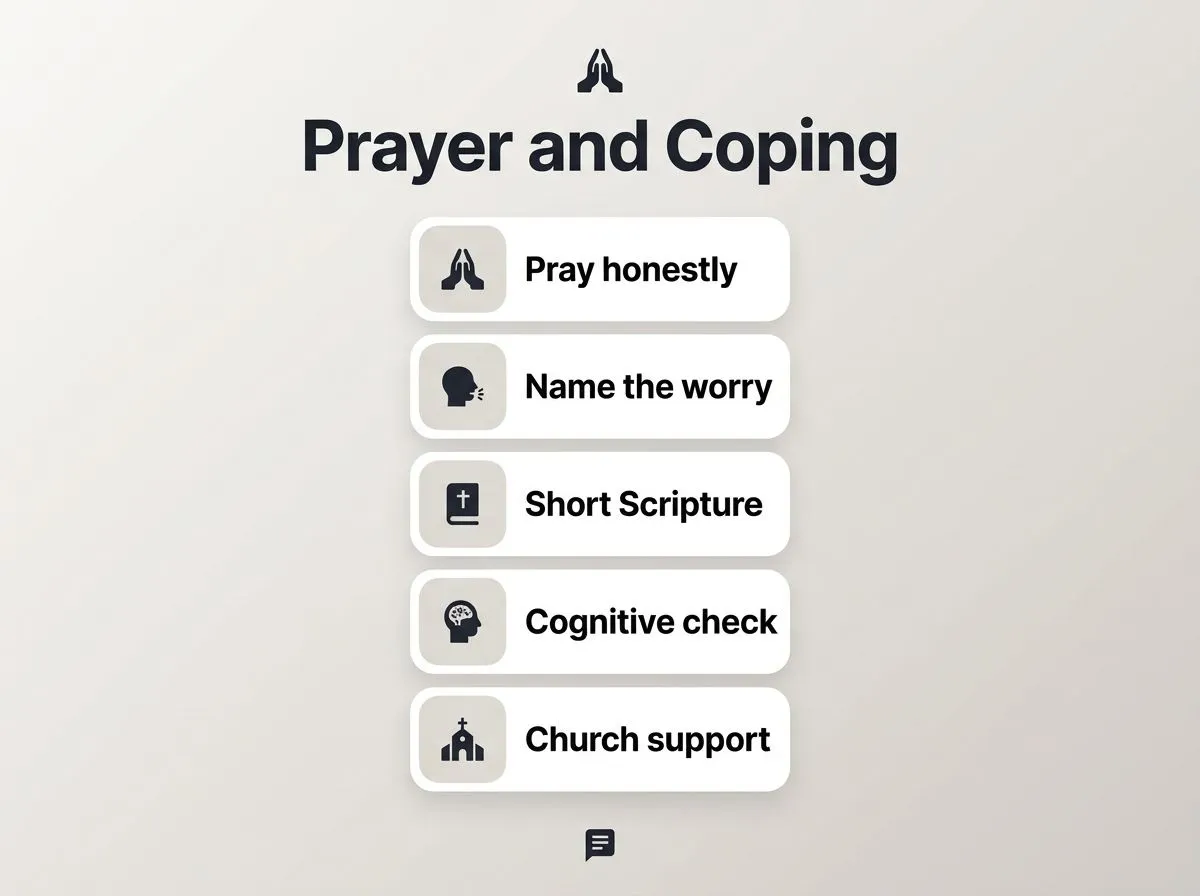
What this looks like in daily practice
- Pray honestly, naming the specific worry instead of vaguely asking for peace.
- Read one short Scripture passage, such as Matthew 6:34 or Philippians 4:6-7, and sit with its main command for a minute.
- Take one grounded action you can complete today, such as making the call, writing the email, or preparing the next step.
- Bring one support step into the day, like speaking with a pastor, counselor, trusted friend, or church group.
- Keep going with treatment if your symptoms are persistent or severe, because prayer and Scripture can strengthen you while professional care addresses the disorder itself.
Church support matters here too. A wise pastor or mature Christian friend can remind you to pray, help you stay connected, and reduce isolation, but spiritual encouragement works best when it sits beside medical or therapeutic care instead of trying to replace it.
What this means for your next step
Jesus teaches you to release tomorrow to God, but He does not ask you to ignore signs that anxiety is becoming more than ordinary worry. If your fears are shrinking your life, make the appointment, keep praying, and let Scripture shape your trust while a qualified professional helps you heal and regain steady ground.
Frequently asked questions
Can a Christian have anxiety and still have strong faith?
Yes. Faith and anxious feelings can coexist, and struggling with anxiety does not mean you have failed God. Jesus’ teaching and the rest of Scripture call you to bring fear honestly to Him, not to pretend you are never overwhelmed. If your worry is starting to narrow your life, that is a sign to seek help, not a sign that your faith is fake.
What Bible verse should I pray when I feel overwhelmed?
Philippians 4:6-7 is a strong place to start because it tells you not to be anxious, to pray about everything, and to thank God as you ask for help. It also gives a clear promise: God’s peace will guard your heart and mind in Christ Jesus. If you need another companion verse, 1 Peter 5:7 says to cast all your cares on Him because He cares for you.
Should I read Scripture instead of going to therapy?
No. Scripture is essential for spiritual encouragement, but it is not a replacement for professional care when anxiety is persistent, leads to avoidance, or disrupts daily life. The article points you toward both prayer and practical help, including therapy, because prayer can strengthen your trust while treatment addresses the disorder itself.
How do I help a loved one who is anxious without making it worse?
Listen calmly, encourage them to make one appointment with a mental health provider, and avoid pressuring them to push through fear before they are ready. Partnership usually helps more than pressure, especially when anxiety is already affecting school, work, friendships, or home life. A steady presence and patient support can make it easier for them to take the next step.


The Life of Jesus Christ: From His Birth to Resurrection
See how Matthew, Mark, Luke, and John trace Jesus from birth to the empty tomb, and why the differences matter.

What Jesus Taught About Forgiveness and Second Chances
Jesus ties forgiveness to mercy, repentance, and love for enemies. Learn how His teaching shapes real forgiveness and wise boundaries.

What Jesus Taught About Faith, Trust, and Believing in God
Jesus teaches faith as personal trust in Him. Learn what that means, how it differs from works, and how to live it daily.

What Jesus Taught About Love: Lessons for Everyday Life
Jesus taught love as sacrifice, obedience, and action. Learn how that shapes your words, choices, and relationships each day.