
Why Does God Allow Suffering?
Suffering can feel random when it lands in your home, your body, or your marriage, but the Bible says God has not abandoned you in it. He allows pain in a fallen world, works through it for redemptive purposes, and promises His presence, comfort, and ultimate restoration without pretending the hurt is small.
Key takeaways
- Romans 8:18, 28, and 29 point to present pain now and future glory later, so suffering is never the final word.
- John 16:33 says trouble will come, but Jesus has already overcome the world, giving you peace in the middle of it.
- James 1:2-4 and 1 Peter 1:6-7 show that trials can refine faith, but growth still takes time, prayer, and obedience.
- Scripture does not call suffering good, but it does teach that God can bring good from what He hates.
- When suffering hits, lean on God’s comfort first, then comfort others with the same mercy you have received.
What the Bible says about suffering
- Romans 8:18, 28, and 29 frame suffering as real now and glory later, with God working through all things for those who love Him.
- John 16:33 says Jesus promised trouble in this world, then pointed to His own victory as the reason you can have peace.
- 2 Corinthians 1:3-4, James 1:2-4, and 1 Peter 1:6-7 connect hardship with comfort, endurance, and faith that is tested and refined.
- These verses should be read as comfort, not as a shortcut around grief, denial, or unanswered questions.
Romans 8 does not say believers will avoid pain, and that matters. Paul begins with present groaning, then turns to future glory in Romans 8:18 and Romans 8:28, which means the Christian story holds tears and hope together. The practical takeaway is straightforward: if you read that chapter as a promise of easy relief, you miss its stronger promise that suffering is not wasted in God's hands.
Jesus says it even more directly in John 16:33. He tells you trouble is part of life in this world, then adds, “take heart,” because He has overcome the world. That is not a polished answer to every wound, but it is solid ground to stand on when your circumstances have not changed yet.
The comfort passages are not there to minimize sorrow. 2 Corinthians 1:3-4 says God comforts us in our affliction so we can comfort others, and 1 Peter 1:6-7 says trials can prove faith that is more valuable than gold. The point is not that pain is pleasant, but that God can meet you in it and bring endurance, compassion, and tested trust out of it.
Why God allows suffering
God allows suffering because human sin and human freedom are real, and those realities have consequences. Renew.org says suffering is a byproduct of sin, and that fits the Bible's plain picture: when people reject God's good design, harm spreads outward into families, communities, and even the body itself. That does not explain every individual pain, but it does explain why the world is not as it should be.

A fallen world also helps explain why pain reaches people who did not cause the immediate problem. Children suffer from their parents' choices. The faithful endure sickness, betrayal, and loss in the same world where the unjust often seem untouched for a season. FamilyLife notes that God can use suffering to show our need for a Savior, and that is a deep answer because it tells the truth about both the brokenness of the world and the mercy of God.
God brings good without calling suffering good
God can bring good out of suffering without calling suffering good in itself. That distinction matters, because Christians should never look at grief, abuse, illness, or death and label them good. David Jeremiah Ministries puts it plainly: God never allows pain without purpose, yet the pain itself is still pain.
This is where many believers stumble. They hurry to explain the event instead of trusting the God who is present in it. The better biblical move is to say that God is able to redeem what He does not delight in, which keeps you honest about evil and confident about His sovereignty at the same time.
Mystery belongs here too. Billy Graham Evangelistic Association says suffering carries a message of mystery, and that is not a failure of faith. Some questions will not have a neat explanation in this life, and forcing one often wounds people more than silence does.
What Scripture promises in suffering
- God can use suffering for good, including deeper trust and a clearer dependence on Him, as Romans 8:28 teaches.
- Trials can produce perseverance and mature faith instead of shallow belief.
- Present pain is not the final word for believers, because Jesus has already overcome the world.
- God’s comfort and presence are promised even when immediate relief does not come.
Romans 8:28 is a promise about God’s purpose, not a promise that every event will feel good. FamilyLife points to the central truth that God works in and through all things for His people. The practical consequence is that you do not have to call a tragedy good to trust that God can still shape something good from it.
James 1:2-4 and 1 Peter 1:6-7 give the believer a second promise: trials can mature faith. That means testing can expose what is brittle, shallow, or borrowed from other people, then strengthen what is real. The common mistake is to treat growth as automatic; Scripture presents it as possible, but still something you must walk through with obedience, prayer, and patience.
The deepest promise is that pain is temporary for those who belong to Christ. John 16:33 keeps the timeline honest, because Jesus does not say trouble disappears now. He says He has already overcome, which means suffering is serious but not sovereign.
God’s comfort is also a promise, not just an idea. 2 Corinthians 1:3-4 says He comforts us in all our affliction, then sends that comfort outward through us. That changes how you read your own pain: it may become the place where your tenderness toward someone else is born.
How to respond pastorally when suffering hits
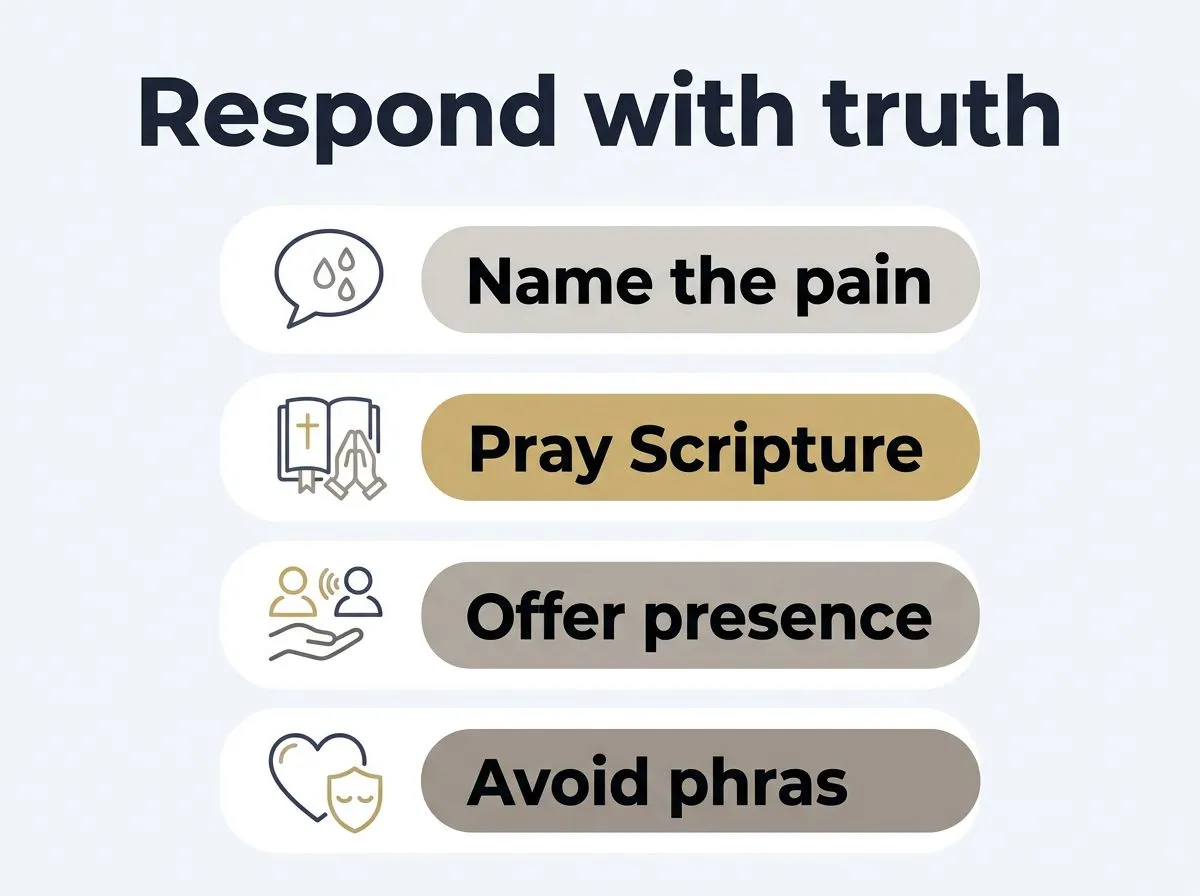
- Name the pain plainly instead of rushing to explain it away.
- Pray Scripture and lament honestly, using the Psalms as a guide.
- Offer presence, practical help, and patient listening to hurting people.
- Avoid phrases that minimize grief or pressure someone to move on too quickly.
Name the pain plainly because vague language can feel like spiritual avoidance. If someone is grieving a death, living through a diagnosis, or carrying the fallout of betrayal, say that the loss is real and heavy. That kind of honesty does not weaken faith; it makes room for God’s comfort to meet the actual wound rather than a sanitized version of it.
Pray Scripture and lament honestly because the Psalms already give you words for that. You do not have to compose polished prayers when your heart is breaking. Tell God the truth, ask for mercy, and keep returning to His promises when your feelings lag behind your faith.
What helping others looks like in practice
Presence matters more than speeches. Sit with the person, bring the meal, answer the text, remember the appointment, and do not make them carry the conversation alone. Scripture Union’s emphasis on hope and practical wisdom fits here, because encouragement in Scripture should show up in actual care, not just words.
Patient listening is often the most compassionate thing you can do. Let the hurting person speak without steering them toward a lesson too soon. FamilyLife and Billy Graham Evangelistic Association both point in similar directions here: compassion is not silence forever, but it is restraint, and it refuses to hurry someone past what God is still meeting them in.
Avoid the lines that shrink grief. “Everything happens for a reason” can sound tidy when someone is shattered. So can “at least” statements that compare pain instead of honoring it. Better words are simple: “I am so sorry,” “I am here,” and “I will pray with you.”
If you are the one suffering, start there too. Tell God exactly where it hurts, open the Psalms, and ask one trusted believer to pray with you this week. If you are supporting someone else, give them time, stay near, and let Romans 8:28 mean what it says, without using it as a shortcut around their tears.
Frequently asked questions
Does the Bible say suffering is always punishment for sin?
No. Scripture shows that some suffering is connected to sin, but not all suffering is a direct punishment for a specific wrongdoing. Job’s story and Jesus’ teaching in John 9 warn against assuming a simple one-to-one cause, and Romans 8 also keeps present groaning in view instead of pretending pain always has an easy explanation.
How do I pray when I do not understand my suffering?
Pray honestly, even if the prayer is short: tell God what hurts, ask for strength, and ask for help to trust Him one day at a time. The Psalms give you language for that kind of prayer, and they also give you permission to lament without pretending you feel fine.
What should I say to a Christian friend who is hurting?
Start with presence, not explanation. Say you are sorry, listen well, offer specific help, and avoid rushing them toward a lesson before they have been heard. Simple words like “I am here” or “I will pray with you” often help more than a fast answer.
Can God bring good out of suffering without causing the suffering itself?
Yes. The Bible presents God as able to redeem what is broken and use hardship for growth, compassion, endurance, and deeper dependence on Him. Romans 8:28 and 1 Peter 1:6-7 show that trials can shape real faith without calling the pain itself good.


A Letter From Jesus to You
Maybe you arrived here carrying thoughts that no one else knows about. Maybe everything seems fine on the outside, but inside, a battle is taking place. There…

Jesus Has a Word for Your Heart Today
Maybe you arrived here carrying thoughts that no one else knows about. It could be a concern about your family, an important decision, a financial struggle, or…

7 Promises From God for Difficult Times
Seven promises to pray in hard seasons, with clear context so you can trust God’s Word without misreading it.

A Practical Guide to Reading the Gospels
Read one Gospel at a time, keep sessions short, and notice each writer’s purpose so Jesus’ words stay clear.