
Prayer for Financial Help During Difficult Times
If you need a prayer for financial help in a hard season, pray for daily provision, peace, wisdom, and open doors, then take one practical step today. God can meet you in the middle of rent pressure, overdue bills, grocery stress, job loss, or an unexpected medical expense, and this guide gives you both the prayer and the next move.
Key takeaways
- Pray for 4 things today: daily provision, peace, wisdom, and open doors.
- Check 1 urgent bill first, then act on the payment that could protect housing, utilities, or transportation.
- Use official program pages to verify income, residency, and hardship rules before you apply.
- If debt is growing, call creditors early and ask for a payment plan or hardship option.
This prayer asks God for help, strength, and direction, not a promise of one specific outcome. It also points you toward real support options and debt steps, because financial strain usually calls for both faith and action.
What prayer for financial help means in a hard season
A prayer for financial help means bringing your real need to God with honesty, specific requests, and trust. You can ask for enough for today, clarity for the next decision, protection from panic, and favor as you look for help, work, or a better plan.
This kind of prayer fits the pressure most people feel first, bills that keep arriving, rent that is due, groceries that cost more than expected, a job that changed, or an emergency that drained savings. It is a prayer for steadiness as much as for money.
The practical wisdom here is simple: pray, then act on the most urgent next step. If the lights are at risk, call the utility. If a medical bill arrived, ask about financial assistance or charity care. If debt is stacking up, start with the debts that could threaten housing, transportation, or essential services first.
That is also why this guide includes help programs and debt choices. Financial pressure rarely comes as a single problem, so your response should not be one-note either.
What kinds of financial assistance may be available, and how to verify what you can use
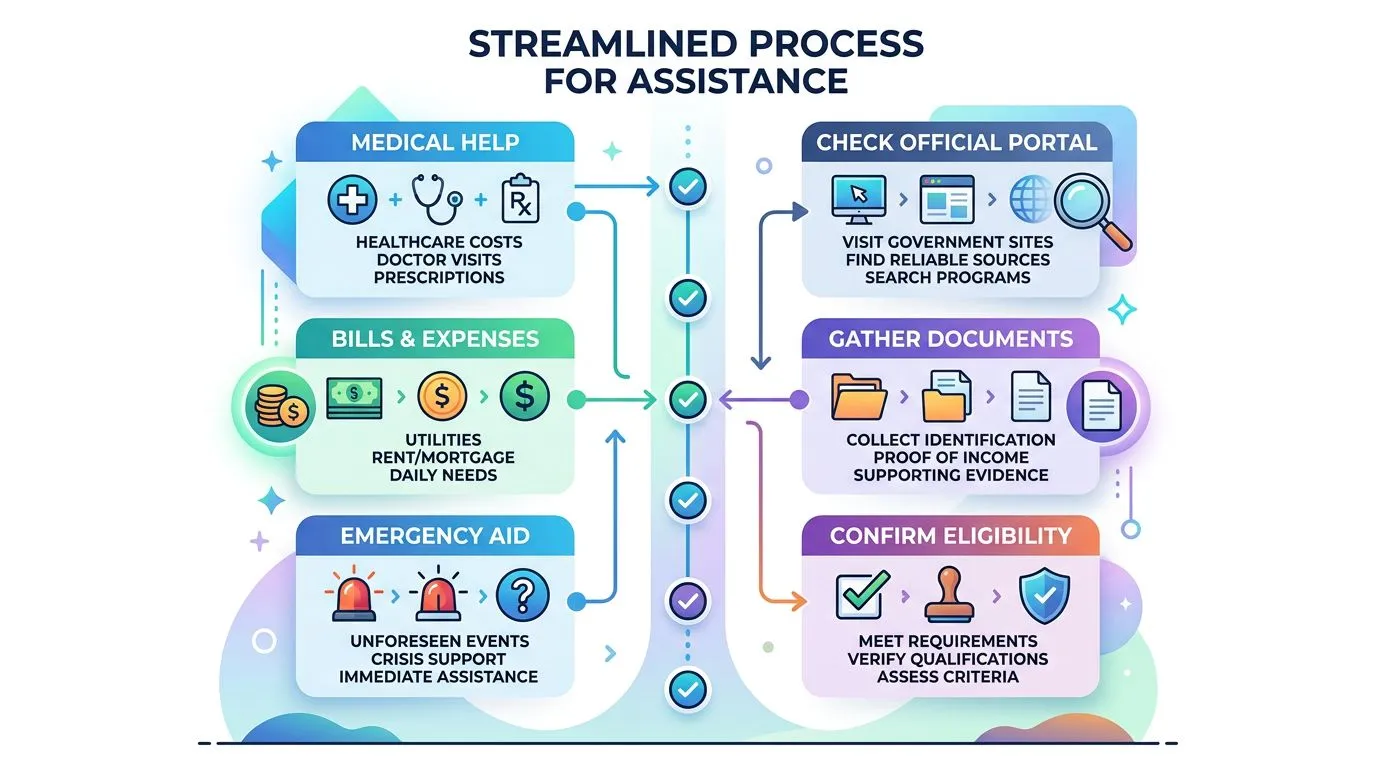
| Type of help | Who it may help | Common eligibility pattern | Where to verify | What it can cover | Notes or limits |
|---|---|---|---|---|---|
| Financial assistance programs | People with medical bills or other urgent bills | Income, household size, hardship, insurance status, or provider rules | Hospital billing office, state program page, or the official provider site | Discounted or free care, reduced balances, or payment help | Rules vary by provider and state |
| Charity care | Patients who cannot afford medical bills | Often based on income and whether you are uninsured or underinsured | Your hospital or medical provider, plus the Consumer Financial Protection Bureau guidance | Free or discounted health care | You may still qualify even if the bill is already in collections |
| Utility help | Households behind on electricity, gas, water, or heating costs | Income, residency, utility account status, and hardship | Your utility company, state energy office, or local social services agency | Shutoff prevention, past-due balances, or seasonal energy bills | Programs often open and close by funding cycle |
| Rent or bill support | Households facing eviction, shutoff, or another short-term crisis | Hardship status, income, residency, and notice deadlines | State and local assistance portals such as California.ca.gov | Emergency rent, payment relief, or short-term case help | Deadlines can be short, so do not wait for a final notice |
| Food aid | Families and individuals stretched by rising grocery costs | Income and household size, sometimes residence | State human services offices and local agencies | Groceries and nutrition support | Benefits depend on current program rules |
| Military family aid | Servicemembers and military families facing a financial emergency | Service history and type of hardship | Army Emergency Relief, Navy-Marine Corps Relief Society, or Air Force Aid Society | Emergency grants or zero-interest loans | Aid society rules differ by branch |
| Disability-related or cash support | Adults with qualifying disability and limited resources | Residency, disability status, income, and resource limits | State human services and benefits pages, such as the Colorado Department of Human Services | Interim or ongoing public financial support | Some programs require you to pursue SSI |
The main pattern is that these programs usually look at income, household size, residency, hardship status, medical need, disability, or service history.
For example, Colorado Adult Financial Programs requires Colorado residency, lawful presence or qualified non-citizen status, an age range of 18 to 59, a qualifying disability, and exhaustion of other benefits before some aid is approved. So the real question is not just, “Do I need help?”
It is, “Which program fits my situation today, what documents do they want, and where do I apply?”
For medical bills, the CFPB page Is there financial help for my medical bills? says charity care and financial assistance can help uninsured people and people who are underinsured, and the bill can still be eligible even if it is already in collections. Apply by asking the hospital, clinic, or provider for its financial assistance or charity care form, then submit the required income and household documents with it.
For state benefits, verify on the official portal rather than relying on old screenshots or dated posts. Colorado Department of Human Services shows how state programs can require residency, lawful presence or citizenship status, disability findings, and resource limits, while California.ca.gov is a central starting point for state assistance and claim-status services. If you live elsewhere, check your own state benefits portal or the provider's online assistance page for the same kind of requirements and application steps.
How to handle debt when money is tight
- Protect essentials first. Pay for housing, utilities, transportation to work, and food before sending extra money to unsecured debt.
- Sort debts by real consequence, not by embarrassment. A missed rent payment can create faster damage than a credit card balance, and a shutoff notice can disrupt work and family life.
- Call the creditor or lender directly and ask whether they offer a hardship plan, lower payment, deferment, or fee relief. Get the terms in writing before you agree.
- If you want help organizing the debt, talk with a nonprofit consumer credit counselor and ask for a full budget review. The CFPB says these nonprofits can help create a debt management plan and other counseling support.
- Be careful with debt settlement sales pitches. The FTC notes that if a counselor says a debt management plan is your only option without a detailed review of your finances, you should find a different counselor.
- If the budget cannot support even modified payments, ask a bankruptcy attorney what protection may be available. Some bankruptcy attorneys will speak initially at no charge, and that first conversation can help you understand your choices before a deadline hits.
The practical difference matters. A hardship plan changes the payment terms with the creditor, while a debt management plan is usually built through a nonprofit counselor and can lower the monthly payment by stretching repayment over time, reducing fees or stopping some creditor calls once the plan is active. Debt settlement is a different lane, often tied to lump-sum negotiations and bigger risks, so it should not be the default answer just because the monthly bill feels overwhelming.
Your best move is to look at the full budget before choosing anything. If a plan still leaves you unable to pay rent, buy gas, or cover medicine, it is not a workable plan, no matter how good it sounds in the sales call.
Where to verify current programs and requirements
- Use the Consumer Financial Protection Bureau for plain-language guidance on debt, medical bills, and financial help topics, then cross-check with the agency or provider that actually runs the program.
- Check official state assistance pages for current residency, income, disability, citizenship or lawful presence, and resource rules. State portals, including California.ca.gov and Colorado Department of Human Services, are the right place to confirm current requirements.
- Gather proof before you apply: government ID, proof of address, pay stubs or benefit statements, recent bills, collection letters, lease or shutoff notices, and any denial or appeal letters you already received.
- If you are in a military family, verify through the branch-specific aid society, such as Army Emergency Relief, Navy-Marine Corps Relief Society, or Air Force Aid Society, because each one handles aid under its own rules and case review process.
These documents matter because many programs cannot move forward without them, and missing paperwork is one of the most common reasons a case stalls. When you have the right papers ready, you also make it easier to show the exact hardship and the exact amount you need.
For medical bills, confirm whether the provider has a charity care application, ask for the deadline, and keep a copy of everything you submit. For other bills, ask the utility, landlord, or lender whether there is a written hardship form or an online portal, because verbal promises often disappear.
A prayer you can use today
Lord, I bring You my financial need today. Please provide what I need, give me wisdom for each decision, calm my fear, and open the right door at the right time. Help me act with courage, ask for the help that is available, and trust You while I do my part. Amen.
Verification checklist
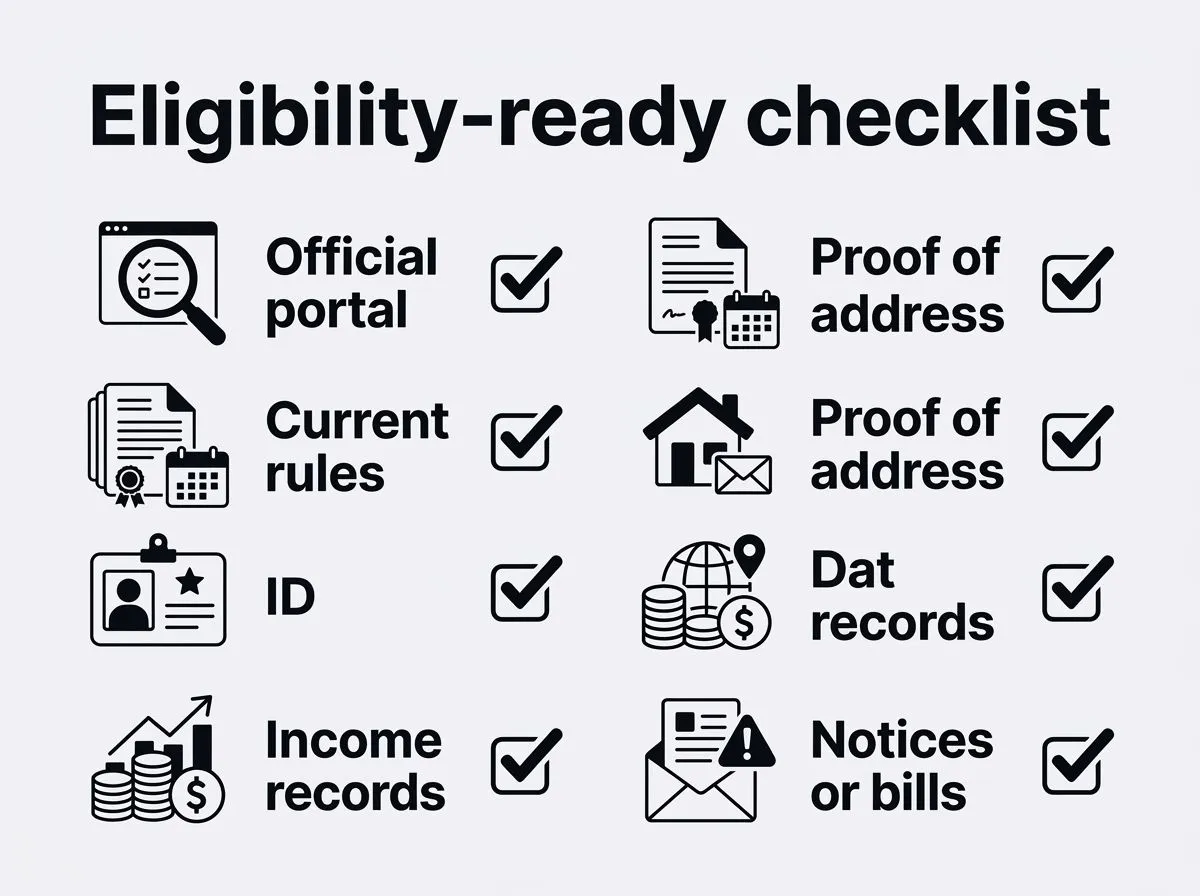
- I have checked the official portal for the program I may use, and the page shows current eligibility rules, not an outdated copy.
- I have gathered my ID, proof of address, income records, bills, and any notices, and each document is current enough for the application.
- I have asked at least one creditor, utility, hospital, or landlord for the written hardship or assistance option, and I have a copy of the terms or application.
- If debt payments no longer fit my budget, I have spoken with a nonprofit credit counselor or bankruptcy attorney, and the budget review explains why that path fits my case.
Frequently asked questions
Can I pray for money if I also need to take practical steps?
Yes. Prayer and action belong together, especially in a hard season like rent pressure, overdue bills, or job loss. Ask God for help, then take one concrete step today, such as calling the utility, contacting your creditor, or checking a real assistance program so you can move quickly on the help that is available.
What should I pay first when I cannot cover every bill?
Pay housing, utilities, food, and transportation needed for work first, because those are the bills that can cause the fastest damage if they fall behind. If a medical bill or other debt is already in collections, deal with it after the essentials, and ask for hardship terms before you miss more payments.
How do I know if a debt management plan is right for me?
It is right only if your full budget can support the new payment without putting rent, gas, or medicine at risk. The type of debt matters too, and the article says a nonprofit credit counselor should review your finances before you decide, because a plan that still leaves you unable to cover essentials is not workable.
Where do I check if a financial assistance program is current?
Check the official agency, provider, or program website, not a third-party summary or old screenshot. The current page should show the eligibility rules, documents, deadlines, and application steps, and if the program is run by a state or hospital, use that official portal to confirm the details before you apply.
Can medical bills qualify for financial help too?
Yes. Hospitals, providers, and some state programs may offer financial assistance or charity care, including for uninsured or underinsured patients who meet the program’s rules.


A Powerful Prayer for a Secure and Successful Future
A powerful prayer for a secure and successful future can bring peace when tomorrow feels uncertain. Questions about your family, career, finances, health, and…

A Powerful Prayer for Your Children’s Education and Future
A powerful prayer for your children’s education and future can help you place their learning, decisions, dreams, and challenges in God’s loving hands. Parents…

A Powerful Prayer for Anxiety, Stress, and Peace of Mind
A powerful prayer for anxiety, stress, and peace of mind can help you turn to God when your thoughts feel overwhelming and your heart cannot find rest. In mome…

A Powerful Prayer for Guidance When You Feel Lost
When uncertainty clouds your thoughts and every path seems confusing, a powerful prayer for guidance when you feel lost can help you slow down, seek God’s pres…