
Digital Bible Study Trends Today
What matters most in digital Bible study today isn’t the fanciest app, but whether the tool helps you read Scripture consistently, study with context, and keep your notes private enough for your comfort level. The best choice depends on what you need most: simple daily reading, group study, or deeper research with commentaries and cross-references.
Key takeaways
- A platform is worth using when it supports 3 things: Scripture access, study tools, and note-taking.
- A one-year, six-month, or book-by-book plan is easier to keep than an impressive plan you quit in 2 weeks.
- Web-based study is better for larger screens and deeper research, while app-based study fits travel, commuting, and offline reading.
- If privacy matters, check what you save after sign-in before you commit your notes and reading habits to the platform.
What Matters Most in an Online Bible Study Platform
The best Bible study platform gives you enough Scripture access, study help, and note-taking support to actually stay in the Word. If it only makes verse browsing easy, but doesn’t support real study, then it’s a convenience tool, not a Bible study environment.
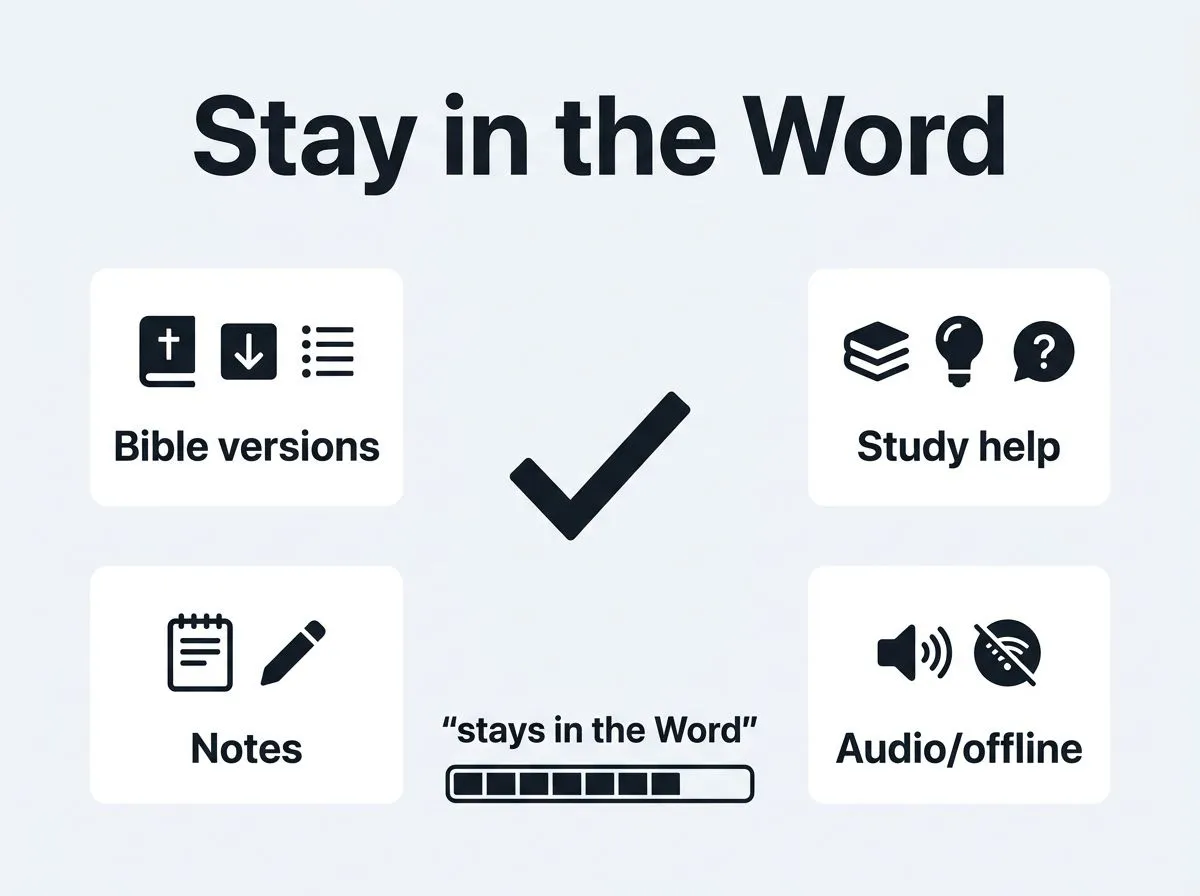
- Bible version access and translation breadth
- Commentaries, cross-references, and historical context
- Reading notes, highlights, and search tools
- Audio Bible, offline access, and group features
Bible version access and translation breadth
A strong platform should let you compare translations without friction, because reading one verse in only one wording can flatten the meaning. YouVersion says its Bible app offers 3,500 Bible versions in 2,300 languages, which makes it a strong choice if you want broad access to Scripture in one place YouVersion.
That breadth matters most for beginners, families, and group leaders who need to move quickly between translations. It also helps when a passage feels unclear in one wording and you want a second witness before you settle on an interpretation.
Commentaries, cross-references, and historical context
A good study platform should help you ask, “What does this passage mean in its setting?” BibleHub is known for putting several translations, commentaries, and cross-references on one page, which is useful when you want to stay anchored to the verse while reading around it Better Bible Teachers.
BibleProject Classroom goes a step further by teaching biblical books and their first-century context, which helps you read whole passages instead of isolated lines BibleProject Classroom. That kind of context keeps you from treating a verse like a slogan when it was written as part of a larger letter, poem, or narrative.
Reading notes, highlights, and search tools
The platform you keep using is the one that lets you capture what God is showing you without breaking your flow. Logos Bible Study app is built for that deeper workflow, and its reading-plan tools are designed for people who want to set up a plan and keep moving through the text Logos Bible Study app.
This matters because Bible study usually fails at the follow-through stage, not the intention stage. If you can’t search your notes, revisit a highlight, or move from one passage to another without losing your place, your study becomes scattered.
Audio Bible, offline access, and group features
Audio, offline reading, and sharing tools matter when real life interrupts your routine. YouVersion says its app is optimized for older phones, low storage, slow connections, and offline use, and it also includes Bible reader, audio Bibles, Verse of the Day, prayer, and friends features YouVersion.
That combination is practical for commuting, travel, or church small groups. If you study with others, a platform that supports shared plans or group interaction can keep everyone in the same passage at the same pace.
How to Build a Bible Study Plan You Can Keep
A Bible study plan works when it fits your week, not when it looks impressive on paper. The most sustainable plans are simple enough to repeat, clear enough to track, and flexible enough to survive busy seasons.
- Choose a plan length, such as one year, six months, or a book-by-book plan
- Use a timeline or chronological reading order when you want the Bible’s story flow
- Set a daily reading time and track it in a calendar or app
- Adjust the pace for your season of life without quitting the plan
Choose a plan length that matches your current attention span. Ligonier Ministries offers reading plans that include one-year options and a chart you can use at your own pace, which is helpful if you want structure without feeling trapped by a rigid schedule Ligonier Ministries.
If you haven’t been reading regularly, start with a smaller commitment than you think you need. A six-month New Testament plan may be better than a full-Bible plan if the shorter path gets you to consistency first.
Use chronological reading when you want the Bible’s storyline to unfold in order. The Bible Seminary notes that this approach arranges the text according to historical timeline rather than canonical order, which can help beginners understand how the narrative of redemption develops across Scripture The Bible Seminary.
That is especially useful if you get lost jumping from one prophet to another without seeing the larger picture. A timeline approach makes it easier to notice empires, rulers, and cultural setting, which is why a study Bible or timeline chart can make the reading stick.
Set a daily reading time before you try to perfect the plan. Logos recommends putting Bible reading on your calendar and even setting an alarm if needed, which is a plain but effective way to protect the habit Logos Bible Study app.
The practical move is to attach reading to something already stable, like breakfast, lunch, or bedtime. If your schedule changes often, keep the same general block instead of chasing the exact same minute every day.
Adjust the pace when life gets full, but don’t drop the plan just because you missed a day. The point is to remain in Scripture, not to win a streak badge. A lighter pace for a hard season is usually wiser than abandoning the habit entirely.
Web-Based vs App-Based Bible Study Options
Web-based tools are best for quick access on a computer, while app-based tools are usually better for reading on the go and offline use. The right format depends on where you actually spend time, not on which option sounds more advanced.
| Best for quick access | Web-based platforms on a laptop or desktop |
|---|---|
| Best for offline reading | App-based tools with downloaded Bibles |
| Best for deeper study tools | Desktop or app ecosystems with notes, cross-references, and search |
| Best for group sharing | Platforms with friend, plan, or classroom features |
| Account and sync needs | Sign-in helps if you want notes and progress saved across devices |
If you mostly study at home or at your desk, a web platform may be enough. If you read during a commute or in a place with weak signal, app-based reading becomes the safer choice because you’re less likely to lose access mid-passage.
For deeper study, the big deciding factor is often how much the tool lets you keep everything in one place. BibleHub works well for quick verse-level research, while Logos is stronger if you want reading plans, notes, and a more developed study workflow.
Privacy, Accounts, and What You Give Up When You Sign In
You should check what a platform stores before you create an account, because notes, plans, prayer lists, and reading history may remain on its servers or sync across devices. That’s helpful if you want continuity, but it also means you’re sharing more of your spiritual routine than a casual visitor would.
An email login usually gives you saved progress, device syncing, and access to features tied to an identity profile. That can be a good trade if you want to move between phone and computer without losing your place, but it’s worth testing the reading experience first so you don’t sign up before you know the interface works for you.
Free tools are often enough for daily reading and simple study. Paid accounts usually matter when you want richer libraries, extra study materials, or advanced features that support longer research sessions, especially on platforms built around commentary and search.
A good habit is to preview the platform in guest mode, if it’s available, and see whether the reading screen, font controls, and navigation feel natural. If the app keeps interrupting your reading with sign-up prompts before you’ve even sampled the passage flow, that’s a sign the platform may be built more for capture than for quiet study.
How to Choose the Right Online Bible Study Setup for Your Goal
The right setup is the one that fits your purpose, because different goals call for different tools. A devotional reader, a small-group participant, and a Bible teacher don’t need the same depth or the same account structure.
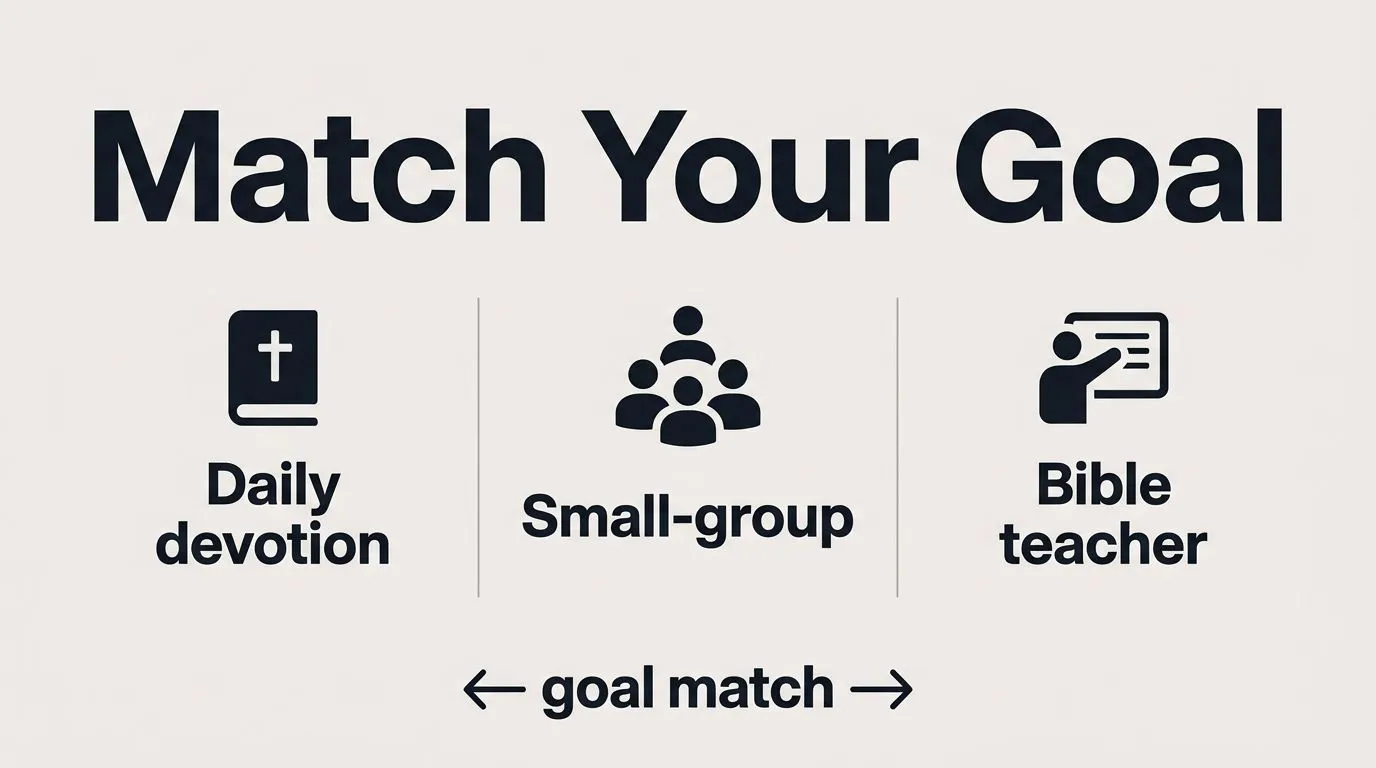
Beginner devotional use
For daily devotion, choose a clean interface, a reliable Bible reader, and one simple plan you can finish. YouVersion is a strong fit here because it brings broad translation access, prayer, audio, and reading plans together in one place YouVersion.
If you’re just starting, the best test is whether you can open the app and know exactly what to read next. The beginner mistake is collecting too many tools and studying none of them well.
Group or family study
For group study, pick a platform that makes sharing easy and keeps everyone in the same passage. BibleProject Classroom and YouVersion both work well for shared learning, especially when you want discussion to stay rooted in the text instead of drifting into general opinions BibleProject Classroom.
A useful group setup is one that gives each person a reading assignment before the meeting. That way, people arrive with something concrete to say, not just the feeling that they read “something spiritual.”
Deeper book study with commentaries
For serious book study, you need a platform that gives you cross-references, context, and room to compare interpretations. BibleHub, Logos Bible Study app, and Faithlife Study Bible are the clearest fits from the tools named here because they support study beyond a single verse Faithlife Study Bible.
This is where the criteria on the other side of the table matter: if you’re preparing to teach, the question isn’t whether the app is pleasant, but whether it helps you defend an interpretation from the text itself. A shallow tool can still feel busy while failing the deeper job.
Long-term consistency and habit building
For long-term consistency, choose the platform that removes friction at the moment you usually quit. If that means offline access, use it. If that means a calendar reminder, set it. If that means a simpler reading plan, shorten it now instead of waiting for a perfect month that never comes.
The platform should support your habit, not replace it. A faithful reading life is built by repeating a small act with patience, prayer, and honesty before God.
Verification checklist:
- open the platform and confirm the next reading appears in two taps or less
- start a plan and verify the schedule shows today’s passage
- sign out and test whether notes or history are still visible only on your account
- read offline once and make sure the passage still opens without signal
- if you plan to share with a group, confirm that the invite or plan link actually reaches the other person and that they can see the same reading assignment
Frequently asked questions
Can I do an online Bible study without paying for a subscription?
Yes. You can begin with free Bible text, reading plans, and basic study tools, and that is enough for daily reading and simple study. Paid tiers usually add deeper research features, but they are not required to get started or to build a steady habit.
Is an app better than a browser for reading the Bible every day?
An app is usually better if you want quick access, reminders, and offline reading, especially on the go or with an unreliable connection. A browser is often better when you want a bigger screen for longer study sessions, notes, and side-by-side comparison of passages.
Should a beginner start with a chronological reading plan?
A chronological plan can help you see the Bible’s storyline in historical order, which is useful if you want the big picture. But it is not the only good starting point, and a shorter New Testament plan or a one-year plan may be easier to keep if you want less complexity.
Do online Bible study tools replace a church Bible study group?
No. They can help you prepare, stay consistent, and bring better notes to the discussion, but they do not replace the encouragement, accountability, and shared learning of a local group. For group study, the article points to tools like BibleProject Classroom and YouVersion as helpful supports, not substitutes.


A Letter From Jesus to You
Maybe you arrived here carrying thoughts that no one else knows about. Maybe everything seems fine on the outside, but inside, a battle is taking place. There…

Jesus Has a Word for Your Heart Today
Maybe you arrived here carrying thoughts that no one else knows about. It could be a concern about your family, an important decision, a financial struggle, or…

7 Promises From God for Difficult Times
Seven promises to pray in hard seasons, with clear context so you can trust God’s Word without misreading it.

A Practical Guide to Reading the Gospels
Read one Gospel at a time, keep sessions short, and notice each writer’s purpose so Jesus’ words stay clear.