
How to Discern God's Direction Clearly
You can see God’s direction more clearly when Scripture leads and your feelings come in behind it. If a prompting pulls you toward sin, haste, secrecy, or pride, it is not safe to call it God’s voice, no matter how intense it feels. This guide will help you test impressions, pray wisely, and notice when your heart is trying to speak louder than the Bible.
Key takeaways
- Let Scripture lead first, and test every prompting before you act, especially if it pushes you toward sin, secrecy, haste, or pride.
- Write the impression down and wait 24 hours before deciding if it still feels clear after prayer and reflection.
- If a “sign” depends on one isolated feeling, treat it as unproven until it matches biblical truth and trusted counsel.
- A real conviction can survive correction, while a passing impression usually fades once the emotion settles.
What Scripture says about discerning God’s direction
Biblical discernment begins with Scripture, not with a sign or a rush of emotion. Proverbs 3:5-6 calls you to trust the Lord with all your heart, stop leaning on your own understanding, and submit your ways to Him so He can make your path straight. That is not passive waiting, it is active surrender, you bring your decision under God’s rule before you ask whether it feels right.
1 John 4:1 makes the second step clear, believers must test every spirit instead of accepting every impression at face value. That command keeps you from treating every inner nudge as spiritual truth. If an impression cannot stand up to Scripture, it does not deserve your obedience.
Romans 12:2 shows that discernment grows as your mind is renewed, not as your mood gets stronger. Philippians 1:9-10 adds that love should grow with knowledge and discernment so you can approve what is excellent. In other words, maturity is not just having a feeling about a decision, it is learning to weigh what is good, better, and best in light of God’s will.
Hebrews 5:14 says mature believers train their senses to tell good from evil. That matters because discernment is practiced, not guessed. Over time, the more you study Scripture, pray honestly, and obey what you already know, the less likely you are to confuse anxiety, ambition, or impulse with God’s leading.
How to test a prompting against Scripture
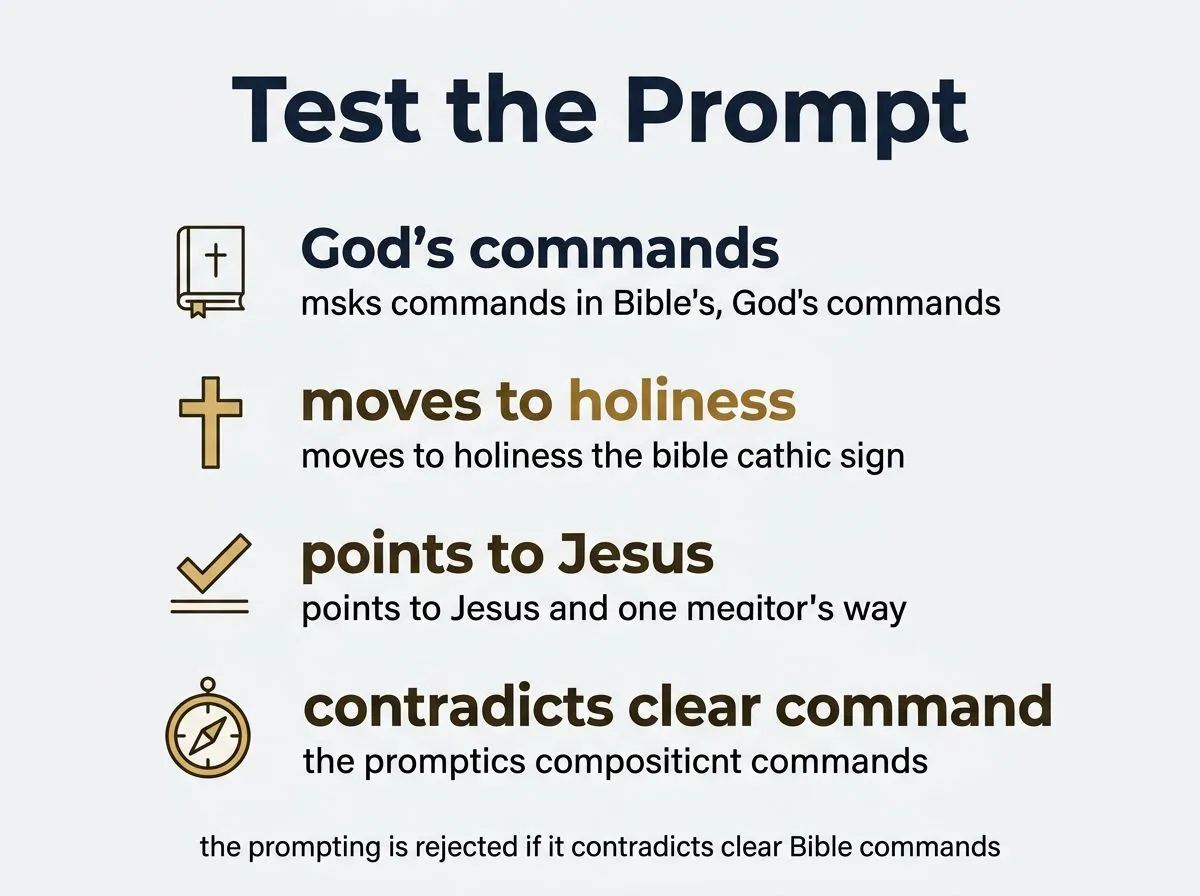
- Check whether it agrees with God’s commands and character in the Bible.
- Ask whether it moves you toward holiness, wisdom, and obedience, or toward compromise.
- See whether it points to Jesus and the gospel, or only stirs a strong emotion.
- Bring it to prayer, biblical reflection, and trusted counsel before you act.
- Treat peace, open doors, and feelings as possible confirmations, but never as authorities above Scripture.
A prompting that contradicts a clear command has already been answered. If it asks you to lie, hide, exploit, or disobey, the test is over before you start analyzing the circumstances. This is where many Christians get tripped up, because a desire can feel urgent and still be spiritually unsafe.
A real word from God will not require you to set aside the Bible in order to receive it. The question is not only, “Did I get a confirmation?”, but also, “Does this line up with Christ, His Word, and His kind of life?”
How to tell a real conviction from a passing impression
A real conviction usually stays clear after the emotion settles, while a passing impression often fades as soon as you slow down. Start by pausing and praying for clarity, because rushed decisions often sound more spiritual than they are. Then write the impression down in one sentence so you can review it without the pressure of the moment.
- Pause, pray, and ask God for clarity before making any decision.
- Write the impression in plain language so you can revisit it calmly.
- Compare it with Scripture and mark any conflict with biblical truth.
- Watch whether it remains consistent over time instead of treating one intense moment as final direction.
- Seek mature Christian counsel when the decision is important or the path is unclear.
That written sentence helps you catch emotional exaggeration. For example, “I should leave my job this week” is different from “I feel dissatisfied and need to pray about whether to stay or begin looking elsewhere.” The first sounds absolute, but the second leaves room for testing, counsel, and patience.
A helpful source of support is the way Discernment is described in BYU Speeches as a light of protection and direction in a dark world. That reminder fits the practical work here: careful spiritual reading, patient prayer, and testing impressions before you act.
Common warning signs that a ‘sign’ may be misread
A sign is often misread when it mainly confirms what you already wanted. That is the most common trap, because desire can dress itself up as direction and then borrow religious language to sound obedient. If the “message” flatters your preference, like telling you to quit a job, ignore wise counsel, and move immediately, be slower, not quicker.
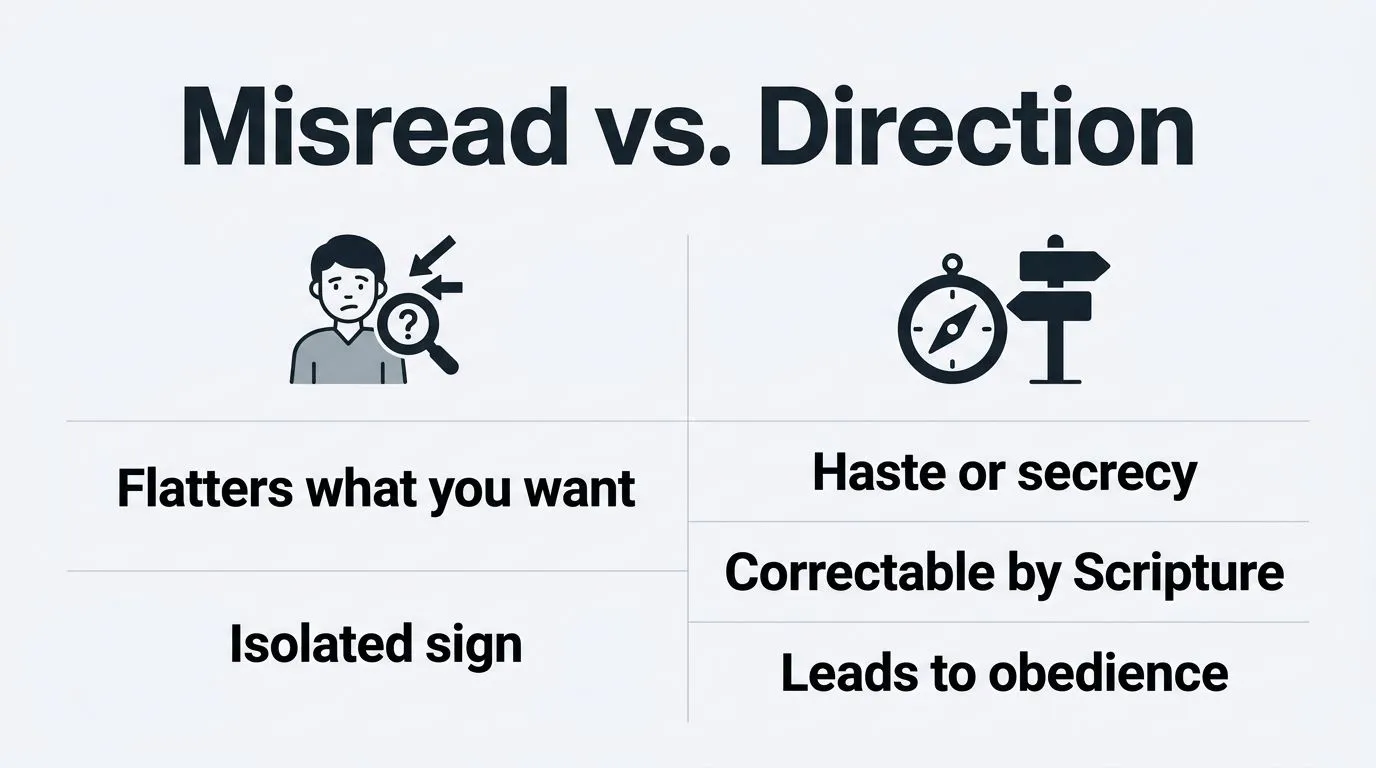
- The message flatters what you already wanted to do.
- It depends on one isolated sign while ignoring the wider teaching of Scripture.
- It pushes haste, secrecy, or disobedience.
- It cannot survive correction from mature believers or a fresh look at biblical wisdom.
- It relies on convenience alone instead of tested obedience.
A single open door is not enough if the path behind it violates wisdom. Scripture and mature counsel matter because convenience can be misleading, and a good opportunity can still be a bad decision. Crossway makes this same point clearly in its teaching on Christian ethics, where Scripture stands above tradition, reason, experience, expected results, and subjective perceptions of guidance.
This is where self-deception gets expensive. If you only ask whether something feels peaceful or accessible, you may miss the harder question, whether it is actually faithful. A prompt that cannot handle correction should not be trusted as God’s direction.
Where trusted Christian resources help you sharpen discernment
Trusted Christian resources help most when they push you back to Scripture instead of replacing it. GotQuestions.org emphasizes that if you want to hear God’s voice, you should begin with the Bible, because all of Scripture expresses God’s will and gives shape to your discernment. That keeps guidance rooted in what God has already said.
Bible Study Tools is useful for seeing how passages like Proverbs 3:5-6, 1 John 4:1, Romans 12:2, Philippians 1:9-10, and Hebrews 5:14 work together. Taken together, those texts show a pattern: trust God, test the spirits, renew your mind, grow in love and knowledge, and train yourself to recognize what is good. That pattern is practical because it teaches you how to think before you act.
LCBC Church’s Bible verse collection and Desiring God’s teaching on discernment both reinforce a simple habit, keep returning to the Word until the prompt is no longer just a feeling. Derek Prince Ministries adds another helpful safeguard, anything from the Spirit of God will not oppose Scripture and will point people to Jesus. Use those resources as supports, not substitutes.
How to make a decision without pretending you have more certainty than you do
You do not need perfect certainty to obey God, you need enough clarity to take the next faithful step. That means you can choose, pray, and move forward without claiming absolute confidence if the Bible does not give it. Humility is often part of discernment.
When the issue is small, the next step may be as simple as waiting, keeping up with your study, and staying in prayer. When the issue is weighty, like a job change, a move, or a ministry commitment, ask for counsel from mature believers who know Scripture well and are willing to challenge you. Their value is not that they make the decision for you, but that they help reveal blind spots you can’t see on your own.
Use this as your weekly practice: write the decision in one sentence, list the Scripture that applies, note what your emotion is saying, and ask one mature Christian to review it with you. Then ask one final question: “Would I still do this if it became less convenient?” That question often shows whether you are following God or just following momentum.
A clear path usually looks tested, not dramatic
God’s direction is often clearest after it has been tested by Scripture, prayer, counsel, and time. If you want a decision you can live with in peace, don’t start with the loudest feeling, start with the Word that judges every feeling. The safest next step is usually the one that stays obedient after the excitement fades and still points you toward Christ.
Frequently asked questions
What should I do if I think God told me something that seems to conflict with Scripture?
Set the impression aside and let Scripture govern the decision. If a prompting pulls you toward sin, haste, secrecy, or pride, it is not safe to call it God’s voice, no matter how strong it feels. A true leading from God will not ask you to ignore what He has already said in His Word.
Can God guide me through peace, circumstances, or open doors?
Yes, but those can only confirm a direction, not replace Scripture. Peace, circumstances, and open doors are helpful signs only when they line up with biblical obedience and the character of Christ. A door that opens easily can still lead you the wrong way if it asks you to compromise.
How long should I wait before acting on guidance?
Wait long enough to test it properly when the decision matters. If the choice is serious, slow down, pray, compare it with Scripture, and seek wise counsel before moving. The article’s point is that clear direction is usually tested by time, not rushed by pressure.
What if two sincere Christians say different things about the same decision?
Return to Scripture, prayer, and the fruit of each option. If the disagreement remains, choose the path that best fits biblical obedience and godly wisdom. A sincere opinion still has to submit to God’s Word, and the safer choice is the one that stays faithful when convenience fades.


A Letter From Jesus to You
Maybe you arrived here carrying thoughts that no one else knows about. Maybe everything seems fine on the outside, but inside, a battle is taking place. There…

Jesus Has a Word for Your Heart Today
Maybe you arrived here carrying thoughts that no one else knows about. It could be a concern about your family, an important decision, a financial struggle, or…

7 Promises From God for Difficult Times
Seven promises to pray in hard seasons, with clear context so you can trust God’s Word without misreading it.

A Practical Guide to Reading the Gospels
Read one Gospel at a time, keep sessions short, and notice each writer’s purpose so Jesus’ words stay clear.