
What to Read in the Bible When You Feel Sad
What to read in the Bible when you feel sad usually starts with the Psalms, especially Psalm 23, Psalm 34, Psalm 42, and Psalm 147. They give you honest words for grief and a steady picture of God’s care. If you want comfort without twisting Scripture out of context, begin with passages written for lament, fear, weakness, and worn-down hearts.
Key takeaways
- Start with 4 Psalms, especially Psalm 23, Psalm 34, Psalm 42, and Psalm 147, because they speak directly to grief.
- Use short verses like Psalm 34:17, Psalm 42:11, Isaiah 41:10, and Matthew 11:28 when you need 1 clear line to pray.
- Read the 2 verses before and after the passage so you do not pull comfort out of context.
- Return to the same passage daily for 7 days, especially when sadness is too heavy for a full prayer.
- If sadness does not lift quickly, keep reading lament passages instead of forcing a verse to mean instant relief.
The Psalms and Bible books that speak most directly to grief
- The Psalms are the best place to begin because they already make room for tears, fear, longing, and trust, so you do not have to pretend you are fine before you pray.
- Psalm 23 gives you the picture of the Lord as your shepherd, which matters when sadness makes life feel unsteady and directionless.
- Psalm 34:17 and Psalm 34:18 belong together, because they show both that the Lord hears the righteous and that He is near to the brokenhearted.
- Psalm 42 is a strong Psalm for the moment when your own soul needs to be spoken to, especially when hope feels thin and repeated questions keep circling in your mind.
- Psalm 147:3 is direct comfort for grief, because it says God heals the brokenhearted and binds up their wounds.
- Lamentations is the book of lament itself, Isaiah speaks comfort and strength into fear, Matthew records Jesus’ invitation to rest, and 2 Corinthians shows how God’s comfort can later strengthen someone else.
- These books fit grief better than pulling one encouraging line from anywhere in the Bible, because the surrounding chapter shows who is speaking, what pain is being named, and what promise is actually being made.
- This first step is about finding the right passage for your season, not collecting random inspirational quotes that sound encouraging but may miss the point of the text.
Short Bible verses for sadness that many Christians return to

- Psalm 34:17 says the Lord hears the righteous when they call for help, which makes it a steady verse for grief, loneliness, and the days when your prayers feel small.
- Psalm 42:11 is a verse you can speak back to your own heart when sadness is louder than hope, because it turns attention from your feelings to God.
- Isaiah 41:10 is especially helpful when fear and weakness are tangled together, since it centers God’s presence, help, and strength.
- Matthew 11:28 is Jesus’ own invitation to come to Him for rest, and that matters when you are emotionally worn out and have no strength left to perform.
- 2 Corinthians 1:3-4 reminds you that God comforts you in trouble and uses that comfort to help you comfort others later, which gives suffering a shape without minimizing it.
- Psalm 147:3, Psalm 34:17, Isaiah 41:10, Matthew 11:28, and 2 Corinthians 1:3-4 are often used as Bible verses for sadness, Bible verses for comfort, and Bible verses for depression, but each one should still be read in context so you do not flatten its meaning.
How to read Scripture for encouragement when you feel emotionally overwhelmed
- Read the verses before and after the passage so you can see who is speaking, who is being addressed, and what problem the text is answering.
- Look for the main message of the chapter first, then go back to the line that caught your attention so the verse stays attached to its setting.
- Pray the passage back to God in your own words when you are too overwhelmed to form a full prayer, especially with Psalm language that already gives you honest words.
- Return to the same passage daily during a hard season so the truth has time to settle into your heart instead of becoming one more quote you glanced at and forgot.
- Use a Bible reading tool like the Bible App or BibleGateway.com to compare translations, highlight verses, save favorites, and add notes about what the passage says about God, your pain, and your next faithful step.
How to keep comfort rooted in context instead of pulling verses out of context
The safest way to read Bible verses for sadness is to ask what the whole passage is doing before you ask how it makes you feel. A line about comfort can mean very little if you miss whether the chapter is lament, worship, promise, or instruction.
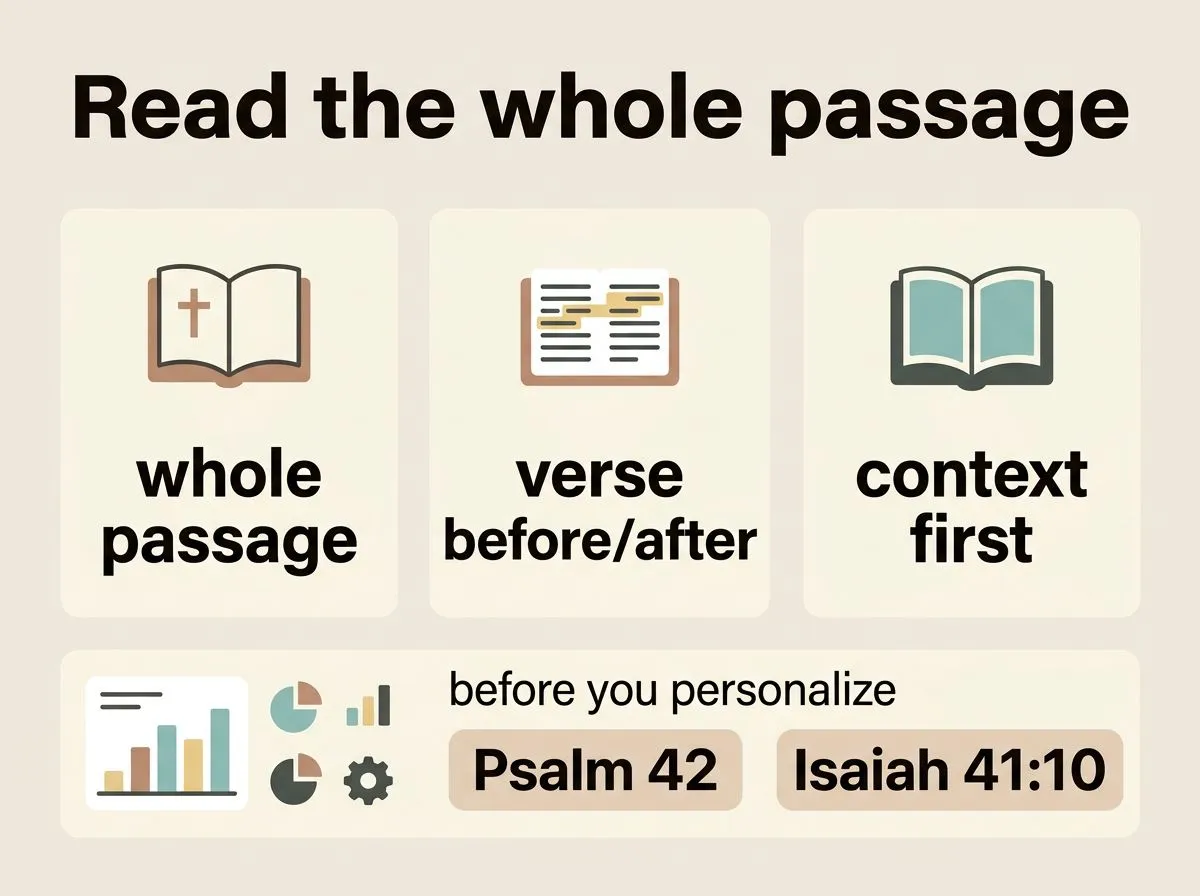
Psalm 42 is a good example. It does not deny despair. It shows a believer talking to his own soul and waiting on God, which means the comfort is real, but it is not cheap. That keeps you from turning the verse into a quick slogan when the text is actually teaching endurance.
Isaiah 41:10 works the same way. The verse speaks directly into fear and weakness, but it is not a blanket promise that pain will vanish on command. It is a promise that God is present, strengthening, and helping, which is often the deeper need in sorrow.
When to read Psalm 23 first
Read Psalm 23 first when sadness has made everything feel unsafe or unfamiliar. The shepherd image matters because it gives you guidance, provision, and protection in one picture, and that is exactly what a grieving heart is often missing.
If your pain feels more like panic than quiet sorrow, Psalm 23 can steady you before you move to a more expressive lament. It does not rush you, but it does remind you that the Lord stays with you in the valley.
When to read Lamentations and Psalm 42
Read Lamentations and Psalm 42 when you need permission to say that life hurts and you do not yet feel better. Those books are honest about mourning, which helps if you feel guilty for not sounding more upbeat in prayer.
That honesty has a practical consequence, it keeps you from forcing a cheerful reading on a sorrowful day. In real grief, forced positivity often falls apart quickly, but lament gives you words that can carry both pain and faith.
How Bible reading tools can help you stay with the passage
Bible App and BibleGateway.com are useful because they make it easier to slow down, compare translations, and return to the same passage without losing your place. The practical value is simple, you spend less energy hunting for the text and more time hearing it clearly.
BibleGateway.com also lets you add notes and save favorites, which is helpful if you want to keep Psalm 34:17 one day and Matthew 11:28 the next. The point is not to build a large collection of verses, but to keep a few faithful passages close enough that you can pray them when sadness returns.
What to do with these verses when the sadness does not lift quickly
Return to the same passage regularly if the feeling does not change right away, because comfort often comes through repetition before it becomes relief. You may not notice a dramatic shift on the first reading, but steady return can keep your heart anchored when emotions are moving all over the place.
If you are carrying grief, stress, or depression, let the passage shape one small next step, not your whole life in a single sitting. That might mean praying Psalm 34:17 aloud, reading Psalm 23 at night, or sitting quietly with Matthew 11:28 before you answer another demand.
American Bible Society speaks of Scripture bringing hope and healing in life’s darkest valleys, and that is a good way to think about these passages. If you want a simple next step, choose one verse, read it each morning for a week, and pray it back to God before bed.
Verification checklist
- Open Psalm 23, Psalm 34, Psalm 42, or Psalm 147 in a Bible app or on BibleGateway.com, and confirm that the chapter is complete before you focus on one line.
- Read the verse before and after the passage, and confirm that the speaker, audience, and main problem match the meaning you are taking from it.
- Compare at least two translations for one comfort passage, and confirm that the wording still points to God’s presence, help, rest, or healing.
- Choose one verse to pray today, and confirm that you can say it back to God in your own words without changing its meaning.
Frequently asked questions
What is the best Psalm to read when you are sad?
Psalm 23, Psalm 34, Psalm 42, and Psalm 147 are the strongest starting points because they speak directly to grief, fear, brokenheartedness, and God’s care. If your sadness feels more like panic or disorientation, Psalm 23 is a good first read. If you need honest lament, Psalm 42 and Psalm 34 are especially steady.
Should I read one verse or the whole chapter?
Read the whole chapter when you can, because the surrounding verses show who is speaking, what pain is being named, and what promise is actually being made. A single verse can comfort you, but the chapter keeps you from pulling a line out of context and missing its meaning. If you only have a moment, start with the verse and come back to the chapter later.
Can I pray the verses back to God?
Yes. Praying Scripture is one of the simplest ways to turn reading into comfort, especially when you do not have words of your own. Psalm language works especially well for this, because it already gives you honest words for fear, longing, and trust.
What if the verse does not make me feel better right away?
That is normal. Comfort often comes gradually as you keep reading the same passage, praying it, and letting it sit with you instead of expecting an instant emotional shift. A verse like Psalm 42:11 or Matthew 11:28 may not change your feelings in one sitting, but it can still steady you over time.


A Letter From Jesus to You
Maybe you arrived here carrying thoughts that no one else knows about. Maybe everything seems fine on the outside, but inside, a battle is taking place. There…

Jesus Has a Word for Your Heart Today
Maybe you arrived here carrying thoughts that no one else knows about. It could be a concern about your family, an important decision, a financial struggle, or…

7 Promises From God for Difficult Times
Seven promises to pray in hard seasons, with clear context so you can trust God’s Word without misreading it.

A Practical Guide to Reading the Gospels
Read one Gospel at a time, keep sessions short, and notice each writer’s purpose so Jesus’ words stay clear.